Independent comparisons. We may earn from shop links. More info

How to use a measurement microphone

Updated: 22 October 2026

The sweep looks crooked and the microphone is already on the desk. How to use a measurement microphone, once Room EQ Wizard is open, is a match between the calibration file and the way the capsule points. Peter F. used Room EQ Wizard's British English help and the shelf notes for 21 October 2026. We did not run your sweep. Put the capsule at ear height, load the file that matches that aim, and turn Windows enhancements off before you trust the trace. Models and prices stay on the [measurement microphone comparison](/hub/measuring-equipment/measurement-microphone). A qualifying amazon.co.uk purchase can earn us a commission at no extra cost to you.

The sweep looks crooked and the microphone is already on the desk. How to use a measurement microphone, once Room EQ Wizard is open, is a match between the calibration file and the way the capsule points. Peter F.

Our top picks

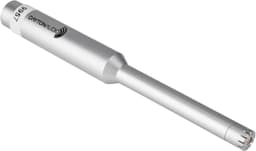
Behringer Behringer ECM8000

Best overall

Behringer Behringer ECM8000
8.2/10about £16.90
miniDSP miniDSP UMIK-1

Rank 2

miniDSP miniDSP UMIK-1
9.1/10about £120
Dayton Audio Dayton Audio EMM-6

Alternative

Dayton Audio Dayton Audio EMM-6
7.6/10about £84.68
On this page

Point the capsule the way the file was measured

A 0-degree file was measured with the capsule aimed at the source. Point it at the speaker and load that file. A 90-degree file was measured with the capsule aimed up. Point it at the ceiling and load that file. miniDSP uses the 0-degree file for stereo and 2.1, and the 90-degree file for surround. Below a few hundred hertz, Room EQ Wizard's help points the capsule up with the 90-degree file. Do not swap the UMIK-1 on-axis and 90-degree files after the stand is set. Load the EMM-6 curve, and do not straighten it by eye. The room correction page allows a looser rule only for a subwoofer-only trace.

Put it at ear height and leave it still

Room EQ Wizard puts the capsule at ear height in the usual seat. A microphone on the speaker, or on the floor in front of the subwoofer, answers a different question. Use a stand. The UMIK-1 listing includes a mini tripod. If the boom dips, the next average is a different seat. Set the height before you commit to the file. Measure the chair you use. A USB microphone can take its stimulus from the headphone socket. An analogue capsule still needs a preamp and phantom power, which is the USB or XLR decision.
Behringer Behringer ECM8000

Testsieger

Behringer Behringer ECM8000
8.2/10about £16.90

Turn off audio enhancements before the sweep

A USB measurement microphone puts the same signal on both channels. Windows can treat that as noise and strip the bass. Room EQ Wizard's soundcard page says to turn enhancements off for that input, then sweep again before you move a speaker. If the file contains a sensitivity figure, select the real microphone device, not Default Input. Otherwise the SPL figure is wrong even when the curve shape looks plausible. miniDSP's setup note uses about 75 dB as an example on the REW meter. That number is not a target for every room and not a legal limit. An analogue input can be ruined by a pad, a high-pass filter, or a monitor mix. The ECM8000 listing has no pad and no low-cut, which does not remove a filter in the interface.

A wiggly calibration file is the correction

Load the curve. The wiggles are what the software subtracts. Editing the file flat puts those deviations into every sweep. A generic ECM8000 curve will not draw a serial-specific shape. A file is not an acoustic calibrator. A number in REW is not an LAeq or an LCPeak. The buying guide keeps that boundary. Audix's TM1 sheet says the pop from plugging into a live, open channel can damage loudspeakers. Close the channel before the XLR connector moves.

Common questions

What is the difference between the two files?
The 0-degree file matches a capsule pointed at the source. The 90-degree file matches a capsule pointed up. On a UMIK-1 those are two serial files, not a better and a worse version of the same aim. Using the ceiling file while the capsule faces the tweeter is a setup error, not a smoother curve.
Where do I put the microphone?
At ear height in the seat you listen from, on a stand, and then leave it still. REW says small movements change the trace, so a hand-held capsule will not repeat. Set the height before you commit to the file. Several chairs are a different measurement. A capsule on the subwoofer cabinet answers a different question.
Why is there almost no bass in a USB sweep?
A USB measurement microphone puts the same signal on both channels, and Windows can strip it as noise. Turn enhancements off for that input, then sweep again. Select the real microphone device, not Default Input, when the file includes a sensitivity figure. Otherwise the level is not tied to the capsule.
The EMM-6 graph is full of wiggles. Is it faulty?
Not on that evidence alone. The graph is the correction. One UK buyer returned an EMM-6 because the file showed about 2 to 3 dB of deviation instead of a flat line. Load it. Measuring with no file writes those deviations into the room. A generic ECM8000 curve is not a serial graph.
Can I use the SPL number in REW as a noise reading?
No. That figure is a setup level for the sweep, not an LAeq, an LCPeak, or a calibrator check. The 75 dB line in miniDSP's setup note is an example, not a target and not a workplace limit. Noise at work needs a sound level meter. If the bass was missing, fix the enhancements first.
What if I plug an XLR microphone in while the channel is open?
The click can damage loudspeakers. Audix states that for the TM1: close the channel before the connector moves. The amazon.co.uk listing does not repeat a phantom voltage, so this is the maker's warning. If the sweep looks ragged, check aim, file, and enhancements before you assume the capsule has failed.

Related pages

Sources

Public UK sources from the research digest, last checked on 21 October 2026. Shelf prices and star lines are the amazon.co.uk figures captured with these nine listings. The price bands are this set, not a market average.

  1. HSE L108: Controlling noise at work (retrieved 21 October 2026)
  2. HSE INDG362: Noise at work (retrieved 21 October 2026)
  3. Cirrus Research: which class of sound level meter (retrieved 21 October 2026)
  4. NoiseMeters: which meter for noise at work (retrieved 21 October 2026)
  5. Institute of Acoustics: a guide to sound level meters (retrieved 21 October 2026)
  6. miniDSP UMIK-1 (retrieved 21 October 2026)
  7. Room EQ Wizard getting started (retrieved 21 October 2026)
  8. Tantrum Audio: measurement microphones (retrieved 21 October 2026)