Independent comparisons. We may earn from shop links. More info

Lux meter vs exposure meter

Updated: 22 October 2026

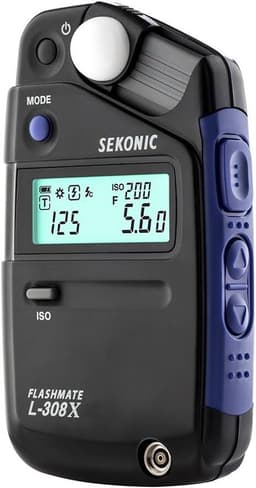
Amazon.co.uk has put a £16 lux meter beside a £199 Sekonic as if they were sizes of the same tool. A lux meter tells you illuminance on a surface. An exposure meter tells you an aperture and a shutter for a stated ISO. A shoe-mount meter is the small reflected version of that second job. If you need an f-stop, buy an exposure meter. If you need lux on a desk, buy an illuminance meter. All twelve listings are on the [light meter comparison](/hub/measuring-equipment/light-meter). Peter F. did not laboratory-test these meters. A qualifying purchase can earn a commission at no extra cost to you.

Amazon.co.uk has put a £16 lux meter beside a £199 Sekonic as if they were sizes of the same tool. A lux meter tells you illuminance on a surface. An exposure meter tells you an aperture and a shutter for a stated ISO.

Our top picks

Sekonic Sekonic L-308X

Best overall

Sekonic Sekonic L-308X
7.1/10about £199
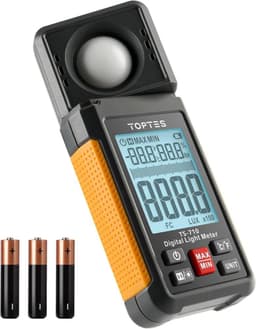
TopTes TopTes TS-710

Rank 2

TopTes TopTes TS-710
7.4/10about £29.99
On this page

Two answers, two instruments

The illuminance bin is every meter except the Sekonic L-308X and the two TTArtisan colours. They claim lux and a foot-candle switch, roughly to 200,000 lux, at about £12.99 to £29.99. The Sekonic at £199 reads incident, reflected, and flash, with photo and cine. Lux on it is secondary. The TTArtisan pair at £62 shows match lights, no lux, no flash, and a CR1632 that is not in the box. Both colours share 3.9 from 218 reviews. A TopTes reviewer looked for an f-stop and did not find one. The Sekonic specification lists EV 0 to 19.9 and flash from about f/1.0 to f/90.9. The simplified lux method wants a lumidisc. Certificates are in the light meter buying guide.

Incident, reflected, and the shoe

Incident metering reads light falling on the subject. Point the dome back toward the camera. A white shirt and a black coat do not change it. Reflected metering pulls both toward a middle grey. The L-308X can do both. One UK review found about a stop between the methods. That gap can be the scene. A bright wall fools reflected light and does not fool the dome. The TTArtisan II is reflected only, about 45°, with no dome and no flash. The cold shoe does not make it an incident meter, and it never claims lux. If the only problem is a corridor, leave both camera meters on the shelf.
Sekonic Sekonic L-308X

Testsieger

Sekonic Sekonic L-308X
7.1/10about £199

Which to buy from this set

Buy the Sekonic for incident light or flash. Skip it for a room, a lamp height, or a plant. The lumidisc is not in this kit. It is the only meter here with flash marked yes, and a UK review says aperture priority does not finish that job. You set the camera from the meter. Buy the TTArtisan at £62 for a meterless camera if you only need reflected light and you will recheck the ISO dial. Both colours are one review sample. If the note you want says lux, stay with an illuminance meter. Named picks are on the best light meter page.

What still goes wrong

A nudged ISO dial on the TTArtisan changes the match lights while the room stays the same. Check it every time you raise the camera. One UK Sekonic read backwards after a drop with no crack. Retire it for exposure you care about. This kit does not list a lumidisc, so lux on the Sekonic is not a substitute for an illuminance meter. A UK film review preferred the Sekonic to an app, and a plant review preferred a lux meter to an app. An app does not join the two instruments.

Common questions

Will a lux meter tell me the aperture?
No. The illuminance meters in this set show lux or foot-candles, and sometimes temperature. They do not take ISO and return an f-stop. Reviewers of the URCERI and the TopTes have already looked for camera settings and not found them. Use the Sekonic or the TTArtisan for aperture. Use a lux meter for a surface.
What is incident metering?
Incident metering measures light falling on the subject, usually with a dome pointed back toward the camera. It does not care whether the subject is pale or dark. On this shelf only the Sekonic offers that dome. A lux meter on a desk is also light falling on a surface, but the output is lux, not a camera setting, so the words are not interchangeable.
Is a shoe-mount meter an incident meter?
No. The TTArtisan II is a reflected meter of about 45°, sitting in the cold shoe, with match lights and no dome. It averages the scene from the camera position. Subject tone can fool it. It does not read flash, and the listing does not offer lux. It is the budget answer for a dead camera meter, not a small Sekonic.
When do I need flash metering?
You need it when the exposure depends on a burst the camera will not measure reliably in the mode you are using. In this set only the Sekonic is marked for flash. A UK review says you still set the camera from the meter. Aperture priority does not finish the job after the flash. Lux meters and the TTArtisan do not meter flash at all.
Can the Sekonic replace a lux meter for an office?
Not as the tool you buy for that job. The simplified lux method expects a lumidisc this kit does not include, and there is no Type F claim. A mid-band illuminance meter does the desk or corridor job for under £30. Keep the Sekonic for incident light and flash.
Why do reflected and incident disagree by a stop?
Because they are not asking the same question. Reflected light includes subject and background tone. Incident light ignores that tone. A UK Sekonic review saw about a stop between the two methods, which can be the scene rather than a fault. If you need the light on the subject, use the dome. If you need what the lens sees, use reflected, and watch bright walls.
Which one if the camera meter is dead?
If you can spend £199 and you want incident or flash, buy the Sekonic. If you only need a reflected match and you will check ISO every frame, the TTArtisan at £62 is the conditional alternative. If the camera meter is fine and the landing is the problem, buy neither. Buy a lux meter and leave the shoe empty.

Related pages

Sources

Public UK and manufacturer sources from the research digest. Shelf prices and star lines are the amazon.co.uk figures in this batch, not a live recrawl. The price bands are this set, not a market average.

  1. Workplace (Health, Safety and Welfare) Regulations 1992, regulation 8 (retrieved 22 October 2026)
  2. HSE HSG38: Lighting at work (retrieved 22 October 2026)
  3. HSE: Lighting (retrieved 22 October 2026)
  4. BSI: BS EN 12464-1:2021 (retrieved 22 October 2026)
  5. BSI: BS 667:2005 illuminance meters (retrieved 22 October 2026)
  6. ILP Guidance Note 7: choosing a photometer (retrieved 22 October 2026)
  7. Sekonic L-308X specification (retrieved 22 October 2026)
  8. Michigan State University: light terminology for plants (retrieved 22 October 2026)
  9. Royal Veterinary College: reptile heating and lighting (retrieved 22 October 2026)