Independent comparisons. We may earn from shop links. More info

How to use a magnetic spirit level

Updated: 22 October 2026

You are hanging a kitchen shelf on a plasterboard wall, or lining a steel back box, and the bubble looks centred until you glance from the side. How to use a magnetic spirit level comes down to three habits: put the measuring face on the work, read the vial square on, and prove the reading by turning the tool. The magnet holds the body on ferrous steel so both hands can mark. That hold does not make the vial truer, and it does not grip aluminium. The steps below cover level, plumb, and a recheck after a knock. Lengths sit on the [magnetic spirit level comparison](/hub/measuring-and-marking-tools/spirit-level-magnet). A qualifying purchase can earn a commission at no extra cost to you.

You are hanging a kitchen shelf on a plasterboard wall, or lining a steel back box, and the bubble looks centred until you glance from the side.

Our top picks

WORKPRO WORKPRO 115 mm mini

Alternative

WORKPRO WORKPRO 115 mm mini
9.4/10about £9.99
Firecore Firecore FSL230PC

Best value

Firecore Firecore FSL230PC
9.2/10about £6.53
On this page

Put the measuring face on the work

A centred bubble means the face on the work is level or plumb, and only when you look straight at the vial. Between the lines, the base is level, compared with a side glance that shifts the same bubble. The plumb vial goes against a door jamb or a stud and tells you whether that edge is vertical. Mix the two and a shelf can look right while the upright beside it leans. Press the machined face down, because a screw head under one end moves the bubble even on a flat wall. The magnet frees both hands on ferrous steel only while the body stays put, so support it if it slides. It does not change the reading. Which metals hold is on the steel and pipe page.

Turn it 180 degrees on the same marks

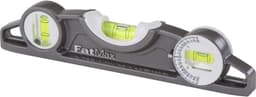
You do not need a surface you already trust. Mark both ends, read the horizontal bubble, turn the level end for end through 180 degrees, and set it back on the same marks. Armstrong Cheshire and OX Tools compare the level with itself. The bubble should sit in the same place relative to the lines. If it moves from left of centre to the right, the face and the vial disagree, and a run of units will lean the same way. Plumb is a side-to-side swap on a door frame, not that end-for-end turn. OX Tools meets the same upright with the opposite face of the level. If the plumb bubble swaps sides, stop. One stored FatMax review said the bubble stayed put when the level was turned, though one comment is not a lab test. Length stays in the buying guide.

Do not stand it on a plastic end

A mini torpedo often has a plastic cap on the short end. Two stored UK reviews of the WORKPRO 115 mm say that end is a cap, not a machined face. If you plumb from it, the bubble can sit between the lines while the edge you want is out. Use the long machined edge for plumb and the base for level. A cap that only protects the corner can stay on. A cap you stand on is the wrong face, and a rubber cap is not a lanyard. A millimetre of plastic on the short end throws the bubble further than the same thickness under a sole around 800 mm.

Recheck after a knock, and do not adjust a sealed vial

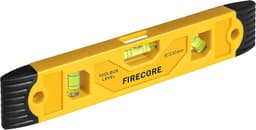
Stop if a vial is cracked or leaking, because a drop can shift the frame with the glass still intact. One stored S&R review said a fall of about 2 m from a ladder left the reading untrue. Run the 180 degree check before the next mark. One stored Firecore review said the bubble did not match, and the level was returned. Do not open a sealed vial. Armstrong Cheshire notes that some are factory-set. A new level that fails is a rejection under section 22 of the Consumer Rights Act 2015, which gives 30 days to reject goods that are not as described or not of satisfactory quality. Call a tradesperson for structural steel, a signed drainage fall, or work at height you are not set up for. Degrees on a screen belong on the digital or bubble page. Peter F. updated this on 22 October 2026 from public UK guides and stored amazon.co.uk reviews, with no laboratory test.

Common questions

How do I know the bubble means level?
The horizontal bubble means level when it sits between the lines and you look straight at the vial, with the measuring face flat on the work. A side glance shifts where the bubble appears, so the same setting can look wrong. If a later flip disagrees, trust the flip, not the first glance. The plumb vial is a separate window and does not tell you the shelf is level.
How do I check the level without a surface I already trust?
Mark both ends, read the horizontal bubble, turn the level 180 degrees, and put it back on the same marks. You are comparing the level with itself, so the bench need not be perfectly level. OX Tools and Armstrong Cheshire both use that check. The bubble should sit in the same place relative to the lines. If it swaps sides, the vial is not repeating.
How is the plumb check different from the level check?
The level check turns the tool end for end on a horizontal surface. The plumb check holds the long edge on a door frame and swaps the level side to side, so each face meets the same upright. OX Tools keeps those moves apart. An end-for-end spin does not test the vertical vial. If the plumb bubble changes sides, do not mark the stud from that reading.
Can I stand a small level on its rubber or plastic end?
Use the machined base for level and the long machined edge for plumb. Two stored UK reviews of the WORKPRO 115 mm call the end a plastic cap, not a measuring face, so standing that model on the cap reads the vial against moulded plastic. A protective cap can stay on the corner. It is not a foot, and it is not a lanyard.
What should I do after I drop it?
Stop if a vial is cracked or leaking. If the glass looks intact, mark both ends and repeat the 180 degree check before the next line. A drop can move the frame or the vial without an obvious crack. One stored S&R review described a fall of about 2 m from a ladder that left the reading untrue. A bubble that swaps sides means you stop using that level.
What if the flip test fails on a new level?
Leave a sealed vial shut. Some vials are factory-set, and forcing the housing can crack the glass or shift it further. If a new level will not repeat the bubble, section 22 of the Consumer Rights Act 2015 gives 30 days to reject goods that are not of satisfactory quality or not as described. Take that up with the seller you bought from.
Does the magnet change how I read the vial?
No. The magnet holds the body on ferrous metal so you can mark with both hands, and it does nothing to the bubble. Read the vial square on, then run the flip. Hands-free use lasts only while the level stays put, so support it if it slides. GOV.UK notes that small fixed magnets can affect a pacemaker, defibrillator, or cochlear implant inside about 3 cm.

Related pages

Sources

Public UK sources used for this page. Shelf prices, stars and review counts are the amazon.co.uk figures for this set. The page score is the comparison score scaled to ten. This is not a laboratory test. Retrieved 22 October 2026.

  1. British Stainless Steel Association, magnetic properties of austenitic stainless steels (retrieved 22 October 2026)
  2. GOV.UK, electromagnetic interference sources (retrieved 22 October 2026)
  3. GOV.UK, laser radiation safety advice (retrieved 22 October 2026)
  4. Consumer Rights Act 2015, section 22 (retrieved 22 October 2026)
  5. OX Tools, how to check the accuracy of a spirit level (retrieved 22 October 2026)
  6. Armstrong Cheshire, how to calibrate a spirit level (retrieved 22 October 2026)
  7. Blueperry, Stabila 96-M-2 magnetic spirit level 60 cm (retrieved 22 October 2026)
  8. HSE HSG281, managing work with an implanted medical device (retrieved 22 October 2026)