Independent comparisons. We may earn from shop links. More info

How to use a water level

Updated: 22 October 2026

The hose looks full, you mark both ends, and the lines do not agree. That usually means a bubble, a kink, or one end still closed. How to use a water level comes down to a clear column, both ends open to the same air, and both people marking the same part of the curve. The listings behind those review notes are in our [hose level comparison](/hub/measuring-and-marking-tools/hose-level). Peter F. used UK guides and the amazon.co.uk reviews gathered on 20 October 2026. Nothing here is a lab test. A qualifying purchase can earn us a commission at no extra cost to you.

The hose looks full, you mark both ends, and the lines do not agree. That usually means a bubble, a kink, or one end still closed.

Our top picks

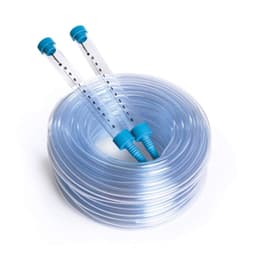
as-Schwabe as-Schwabe 10 m PVC hose

Best overall

as-Schwabe as-Schwabe 10 m PVC hose
8.4/10about £10.56
Cellfast Cellfast 15 m hose level

Alternative

Cellfast Cellfast 15 m hose level
8.2/10about £13.99
On this page

Fill it so the air is actually gone

Lay the hose in a gentle curve before you add water. A tight coil traps a pocket you notice only when the marks disagree. DIY Doctor and the Faithfull water-level sheet both start with a funnel or a siphon, and both say to continue until the bubbles have left. Tap the hose so a bubble can travel to an open end. On the Cellfast 15 m listing, UK reviews say the hose is narrow and one error was about 20 mm until a siphon fill cleared the air. If the first marks are out by about that much, refill before you blame the wall. Leave a little air at the ends so the water can move. Length is on the water level hose buying guide.

Read with both ends open

Both ends have to be open when you take the mark. A cap or a thumb on one end holds a pressure the other end does not share, and the surfaces stop matching. Hold the ends upright, let the water stop rocking, and agree the high point of the meniscus or the low point. DIY Doctor’s point is that both people use the same choice. Mixing them puts a small miss into every transfer. A gust is a reason to wait. Two people is the practical default. One Cellfast review fixed an end to a stake. Stake the reference end only if it cannot shift. If the scale on a Cellfast 15 m tube has rubbed off, mark from the water and keep the same part of the curve. The reading is the water, not the ink.

Close the ends only while you walk

Close the ends when you move, and open them again before the next reading. Thumbs, bungs, or caps stop the water leaving while you walk. They are not part of the measurement. The Faithfull sheet says to read with the valves open and to close them to carry the level. On the Cellfast 20 m kit, one UK buyer needed pliers and used corks. The 15 m caps are very tight, pop off, or were missing, and the 25 m reviews mention a thumb. If the cap will not move, use a thumb or a bung you own. Drilling the cap is not the setup the listing describes. A Faithfull hose that jumps off the connector is a reason to return it under the Consumer Rights Act 2015, not a technique to practise.

Check the datum again, then drain it

Go back to the first mark before you trust the far one. BuildWiz describes a return check: if the water no longer meets the datum, a bubble, a kink, or a shifted end has moved the column, and the new marks should come off. Then empty the hose. Ice splits tubing, which is BuildWiz’s winter warning, so drain it before a frost. Emptying it also limits algae if the coil sits in a shed. Store a loose coil and let the ends dry. This page does not print a glycol ratio.

Common questions

How do I fill the hose without leaving bubbles?
Lay the hose in a gentle curve, fill with a funnel or a siphon, and tap the high points until the pockets reach an open end. On the Cellfast 15 m listing, UK reviews say a narrow hose holds bubbles and that one error was about 20 mm until a siphon fill cleared the air.
Do both ends have to be open when I read?
Yes. Both ends need the same air, or the two surfaces are not one level. Caps and thumbs are for the walk between points. The Faithfull sheet says to read with the valves open. The amazon.co.uk file does not confirm those valves are in the box, so a thumb or a bung still counts.
Which part of the curved surface do I mark?
Agree the high point of the meniscus, or agree the low point, and use that choice at both ends. Mixing the top at one end with the bottom at the other builds a miss into every post. If a printed scale has rubbed off, mark from the water.
Can I do it alone?
You can, and two people remains the first method. One Cellfast review fixed a tube to a stake, and Faithfull’s page describes single-handed use. Stake the reference end only when it cannot slip, and still open both ends for the reading.
What if the caps will not come off?
Read with the ends uncovered, using a thumb or a bung you can remove. UK reviews on the Cellfast 20 m kit mention pliers and corks, the 15 m reviews mention tight or missing caps, and the 25 m reviews mention a thumb. Drilling a cap is not the recommended setup. If the connector spills the water, that is a quality point under the Consumer Rights Act 2015, not a filling tip.
How do I store it so it does not freeze or grow algae?
Drain the hose before a frost. BuildWiz notes that ice splits tubing. Emptying it also limits algae in a shed. Store a loose coil and let the ends dry. This page does not give a glycol recipe. A scale that UK buyers say rubs off should be stored dry, away from a wet fitting.

Related pages

Sources

Public UK sources from the research digest, plus the amazon.co.uk listings compared on this page. Listings captured 20 October 2026.

  1. DIY Doctor, water level (retrieved 20 October 2026)
  2. GOV.UK, Approved Document C (retrieved 20 October 2026)
  3. Consumer Rights Act 2015, section 9 (retrieved 20 October 2026)
  4. BuildWiz, water level (retrieved 20 October 2026)
  5. B&Q, water levels (retrieved 20 October 2026)
  6. York Survey, 25 m graduated water level kit (retrieved 20 October 2026)
  7. Selco, water level (retrieved 20 October 2026)
  8. Pico Hydro manual, chapters 7–8 (retrieved 20 October 2026)