When not to use a line level: choose the right tool

Learn when not to use a line level for foundations, drains, walls and long slopes, and when to choose a spirit, laser or optical level instead.
On this page

You have pulled the string tight, clipped on the little vial and centred the bubble. That proves only that the short part of the line beneath the vial is horizontal at that moment. It does not prove a correct datum, a sag-free cord, or that the job needs to be level. Knowing when not to use a line level matters most when a modest reading can lead to an expensive excavation, a poorly draining surface or masonry built to the wrong height.
In short
Use a line level for rough, visible guidance on straightforward, low-risk work. Switch tools when you need plumb, a designed fall, repeatable heights over distance or a defensible site datum. Involve a competent professional for foundations, drains and structural work you are not qualified to set out.
The jobs a line level can still do
A line level is not useless; it is simply easy to ask too much of it. On a small garden job, a taut string can show a straight edge, keep non-structural features aligned and give you a reference for repeated measurements. It is quick to move, needs no batteries and stays visible while you work. The string spirit level comparison covers it as a practical aid, not a substitute for surveying equipment.
The safe question is not whether the bubble is centred, but what happens if this reference is wrong. If the consequence is one edging block sitting a few millimetres proud, you can normally stop, check and correct it. If the consequence is a foundation, drain invert or retaining wall in the wrong place, the line level is the wrong control.
Even on a modest job, set the end points from a reference you trust rather than moving both until the bubble looks right. Use sound stakes, pull the cord taut and inspect it from the side for obvious sag. Wind, a wet or stretchy line, loose knots and someone brushing past can all alter the setup. Recheck after any disturbance and confirm important measurements with a second method rather than treating one centred bubble as proof.
Plumb, fall and a reliable datum
Three different ideas are often bundled into the word level. Level means horizontal, plumb means vertical, and fall is a deliberate change in height that lets water travel in the required direction. A hanging line vial addresses the first of those, and only through the string supporting it. It cannot tell you whether a wall face or fence post is upright.
To plumb a post, place a suitable spirit level vertically against a straight face, then check an adjacent face as well. One reading catches lean in only one plane. A plumb bob or a correctly set laser may suit taller work. A try square can mark a right angle; it does not turn a line-level reading into a plumb check.
A designed fall creates the opposite problem. Centring the bubble can remove the slope that a patio, channel or pipe requires. You need a known start height, a known finish height and the horizontal distance between them, then a reliable way to transfer those values. A line can display that slope once the end points have been established, but the little vial should not dictate it.
A datum is the reference from which levels are measured. If an arbitrary brick, peg or patch of soil later moves, every measurement from it can still be wrong. For larger setting-out, a builder's optical level transfers heights by sighting a staff. CIRIA's setting-out guidance associates this instrument with about ±5 mm over 30–50 metres. That figure belongs to the optical level and its procedure, not to a hanging vial.
Foundations, drains and structural work
Do not use a line level as the deciding instrument for foundation excavation or concrete level. A foundation has to relate to the design, the ground and an established site datum. A cord can mark an edge after competent setting-out, but it cannot verify bearing ground, trench depth or structural dimensions. Excavations add collapse, access and buried-service risks.
Drainage depends on more than a bubble near the centre. Route, pipe size, connections, access and gradient have to work together. A string may guide a short run, but the start and finish levels must come from the drainage design. If you confuse level with the correct fall, water and solids can travel too slowly or towards the wrong point.
Structural and retaining brickwork deserve the same stop. Skilled bricklayers use string to hold a course, inside established corners, datums, profiles and checks. See using a string spirit level for bricklaying for that limited role. Stop if drawings conflict, a benchmark is missing, boundaries are uncertain or your checks disagree. Do not average the readings. Have the setting-out checked before concrete is poured or masonry locks the mistake in place.
Patios, fences and long slopes
A small patio can still be a sensible string job when the cord marks straight boundaries and gives consistent depth checks. Establish the drainage direction first, set the end heights and use the string to represent that fall. Check more than one line, because a surface can match two edges and still contain a hollow. A long spirit level, straightedge or laser is a useful independent check.
For a short fence on fairly even ground, string is excellent for alignment. It can show where post faces should sit without pretending that every post top must be level. Check each post for plumb separately, and decide before digging whether the finished fence will step or follow the slope.
Distance and steep ground make height decisions less forgiving. A long cord sags, wind moves it, and a measurement down to irregular ground may not match the next bay. A rotary laser with a receiver is often easier for repeated heights on a long fence, and a line laser may suit a shorter visible run. The line level versus laser level guide sets out the trade-offs. Neither device chooses the design heights.
A line left where people walk
The tool can be the wrong choice because of where it is, not what it reads. Thin string at shin or ankle height is easy to miss in dim light or when someone is carrying materials. HSE guidance for construction work emphasises clear access routes. A taut setting-out line across a route is an obstacle.
Plan the line so normal access does not pass through it. If you cannot do that, control the area under the site's safety arrangements rather than relying on a scrap of tape or assuming everybody remembers. Do not leave an exposed line across a shared garden path, pavement, doorway or site walkway overnight. Take it down when the job stops and re-establish it from stable marks when work resumes.
Taking the cord down does not mean losing the job. Record offsets and heights from fixed points, mark the stakes and photograph the arrangement. Before you use the replacement line, verify both ends and the datum again.
What to hire and when to call someone
Choose the replacement by the measurement you need. For plumb posts and short vertical checks, use a spirit level in two directions. For repeated visible lines over a modest distance, a self-levelling line laser may save time. Bright sun can hide the beam, so range, a detector and the maker's limits matter.
A rotary laser with a receiver transfers heights around a larger outdoor area. An optical level and staff suit formal height transfer when a competent operator takes backsights and foresights and keeps records. Hiring a better instrument does not remove setup error: a disturbed tripod, a misread staff or an unchecked benchmark can still spread one mistake across the job.
Call a competent professional when the work involves foundations, drainage or sewers, structural or retaining masonry, significant excavation, work at height, uncertain boundaries or a datum you cannot verify. Depending on the job, that may mean a surveyor, engineer, drainage contractor or experienced builder. Ask who owns the setting-out information and who will check it before irreversible work begins.
For lower-risk DIY, hire only after you know whether you need alignment, plumb, slope or height transfer. Take the receiver, staff, tripod and calibration information with the instrument. Compare a known point from two positions before you trust a full run. If those checks disagree, stop and fix the setup.
Common questions
Can I set out a foundation with a line level?
Can a line level plumb a wall or post?
Is a line level accurate enough for a long fence on a slope?
What does the approximately 5 mm accuracy figure refer to?
Should I leave a string line up overnight?
When is a patio still a suitable string-line job?
Who is responsible for setting-out on a building site?
What should I hire instead of a line level?

Peter F. is the editor for DIY & tools at productscompared.co.uk. Comparisons in this category are checked against amazon.co.uk listings, review evidence and public UK sources.
Related articles
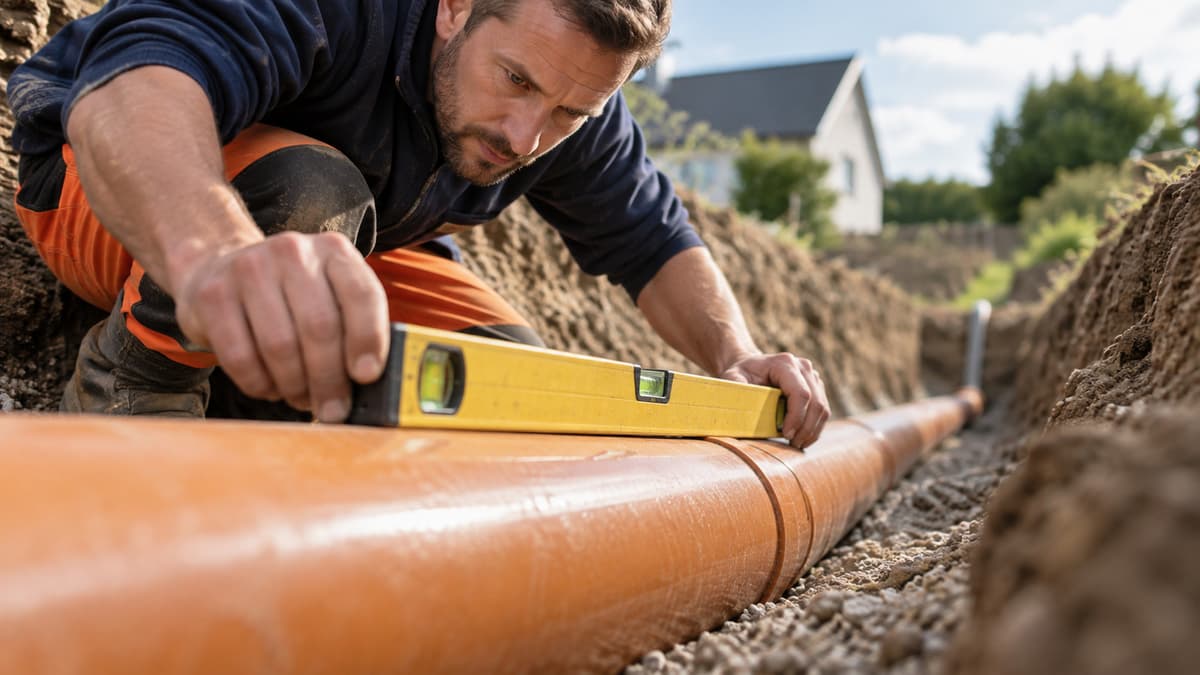
Drain fall 1 in 40: why a centred bubble is wrong
A centred vial means zero fall. A 1:40 fall is a 25 mm drop per horizontal metre.
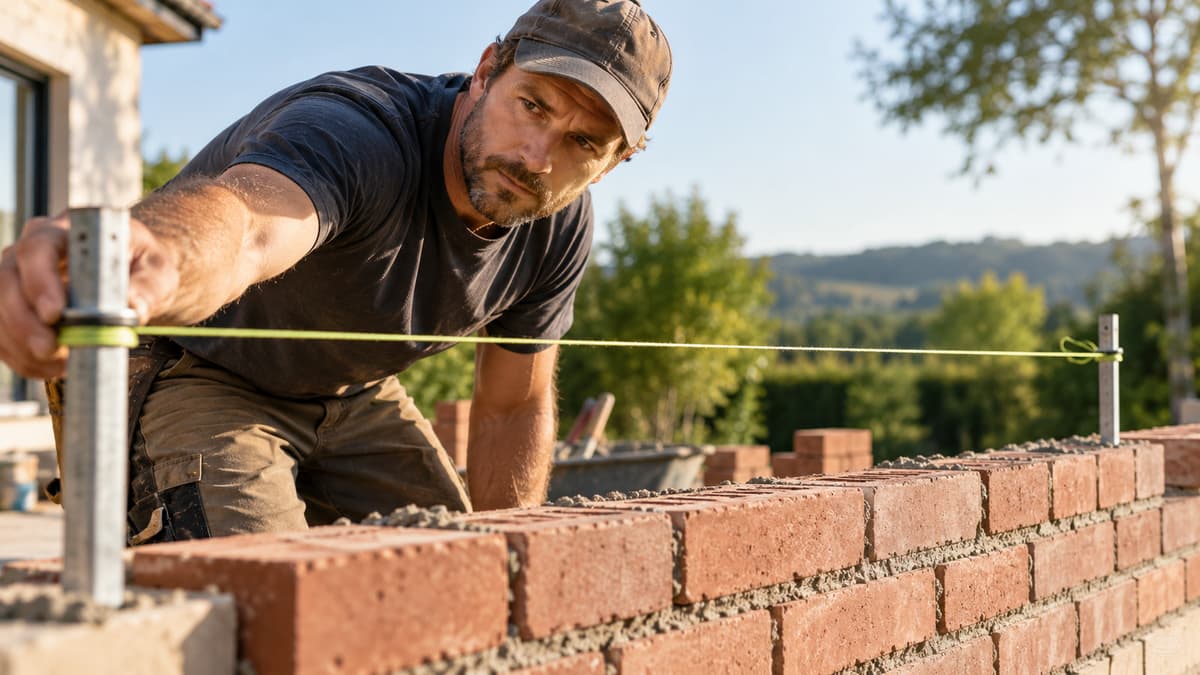
Builders line sag: how to keep your line true
A builder's line always forms a shallow curve under its own weight, even when it looks taut.

String line fence posts UK: keep every post straight
Set the end posts first, then keep every intermediate post clear of a taut string.