Pneumatic vs solid sack truck tyres
A warehouse floor, a gravel drive, and a kerb are different jobs, and listings often use three tyre words as if they were one. Solid rubber, air-filled pneumatic tyres, and foam-filled puncture-proof tyres do not behave alike. A bullet that says R-Trac beside a specification that says pneumatic has not settled it. This page compares pneumatic vs solid sack truck tyres for the twelve listings in the [sack truck comparison](/hub/lifting-equipment/sack-truck). Peter F. used those pages, the UK reviews, and trade explanations of the materials. It is not a rolling-resistance test. Updated 21 October 2026. A qualifying purchase can earn a commission at no extra cost to you.
A warehouse floor, a gravel drive, and a kerb are different jobs, and listings often use three tyre words as if they were one.
A warehouse floor, a gravel drive, and a kerb are different jobs, and listings often use three tyre words as if they were one. Solid rubber, air-filled pneumatic tyres, and foam-filled puncture-proof tyres do not behave alike. A bullet that says R-Trac beside a specification that says pneumatic has not settled it. This page compares pneumatic vs solid sack truck tyres for the twelve listings in the sack truck comparison. Peter F. used those pages, the UK reviews, and trade explanations of the materials. It is not a rolling-resistance test. Updated 21 October 2026. A qualifying purchase can earn a commission at no extra cost to you.
Our top picks
| Badge | Product | Wheels | Stated load | Stairs on the listing | Note | Price | Offer |
|---|---|---|---|---|---|---|---|
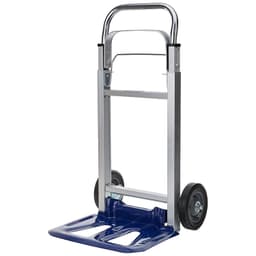
| Best overall |  Modern Group Modern Group sack truck, solid tyres | 2, solid puncture-proof, 10 in | 600 lb. No kilogram on the listing | Not stated | 9.4 | about £54.99 | View offer |
| Best value |  Einhell Einhell folding hand truck, 90 kg | 2, rubber with metal bushing | 90 kg | Not stated | 9.0 | about £23.66 | View offer |
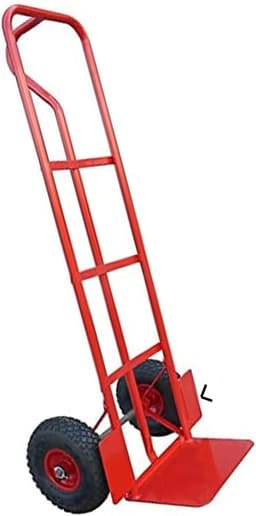
| Alternative |  Modern Group Modern Group sack truck, pneumatic tyres | 2, pneumatic, 10 in | Title and bullet 600 lb. Specification 295 kg | Bullet mentions stairs or steps. No separate stair rating | 9.0 | about £55.99 | View offer |

On this page
Three words, not two
Where each one belongs
What this set actually lists
What tyres do not decide
Common questions
Are solid tyres better than pneumatic?
What does puncture-proof mean?
Will pneumatic tyres go flat in the shed?
Can I use solid tyres on a gravel path?
Why do reviews talk about plastic rims?
Related pages
Sources
Public UK sources named below. amazon.co.uk prices, stars and review counts on these twelve listings were read for the note dated 21 October 2026. Page updated October 2026.
- HSE INDG478: risk assessment of pushing and pulling (retrieved 21 October 2026)
- HSE L23: Manual handling (retrieved 21 October 2026)
- Manual Handling Operations Regulations 1992 (retrieved 21 October 2026)
- HSE: LOLER overview (retrieved 21 October 2026)
- Consumer Rights Act 2015, section 9 (retrieved 21 October 2026)
- Manutan: sack trucks buyers' guide (retrieved 21 October 2026)
- PARRS: steel stair climber sack truck (retrieved 21 October 2026)
- BIL: pneumatic and puncture-proof tyres (retrieved 21 October 2026)