How to use a sack truck
The kilogram on the frame has not lifted anything yet. The truck carries the load only after the weight sits over the axle, and only inside the rated capacity for that mode. Until then you are still steadying a sack barrow. This is how to use a sack truck you already have: check it, load it against the frame, tilt until it balances, move it, and stop when the route is wrong. Peter F. wrote this from public UK guidance and from faults in the reviews behind the [sack truck comparison](/hub/lifting-equipment/sack-truck). Updated 21 October 2026. A qualifying purchase can earn a commission at no extra cost to you.
The kilogram on the frame has not lifted anything yet. The truck carries the load only after the weight sits over the axle, and only inside the rated capacity for that mode.
The kilogram on the frame has not lifted anything yet. The truck carries the load only after the weight sits over the axle, and only inside the rated capacity for that mode. Until then you are still steadying a sack barrow. This is how to use a sack truck you already have: check it, load it against the frame, tilt until it balances, move it, and stop when the route is wrong. Peter F. wrote this from public UK guidance and from faults in the reviews behind the sack truck comparison. Updated 21 October 2026. A qualifying purchase can earn a commission at no extra cost to you.
Our top picks
| Badge | Product | Strap or guards | Wheels | Stairs on the listing | Note | Price | Offer |
|---|---|---|---|---|---|---|---|
| Best overall |  Modern Group Modern Group sack truck, solid tyres | Wheel guards and a large toe plate, as the title | 2, solid puncture-proof, 10 in | Not stated | 9.4 | about £54.99 | View offer |
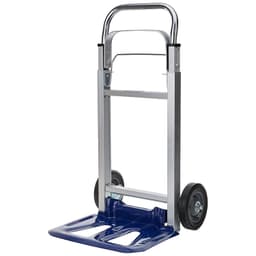
| Best value |  Einhell Einhell folding hand truck, 90 kg | No bungee in the bullets | 2, rubber with metal bushing | Not stated | 9.0 | about £23.66 | View offer |
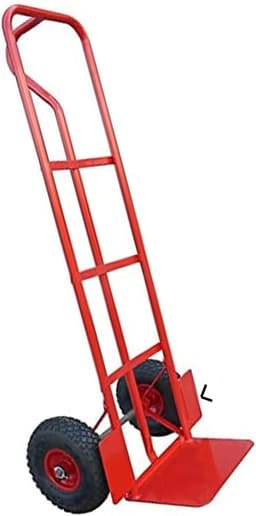
| Alternative |  Modern Group Modern Group sack truck, pneumatic tyres | Wheel guards. Toe plate 345 × 220 mm | 2, pneumatic, 10 in | Bullet mentions stairs or steps. No separate stair rating | 9.0 | about £55.99 | View offer |

On this page
Check the truck before it is loaded
Load it against the frame
Tilt, then push
When you stop
Common questions
Should I push or pull?
What do I do on a slope?
How high can I stack?
What should I check before the first trip?
When do I stop and get help?
Related pages
Sources
Public UK sources named below. amazon.co.uk prices, stars and review counts on these twelve listings were read for the note dated 21 October 2026. Page updated October 2026.
- HSE INDG478: risk assessment of pushing and pulling (retrieved 21 October 2026)
- HSE L23: Manual handling (retrieved 21 October 2026)
- Manual Handling Operations Regulations 1992 (retrieved 21 October 2026)
- HSE: LOLER overview (retrieved 21 October 2026)
- Consumer Rights Act 2015, section 9 (retrieved 21 October 2026)
- Manutan: sack trucks buyers' guide (retrieved 21 October 2026)
- PARRS: steel stair climber sack truck (retrieved 21 October 2026)
- BIL: pneumatic and puncture-proof tyres (retrieved 21 October 2026)