Independent comparisons. We may earn from shop links. More info

Shoulder dolly vs forearm straps

Updated: 22 October 2026

You are choosing between a shoulder dolly-style harness and forearm or hand-grip straps, and amazon.co.uk will not sort them for you. Shoulder dolly vs forearm straps comes down to where the load sits and whether you need your hands free to balance a tall appliance. This page compares those systems using the rows in the [carrying strap comparison](/hub/lifting-equipment/carrying-strap). It is not a full catalogue and it is not the stair procedure. Peter F. read those listings on 20 October 2026. There was no lab test. A qualifying purchase can earn a commission at no extra cost to you.

You are choosing between a shoulder dolly-style harness and forearm or hand-grip straps, and amazon.co.uk will not sort them for you.

Our top picks

On this page

What changes when the strap sits on the shoulder

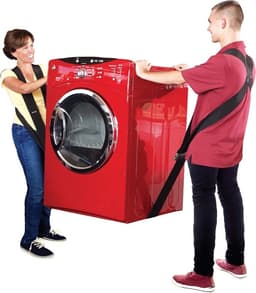
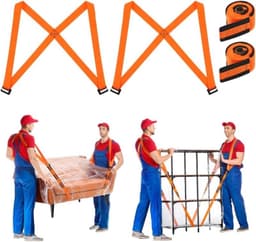
A two-person shoulder harness runs a central strap under the object and up to harnesses on each chest. When threading holds, your hands can steady a fridge door line or a sofa back instead of carrying the full mass in your grip. Shoulder Dolly, SafeCore, and ZIZINET are shoulder-first kits with different buckle materials, glove extras, and conflicting load lines. URAQT’s listing also claims a shoulder mode with sponge pads, though UK reviews often discuss arm wear and short webbing instead. The cost is complexity and fit. You must learn a buckle path, adjust for height gaps, and accept that metal hardware can mark furniture. Manufacturer guidance for this product family says two people are required and that strength does not increase. A harness is not a shortcut past team-handling limits. For a two-person washer or tall wardrobe where hands must steer, this is usually the right side of the fork if you will rehearse on a lighter load first. Load figures and the buying order are on the lifting straps buying guide.

What changes when the strap sits on the hand or forearm

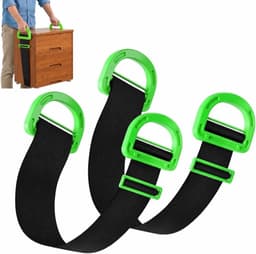
Forearm loops and thickened hand grips, as sold on Netupett, keep the load on the arms. Setup is faster and the kit is cheaper, but biceps and grip fatigue arrive sooner, especially on a long hall or garden path. You should not plan a tall American fridge this way if you need to keep the cabinet vertical while one person walks backwards. Your wrists become the limit before the webbing does. Netupett’s listing states 600 lb in the bullets and 5,000 pounds tensile in the table. Plan to the load claim, not the tensile figure. This amazon.co.uk listing has no UK star line, so check reviews on the live page before you rely on them. Hand-grip straps suit mattresses, stacked boxes, firewood, or a shared move where you can rest often and the mass is modest next to white goods. If that matches the job, a forearm or hand-grip strap wins on simplicity. If not, stay on the harness side.

The listing that claims both

URAQT at £10.99 describes shoulder pads and an arm-mounted method on the same polyester straps. That flexibility can help on light loads, but UK text also reports a snap on a fridge, a short length at 2.7 m, and awkward stairs. Treat both modes as a reason to trial the fit before the heavy day, not as proof either mode matches a dedicated Shoulder Dolly harness. When the job is seriously heavy, a listing that specialises in one shoulder system with a long review record is the safer bet than a dual-mode budget strap, even if the dual-mode price is tempting. ECOSHIRE is a third type: one H-shaped handle for solo carries at a listed sixty pounds. It is not a forearm strap and not a team harness. Do not buy it expecting two-person fridge duty. The carry-style column on the comparison is the quick map if you forget which listing is which.

A conditional pick

If two fit adults must move a bulky appliance with no handles and you will practise buckle threading, choose a shoulder harness from the comparison, leaning to the top pick for review depth or the best value set if budget and gloves matter more than metal buckles. If you share lighter loads and accept tired arms, choose hand-grip or forearm straps such as Netupett, and verify the live listing for reviews. If URAQT’s dual-mode price attracts you, buy early enough to rehearse both wear styles on a box before you commit a fridge. Named picks, with who should skip each set, are on best furniture lifting straps. Stairs, sack trucks, and stop rules stay on their own pages so this one does not swell into a catalogue.

Common questions

Which system leaves your hands free?
A shoulder harness, when the buckle is threaded so it locks. Hand-grip straps do not. A tall fridge that needs a free hand to steer is a harness job.
Are forearm straps easier to put on?
Usually yes, because you skip the chest harness and the cam path. They load the arms at once, so the easier start is paid for in grip fatigue on a long carry.
Can forearm straps move a fridge?
Buyers sometimes try. Guidance for heavy appliances in this product family points to a shoulder harness and two people, not to hand grips alone.
What is in this comparison on each side?
Shoulder-first kits are Shoulder Dolly, SafeCore, and ZIZINET, plus a shoulder claim on URAQT. Netupett is the hand-grip pair. ECOSHIRE is a solo handle, not a forearm strap.
Can one set do both, as URAQT claims?
The listing says yes: sponge shoulder pads and an arm-mounted method on the same straps. UK reviews are mixed, including a snap on a fridge. Trial both styles on a box first.
Is a single H-handle a forearm strap?
No. ECOSHIRE is a one-person handle with a listed load of sixty pounds. It is for boxes one person can hold, not for a two-person fridge.
Which system for a mattress versus a washer?
A mattress can suit hand grips if you can rest. A washer needs a shoulder harness, two people, and a trial lift. A solo handle is the wrong system for that washer.

Related pages

Sources

Public UK sources named below. amazon.co.uk prices, stars and review counts on these six listings were read on 20 October 2026. Page updated October 2026.

  1. HSE INDG143: Manual handling at work (retrieved 20 October 2026)
  2. HSE: Manual handling risk filters (retrieved 20 October 2026)
  3. HSE: LOLER overview (retrieved 20 October 2026)
  4. HSE INDG474: Lifting accessories (retrieved 20 October 2026)
  5. HSE: Carrying controls (retrieved 20 October 2026)
  6. BSI: BS EN 1492-1 flat woven webbing slings (retrieved 20 October 2026)
  7. Consumer Rights Act 2015, section 9 (retrieved 20 October 2026)
  8. Shoulder Dolly: instructions (retrieved 20 October 2026)