Independent comparisons. We may earn from shop links. More info

How to use shoulder dolly straps

Updated: 22 October 2026

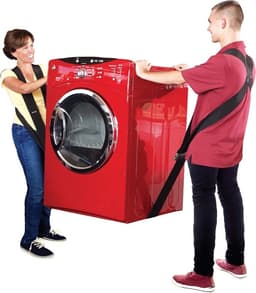
Two of you have the harnesses in the hall and a fridge still on its feet. The failure mode on the first try is threading the buckle under load, finding slip on the first centimetre, and wishing you had rehearsed on a lighter box. This page is how to use shoulder dolly straps on flat ground and short carries. Which listing to buy is in the [carrying strap comparison](/hub/lifting-equipment/carrying-strap). ECOSHIRE’s solo handle and Netupett’s hand grips are different products. Do not use this sequence on them. Peter F. read the listings on 20 October 2026. There was no lab test. A qualifying purchase can earn a commission at no extra cost to you.

Two of you have the harnesses in the hall and a fridge still on its feet.

Our top picks

On this page

Put the harness on before the object is attached

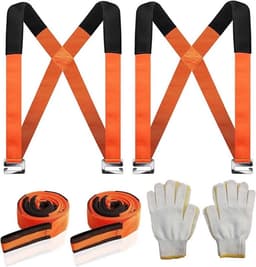
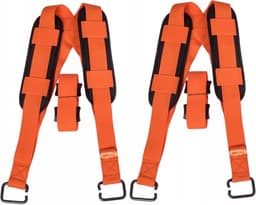
Each person puts on a harness with the buckle at the front and the cross of the straps centred on the back, as Shoulder Dolly’s guide describes for that buckle family. Adjust length for the height gap now, before the appliance is in the way. SafeCore and ZIZINET buyers report thin instruction sheets. If your leaflet differs, follow that diagram. Do not combine arm loops and a shoulder harness on the same lift. Shoulder Dolly treats arm loops as a separate high-lift aid, not a walking setup mixed with the harness. Agree a stop word before you touch the appliance. If either harness will not close around a chest, or feels twisted, fix that before webbing goes under the mass. At work, straps do not remove the employer’s manual-handling assessment.

Get the strap under the heavy part

Roll or tilt the object only as far as your backs allow, then feed the central strap under the bulk of the mass near the centre of gravity. On a fridge that usually means threading under the cabinet depth, not catching only the door lip. Metal buckles can mark varnished furniture. UK reviews on Shoulder Dolly mention scratches when hardware pressed bare wood, so a blanket or cardboard shim is cheap insurance. Both of you stand on the same side of the object while you thread, then walk to your carry positions. The spare tail should not sit under your feet. If the strap is too short to reach both harnesses without hunching, stop and lengthen the adjustment or choose a longer central strap, rather than forcing a bent-spine lift.

Thread, lock, and tidy the tail

For the metal cam buckle on Shoulder Dolly-style hardware, the maker’s path is webbing under the buckle, behind the larger rod, over the top, and down between the rods. Turn the buckle vertical to lock and horizontal when you need to adjust. UK reviewers say reversed threading is the usual reason for pay-out. Other brands in this set use different hardware. Read your sheet even if a friend swears by a clip of another listing. After threading, pull tension evenly so the load will rise together. Tidy the tail through keepers or tie it back so it does not flap into the buckle on the first step. ZIZINET reviews complain about limited adjustment holes. If you are on the last hole, reset harness length rather than hoping stretch will appear under load.

Lift together and know when to stop

Squat with your legs, keep your arms straight so the chest is not crushed, and lift a few centimetres together, then pause. If the buckle creeps, the strap pays out, or one partner carries the whole mass, lower immediately and re-thread. Shoulder Dolly’s sheet says the product does not increase strength and that damaged webbing must not be used. A frayed edge is a stop, not one last lift. Walk with short commands, one person guiding backwards if needed, and lower on the count you agreed. If the object snags a door frame, reduce height by adjusting buckle tension together rather than twisting your wrists. When clearance drops toward a step or landing, pause and read moving straps on stairs before you commit. Hire a crew when either person feels sharp pain, when the buckle slipped twice, or when the load never cleared the floor on the trial lift.

Common questions

Which way does the webbing go through the buckle?
On Shoulder Dolly-style cams the path is under, behind the large rod, over, and down between the rods, then vertical to lock. Your set may differ. Use the leaflet in that box.
How do two people of different heights share one strap?
Set each harness length first, then adjust the central buckle so both of you can stand with straight arms. Re-check after a trial lift of a few centimetres.
What do you do with the spare tail?
Route it away from feet and away from the buckle path. Loose tail can feed back through the cam and undo a lock, and a tail under a shoe is a trip.
Should you practise on a light object first?
Yes. A filled box lets you test slip without a dropped appliance on a toe. Thread, lift a few centimetres, pause, and only then move to the fridge.
Can you use the arm loops and the harness together?
Not for walking a load. Shoulder Dolly treats arm loops as a separate high-lift aid, not as a walking setup mixed with the shoulder harness.
What if the strap creeps on the first centimetre of lift?
Lower, re-thread, and look for a reversed path or damaged webbing. Do not walk on in the hope that friction will catch the buckle.
When do you stop and hire help?
When the trial lift fails twice, when either person should not team-lift, or when a stair needs clearance you cannot get with a level load.

Related pages

Sources

Public UK sources named below. amazon.co.uk prices, stars and review counts on these six listings were read on 20 October 2026. Page updated October 2026.

  1. HSE INDG143: Manual handling at work (retrieved 20 October 2026)
  2. HSE: Manual handling risk filters (retrieved 20 October 2026)
  3. HSE: LOLER overview (retrieved 20 October 2026)
  4. HSE INDG474: Lifting accessories (retrieved 20 October 2026)
  5. HSE: Carrying controls (retrieved 20 October 2026)
  6. BSI: BS EN 1492-1 flat woven webbing slings (retrieved 20 October 2026)
  7. Consumer Rights Act 2015, section 9 (retrieved 20 October 2026)
  8. Shoulder Dolly: instructions (retrieved 20 October 2026)