Pallet truck or sack truck: which to buy first

A pallet truck wants a pallet and a flat floor. A sack truck wants boxes, a kerb, or a van. Choose which handling aid a small UK shop should buy first.
On this page

The pallet is on the bay and the loose cartons are still in the van. A pallet truck or sack truck is a question about the load, the floor, and the last few metres from the vehicle to the shelf. Forks suit goods that stay on a pallet. A toe plate suits boxes, sacks, and anything you walk off the van by hand.
UK handling sellers draw that line in public guides. Acclaim Handling describes a manual pump for short runs on a sound floor, and electric when the same pallets move all shift. Manutan points a sack truck at lighter loads off a pallet, and lists hand pallet trucks from 750 kg to 3,000 kg. RAJAPACK puts sack trucks on sacks and boxes, and pallet trucks on palletised goods. The pound price sits on the amazon.co.uk listing.
Peter F., editor for DIY & tools at productscompared.co.uk, updated these notes in October 2026 from those guides, Health and Safety Executive material on kerbs and steps, and amazon.co.uk listing extracts where a model is named. Nothing here was weighed in a lab. A qualifying purchase through our amazon.co.uk links can earn a commission at no extra cost to you.
In short
Choose a pallet truck when the goods stay on a pallet and the route is a flat, sound floor. Choose a sack truck when you move boxes, meet a kerb, or lift the empty truck back into a van. If both jobs happen on the same day, you need both. A platform that converts from a hand truck still has no forks.
What each machine is for
A pallet truck, often called a pump truck or a pallet jack, slides forks into a pallet and raises the load a few centimetres so the wheels carry it. Manutan’s 750 kg to 3,000 kg span is their catalogue, not every amazon.co.uk truck. Your limit is the figure printed for the truck you buy.
A sack truck, also called a hand truck or a sack barrow, is a two-wheel lever. The toe plate goes under a box, a sack, or an appliance, and you tilt the load back over the axle. The stated kilogram figure is the maker’s claim, and the Manual Handling Operations Regulations 1992 still expect you to assess the task. On the aluminium sack truck comparison, the Move-It folding hand truck is the top pick: £69.99 on amazon.co.uk, 4.7 from 140 ratings, 70 kg on two wheels and 120 kg on four, 7.15 kg empty. A bullet mentions steel while a material field says aluminium. The score comes from the listing and reviews, not a lab test.
The machines fail in opposite directions, which is the pallet jack versus hand truck question. A toe plate cannot enter a pallet the way forks do, and a loaded pallet sits far forward of a two-wheel axle. Loose cartons slide on bare forks at the first turn. A convertible frame adds a platform. It still has no forks and no pump.
Floors, pallets, and loose loads
A manual pallet truck wants a floor that is flat, hard, and free of lips. MGB Easy Handling states the limit plainly: pallet trucks want flat floors and pallets, and stairs and gravel are where that tool stops. On gravel or a broken yard, leave the pallet on the sound slab and move smaller units from there.
The pallet has to match the forks. A 1,200 mm by 1,000 mm UK pallet and a 1,200 mm by 800 mm EUR pallet both turn up. Forks that stick out catch racking. Forks that stop short let the pallet tip as you lift. The pallet truck comparison is where those fork figures belong once you know your deck.
Loose loads belong on a toe plate or a platform, with a strap when the stack is tall. Three cartons with no strap lose the top one at the first kerb, and forks do not strap the stack. For a shop of cartons, buy the sack truck first. For a back room of whole pallets on a sound floor with room to turn, buy the pallet truck first. When to use a pallet truck in the UK is that second case.
A 2,500 kg pallet truck and a 100 kg sack truck are rated for different objects. If you are not moving a pallet, the pump truck’s capacity is capacity you cannot use. A 400 kg pallet is the wrong job for a sack truck’s 100 kg line on a smooth warehouse floor.
Vans, kerbs, and stairs
A van without a tail lift, a kerb, and basement steps are a sack-truck route. You cannot pump a pallet up steps. Health and Safety Executive guidance says effort rises where wheels meet a kerb or a step, and a pallet truck cannot take the flight. A sack truck can take a step when the wheels meet the nosing, the load is strapped, and you stay inside a weight you can control. With no separate stair load, treat the headline as a flat-ground claim and carry less.
Off a kerb, the small rollers of a pallet truck fall first and the load pitches. You cannot carry a yard ramp on a multi-drop round, and the empty truck has to go back in the van. A folding sack truck is a realistic lift. A manual pallet truck does not fold into a boot.
Gravel and wide joints in block paving stop a pump truck the way stairs do. Pneumatic tyres on a sack truck can cross a short rough patch, and they can puncture. If the path is loose stone, break the pallet at the van. A stair climber is a different purchase from a shop that receives pallets.
When electric or a stacker enters
Electric is the same fork job with a motor. Acclaim’s split holds: manual for short runs on a sound floor, electric when those pallets move all shift. A handful of pallets across a short bay in a morning is still a manual pump, as a rule of thumb. Look at an electric pallet truck when the walking is the strain, and read fork length, battery type, and the stated gradient. A motor does not add stairs or make loose boxes safe on bare forks.
A stacker is where the job leaves the floor. A pallet truck raises a pallet enough to roll. It does not put that pallet on a racking beam. If the job goes up, you are choosing a mast and a different set of inspection duties. Cartons stacked on forks to gain height are unstable.
amazon.co.uk prices move. A cheap pump with the wrong fork length costs more in damaged goods than a truck that fits the pallet. Aluminium sack truck extracts we hold run from about £24 to about £184, and a 3 kg folder is a different lift into a van from a 17 kg multi-truck. The Manual Handling Operations Regulations 1992 still ask an employer to avoid risky handling where practicable, then assess what remains.
A simple rule for the first purchase
Write down the next twenty moves. Fifteen whole pallets on concrete inside one building means the pallet truck comes first. Fifteen boxes, kegs, or appliances that leave a van and meet a kerb means the sack truck comes first. A pallet truck in a garage does not help loose drops, and a sack truck does not unload a pallet you will not break by hand.
Three questions settle the first invoice. Does the load stay on a pallet for the journey you care about? Is the floor sound, level, and free of steps? Will you lift the empty machine into a vehicle several times a day? A kerb, a stair, or gravel is where the pallet truck stops. A long pallet truck stays on the premises. A folding sack truck goes in the van.
Yes to whole pallets, yes to a sound floor, and no to lifting the truck into a van: buy a manual pallet truck first. No to the pallet and yes to the van or the kerb: buy a sack truck first. If both happen on the same day, buy both. A platform conversion still has no forks. Retire a truck when the frame is bent, the forks are cracked, or the toe plate no longer sits flat.
Common questions
Can you put a pallet on a sack truck?
Can you take loose boxes on a pallet truck?
Which is better in a shop?
Which is better for a van round?
Do you need an electric pallet truck?
What about stairs?
What about gravel?
Is a convertible hand truck a pallet truck?

Peter F. is the editor for DIY & tools at productscompared.co.uk. Comparisons in this category are checked against amazon.co.uk listings, review evidence and public UK sources.
Related articles
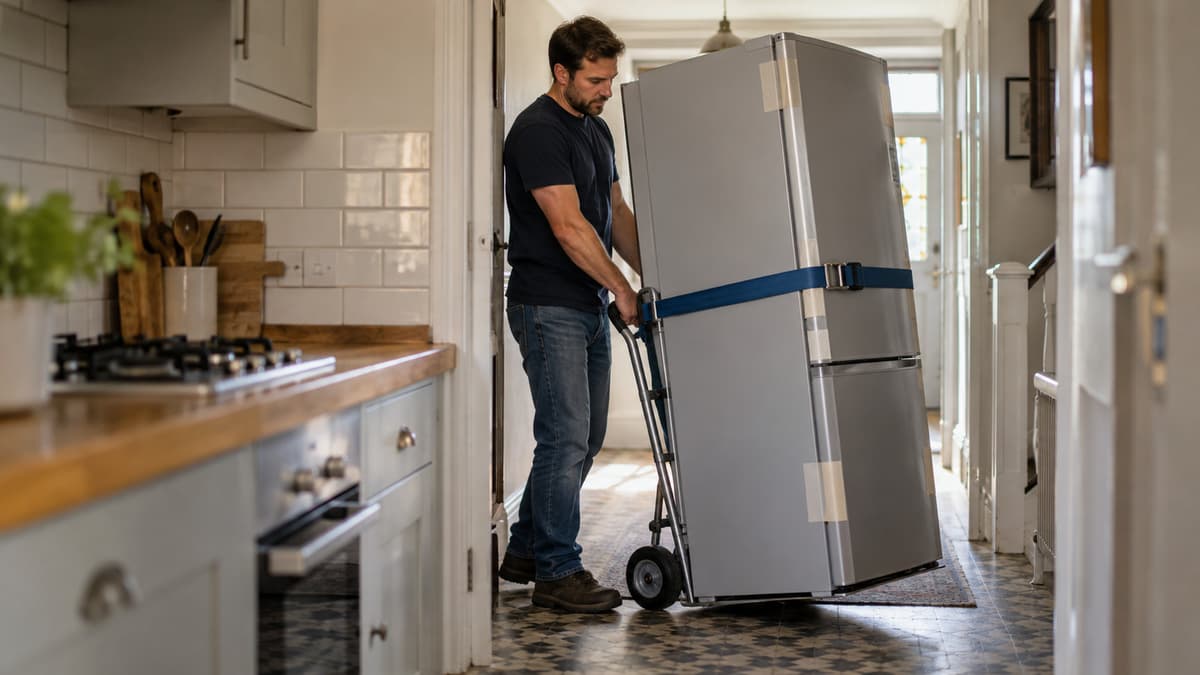
Moving a fridge on a hand truck
A narrow toe plate and no strap are how a fridge tips. What to check before you tilt an appliance.
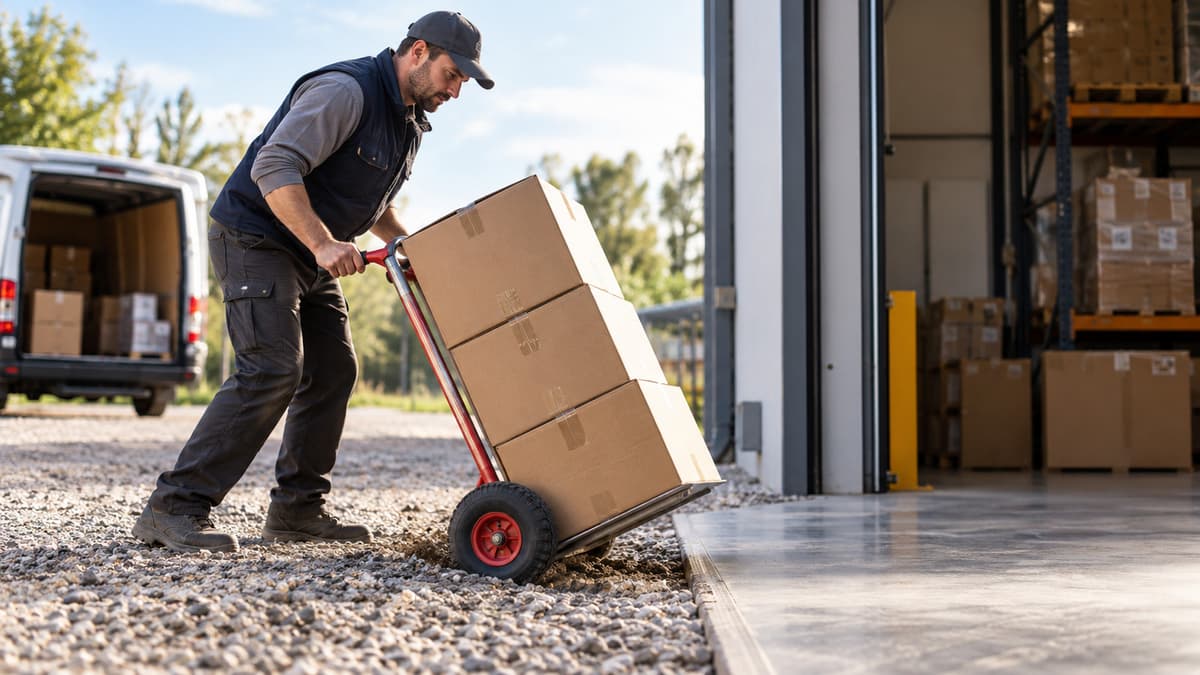
Solid rubber or pneumatic wheels
Solid tyres suit a warehouse floor. Pneumatic wheels help on a short rough patch, and they can puncture.

Manual handling rules for sack trucks
A printed kilogram figure is not a legal personal limit. The duty to assess the task still sits with you.