Sack truck inspection frequency: a rhythm you can keep
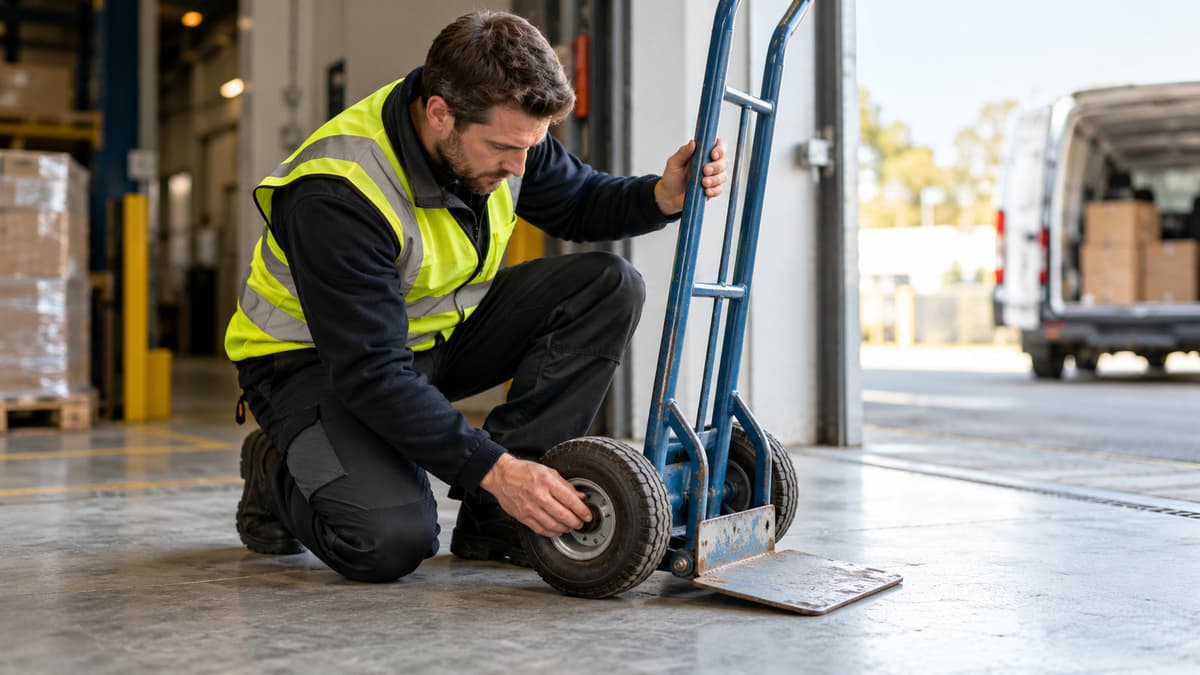
PUWER sets no single month for a workplace sack truck. Use a pre-use look on the days it works, and a short written check when use or weather is hard.
On this page

The hand truck lives by the warehouse door. Someone took it at seven, the toe plate was already scuffed, and the only record in the building is last year's forklift sticker. Sack truck inspection frequency is the rhythm you set from how the barrow is used and what happens if a wheel, plate, or handle lets go. PUWER expects the truck to be maintained. It does not print a universal calendar.
Peter F., editor for DIY & tools at productscompared.co.uk, wrote this in October 2026 from amazon.co.uk listing extracts, PUWER 1998, HSE guidance that the inspection gap follows use, environment, and risk, and INDG478 on pushing and pulling. BIL and Handle-it supply pre-use methods, not statutes. Prices and stars are those extract figures. These frames have not been lab-tested. A qualifying purchase through our amazon.co.uk links can earn a commission at no extra cost to you. This is not legal advice. The duty at work sits with the employer.
In short
There is no statutory month for a workplace sack truck. On every shift it is used, give it a pre-use look of a few minutes, and record a check when hard use, weather, or the risk of a failed part makes deterioration dangerous. A failed wheel, plate, or handle comes out of service the same hour.
There is no single statutory month
In Great Britain, PUWER 1998 requires work equipment to be kept in an efficient state, in efficient working order, and in good repair. It does not name a hand truck or a calendar day. Northern Ireland puts the parallel duty in the Provision and Use of Work Equipment Regulations (Northern Ireland) 1999. You can run one rhythm in both places. Name the instrument that applies on the site where the truck is used.
Inspect where deterioration is liable to cause danger, at suitable intervals and again after exceptional circumstances, and keep that record until the next inspection replaces it. HSE guidance, including L22, ties the gap to intensity, environment, and the risk if a part fails. A sack truck that can drop a load through a failed wheel, plate, or handle is a fair candidate for that duty. Where a maintenance log already exists, keep it up to date. One sheet is enough if the site has no log. An annual forklift sticker on a barrow that hits kerbs five days a week does not stand in for the look.
LOLER thorough examination belongs to lifting equipment: at least every six months where people are lifted, and at least every twelve months for much other lifting equipment. A sack truck you tip and roll stays under PUWER. A pallet truck with a hydraulic pump is a different inspection conversation.
A pre-use look on every shift it is used
Do sack trucks need a daily inspection? Look on the days the truck works, before the first load, with the frame empty and in the light. A few minutes is the scale BIL describes, aimed at the wheels, the toe plate, and the handles. Handle-it's sheet is a before-use form for the same parts, and neither note is a statute. A day spent in the rack needs no tick.
- Roll the empty truck about a metre and listen for a flat spot, a scrape, or a hub that grinds.
- Sight along the toe plate and stop for a bend, a twisted corner, or a crack where the plate meets the uprights.
- Check each wheel for a missing pin, a nut that has backed off, and a tyre that has lost its shape overnight.
- Confirm the handle locks, and fold a folding frame once so a hinge that will not hold shows itself before the boxes are on it.
How often to check trolley wheels is every time the truck is about to work, because a soft tyre or a missing pin can appear overnight. Fixings in detail are in Nuts, bolts, and wheels on a sack truck. A soft tyre stays in the bay until it holds pressure. On the aluminium sack truck comparison, the Move-It folding hand truck states 70 kg on two wheels and 120 kg on four, at £69.99 with 4.7 from 140 reviews and 7.15 kg empty. Check the mode you will use before the first load.
A recorded check when the truck works hard or lives outside
Write down the inspection you rely on when the truck lives outside, works most days, or could injure someone if a wheel, plate, or handle fails. Five fields are enough for a sack truck maintenance schedule: the date, which truck, who looked, pass or the fault, and whether it returned to use. Keep that sheet until the next recorded inspection replaces it.
A planning rule of thumb, not an HSE figure, sets the written gap. Most days outdoors or across kerbs means a written check once a week. Light indoor use on a smooth floor means once a month. An occasional move means a note on the day, plus another after a wet lay-up. The pre-use look still happens on days of use. A lay-up of a few months earns a written look before the next load, because tyres and pins perish in storage.
The person who looked signs the line. No regulation names a job title for an ordinary hand truck, so a supervisor who did not see the wheel can withdraw the truck and should not sign the inspection. A Friday sheet filled in for Monday's fleet is a false record.
Reassess the task when the route or the load changes
Reassess pushing and pulling with HSE INDG478 when the route or the load changes. A new slope, heavier goods, stairs, a different wheel, or a starter who has not been shown the tilt are task changes. An annual-test rumour is not one. The inspection sheet does not replace that assessment, and a fresh RAPP score does not free a seized axle.
HSE figures used with the Manual Handling Operations Regulations 1992 are about 20 kg for men and 15 kg for women to start or stop a load, and about 10 kg and 7 kg to keep it moving. Those are forces at the hands, not the kilogram line on the toe plate. A slope or a squared-off tyre raises them. The longer account is in Manual handling rules for sack trucks. If the push already feels past those guidelines, change the route, add a person, or change the aid.
Hours, rain, salt, kerbs, and loads near the printed rating shorten the written gap. BIL's suggestion to stay about 20 percent under that rating is the seller's rule of thumb, not a UK legal limit, and it is a fair reason to inspect sooner. A drop, a collision, or an overload is an exceptional circumstance, so record a look that day. EN 1757:2022 covers platform trucks with at least three wheels, so it is the wrong standard to file for a two-wheel barrow.
What to do with a failed check
Take a failed truck out of use the same hour, and tag it so the next shift cannot treat it as the spare. Write the fault even if the weekly or monthly line was not due. One more drop because the van is late puts a known fault on the customer's step.
A loose nut, the correct pin, or a tyre brought back to pressure can return the truck to work if the axle is straight and the wheel then runs true. Finish that before release. A hinge that locks again in both positions can go back. A hinge that collapses on an empty test stays out.
A bent toe plate, a crack, a handle that will not lock, or a bent axle retires the truck from loaded work. A tighter bungee leaves the damage in the load path. Those stops are in When to replace a sack truck. The next frame has to suit the load, the floor, and the person who tilts it. Show people the pre-use sequence and who to tell, so they can refuse a bad truck rather than finish a crack with a weekend weld.
Common questions
Is a daily sack truck check a legal requirement?
What should a pre-use check on a sack truck include?
How often should a supervisor record a hand truck inspection?
Does a little-used truck need the same rhythm as a multi-drop truck?
Do I need a maintenance log for every sack truck?
What changes how often you should inspect a sack truck?
Is a sack truck inspection the same as a forklift examination?
Who signs the sack truck check sheet?

Peter F. is the editor for DIY & tools at productscompared.co.uk. Comparisons in this category are checked against amazon.co.uk listings, review evidence and public UK sources.
Related articles

Manual handling rules for sack trucks
What workplace rules ask of a sack truck, and why a printed kilogram line is not a permission slip.

Nuts, bolts, and wheels on a sack truck
Pins, nuts, and tyres to check before a loose fixing bends the frame or lets a wheel walk off.

Pallet truck or sack truck
A sack truck fights a pallet. A pallet truck fights stairs and loose boxes. Match the tool to the load.