Independent comparisons. We may earn from shop links. More info

Lawn lute vs rake: when the back of a rake is enough

Updated: October 2026

You already own a garden rake, the lawn needs a light dressing, and a lute looks like a second tool for the same afternoon. Sometimes the back of the rake is the method the Royal Horticultural Society teaches, and the plate can wait. This page is only that choice. It does not rank listings or set a rate. Width, the stroke, and the mix sit on their own pages. The table is the [lawn squeegee comparison](/hub/lawn-and-garden-equipment/lawn-squeegee). Public UK methods were set beside a lute maker's claims. There was no side-by-side trial. A qualifying purchase through our links can earn a commission at no extra cost to you.

You already own a garden rake, the lawn needs a light dressing, and a lute looks like a second tool for the same afternoon.

Our top picks

DAKEPOLE DAKEPOLE 76 cm bullet

Best overall

DAKEPOLE DAKEPOLE 76 cm bullet
9.4/10about £21.99
TITECK TITECK 114 cm plate

Alternative

TITECK TITECK 114 cm plate
9.0/10about £69.99
On this page

What each tool does to the dressing

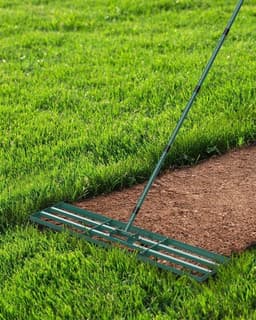
A garden rake has teeth. Face-down, those teeth pull material out of a low spot. On its back, the bar is a blunt spreader. The RHS autumn page says work dressing in with the back of a rake or a broom, at about 2–3 kg per square metre after aeration. Neither page says you must buy a lute. A lawn lute is a wide flat plate. You push it and you pull it, and there are no teeth to catch the crowns if you keep it flat. Allett say the frame rides high spots and leaves material in the hollows, while a rake can dig in. That is a maker's argument. It does not cancel the RHS method. A landscaping rake is still a row of tines. Teeth will groove a lawn if you press.

When the rake is enough

Use the back of the rake on a small lawn and a light dressing. A garden broken up by a path and a border is that case. The RHS rate of about 2–3 kg per square metre is a thin coat, not a resurfacing. Change direction, then broom, so a single pull does not leave ridges. The rake stops being enough when the teeth or the back edge gouge. You will see lines and dressing pulled out of the hollows. That happens sooner with a damp, clumpy mix. A tiny lawn you can cross in a few strides rarely justifies a dedicated plate.
DAKEPOLE DAKEPOLE 76 cm bullet

Testsieger

DAKEPOLE DAKEPOLE 76 cm bullet
9.4/10about £21.99

When a lute earns the purchase

Buy a plate when the area or the volume makes the rake gouge, and you want the material to stay in the hollows while you work both ways. An open lawn you dress in long passes is the usual moment. A flat sole is less likely to comb the sand back out. That is not a claim that a lute is always better. A wider head bridges a hollow and pulls a longer ribbon of sand. Allett's wider lute is 4 kg empty at 1,000 mm against 3 kg at 750 mm, both £155 on the maker's page, not in this amazon.co.uk set. Formby Gardener says not to default to the widest rake. The buying guide is where that width choice sits. Empty plates in the comparison, where a weight is printed, are about 5.6–8.2 kg before any sand. If the loaded plate hurts your back and the rake back did not, the lute has not earned its place.

Tools that are not either

A roller firms turf. It does not spread a heap. Rolling a freshly dressed lawn can smear the coat. A drag mat can work a thin coat into the sward. It is a poor choice for a heavy, damp heap, because it rides up and leaves the pile. A floor squeegee is the wrong category. The rubber blade is for water on tile. It will not carry dressing across grass. Use the back of your rake, then a broom, for a small lawn and a light dressing. Buy a lute when you are moving enough material, on open ground, that the rake gouges, and choose a width you can pull. If the hollow is deep, neither tool is the repair.

Common questions

Is a lawn lute better than a rake?
It is better when you need to push and pull a lot of dressing on an open lawn without teeth pulling sand out of the hollows. It is not better on a small lawn with a light coat, where the RHS method is the back of a rake or a broom. A lute you cannot turn beside a path is worse than the rake you already handle.
When does a rake gouge the lawn?
When you use the teeth, when you press a narrow head through a damp clump, or when you drag one deep pile instead of a scattered coat. You will see lines and hollows emptying again. A light dressing on short, dry grass, with the rake turned over, avoids most of that. Pressing harder is not the fix.
Is a landscaping rake the same as a lute?
No. A landscaping rake is a wide head of teeth for soil and gravel. A lute is a flat plate for a thin dressing on grass. Teeth will groove a lawn. If your landscaping rake has no flat back, it is the wrong tool for this job.
Do I need a lute for a tiny lawn?
Usually no. If you can cross the lawn in a few strides and the coat is light, the back of a rake and a broom match the published home method. A lute starts to earn the money when the ground is open and the rake is leaving ridges or gouges.
Will a lute fix a deep hollow a rake cannot?
No. Both tools only move what is on the surface. A hollow deep enough to bury the grass needs the RHS H-cut: lift the turf, adjust the soil underneath, and firm it back. A wider lute moves more sand per pass, which is the wrong direction if the sward is about to disappear.

Related pages

Sources

Public UK sources are listed below. Shelf prices and star lines are from the amazon.co.uk listings in this comparison. We did not lab-test edge shape, stiffness or how a plate spreads sand.

  1. RHS, Lawn care in autumn (retrieved 23 October 2026)
  2. RHS, Repairing lawns (retrieved 23 October 2026)
  3. Rolawn, Top dressing (retrieved 23 October 2026)
  4. BBC Gardeners' World, Top-dressing a lawn (retrieved 23 October 2026)
  5. GOV.UK, General Product Safety Regulations 2005: Great Britain (retrieved 23 October 2026)
  6. Business Companion, Selling and supplying goods (retrieved 23 October 2026)
  7. HSE, Manual handling in agriculture (retrieved 23 October 2026)
  8. UK Lawn Care Association, Advice for homeowners (retrieved 23 October 2026)