Independent comparisons. We may earn from shop links. More info

How to use a lawn levelling rake without burying the grass

Updated: October 2026

You have a plate and a heap of sand that will either settle into the hollows or sit in ridges until the next mow. The job is to work the dressing through the grass and stop while the tips still show. This page is the stroke. Rates, drought and the mix are on [how to top dress a lawn](/hub/lawn-and-garden-equipment/lawn-squeegee/sub/lawn-squeegee-top-dressing). Width and the rake-or-plate choice sit on their own pages. The listings are in the [lawn squeegee comparison](/hub/lawn-and-garden-equipment/lawn-squeegee). Public UK guides and the review notes in this set were used. The stroke was not trialled. A qualifying purchase through our links can earn a commission at no extra cost to you.

You have a plate and a heap of sand that will either settle into the hollows or sit in ridges until the next mow. The job is to work the dressing through the grass and stop while the tips still show.

Our top picks

DAKEPOLE DAKEPOLE 76 cm bullet

Best overall

DAKEPOLE DAKEPOLE 76 cm bullet
9.4/10about £21.99
TITECK TITECK 114 cm plate

Alternative

TITECK TITECK 114 cm plate
9.0/10about £69.99
On this page

Before the first pull

Mow first, and do not scalp the lawn. Seller bullets in this set prefer grass at about 4 cm. That is a technique line, not a by-law. Short grass lets the plate ride. Long grass hides the sand. Work on a dry surface. Rolawn says the lawn should be dry, the material free of clumps, and that you should wear gloves. Put the dressing in small heaps. Garden Ninja's UK guide uses piles about every 1.5–2 metres. Sight the frame before the first pull. A twisted base cuts a ridge on every pass. One review on the wide TITECK listing, not marked United Kingdom, says a three-part base did not sit straight. If bolts are missing, or a hole does not line up, fix the frame first. One UK review on a DAKEPOLE listing describes drilling a hole out. A bent rail is a return, not a technique.

How to move the dressing

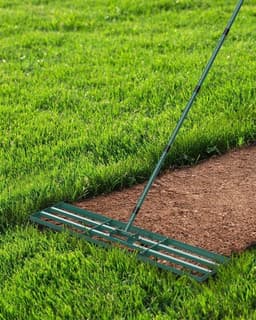
Hold the handle so you can stay fairly upright. Push the plate away to drive material forward, then draw it back to fill what the push left behind. A flat frame is meant to work both ways. A toothed rake used teeth-down will dig on the return. Take a short pass through one pile, then overlap the next by about a third of the head. A second pass, diagonal to the first, breaks the windrows a single bearing leaves. Do not add a third direction if the tips are already clear. If the edge digs, you are tipping the handle too high or the lip is sharp. One UK review on the about £22.99 DAKEPOLE listing says the rails are rounded and slide over the grass. That is one comment on one listing. Ease the angle so the plate slides. On a hollow, work from the surrounding turf into the dip. You stop when the grass disappears.
DAKEPOLE DAKEPOLE 76 cm bullet

Testsieger

DAKEPOLE DAKEPOLE 76 cm bullet
9.4/10about £21.99

When to stop

Stop when you can still see the grass tips. Rolawn's rule is the one to keep: the grass should stay visible. A brown skin with no green in it is too much. Broom the last film so it drops between the plants. Gardeners' World finishes with a stiff broom. The plate moves the bulk. The broom clears the crowns. Do not mow the dressing straight off. Gardeners' World says wait at least a week, and ideally two. Rolawn says not to mow immediately. Mowing the next morning lifts the sand into the box. If every pass leaves a ridge the width of the head, stop and sight the frame again.

When the plate is the wrong tool

A deep hollow, the sort you would have to bury to hide, is not a thicker pull. The Royal Horticultural Society describes an H-shaped cut: lift the turf, add or remove soil underneath, and firm it back. Standing water after rain, and patches that look like disease, are the same kind of stop. The plate does not drain a lawn and it does not treat a fungus. Stop as well if the loaded frame hurts your back. The Health and Safety Executive sets no single legal weight for pushing and pulling. Empty plates in this set, where a weight is printed, run from about 5.6 kg to about 8.2 kg, and the sand is the real load. If you cannot pull a straight pass, use a narrower tool or the back of a rake.

Common questions

How do I use a lawn levelling rake?
Mow to about the 4 cm the seller bullets mention, on a dry lawn. Put dressing in small piles, about every 1.5–2 metres if you follow Garden Ninja. Push the plate through a pile, draw it back, then take a second direction. Broom the crowns. Stop while the grass tips still show, and do not mow for at least a week.
How do I stop the plate digging in?
Lower the handle so the plate slides, and check the bottom edge is straight before you start. One UK review on the about £22.99 DAKEPOLE says rounded rails slide over the grass. That is one comment on one listing. A square lip will snag if you try to shave a high spot. The plate spreads a thin coat. It does not plane the turf.
When have I put too much dressing on?
When you cannot see grass tips. Rolawn's visible-grass line is the stop, even if mix is left in the barrow. A solid brown layer smothers the sward. Sweep the excess off the leaves, or take it away if it is sitting in a mat.
Can I mow the next day?
No. You will lift the dressing into the box and empty the hollows. Gardeners' World says wait at least a week, and ideally two. Rolawn says not to mow immediately. A light rain can settle a dry mix. It does not replace that wait.
When should I stop and lift the turf instead?
When filling the hollow would bury the grass. The RHS method is an H-shaped cut, soil adjusted underneath, and the turf firmed back. Also stop for water that sits after rain, for patches that look like disease, or if the loaded plate hurts your back. Those are not thicker coats.

Related pages

Sources

Public UK sources are listed below. Shelf prices and star lines are from the amazon.co.uk listings in this comparison. We did not lab-test edge shape, stiffness or how a plate spreads sand.

  1. RHS, Lawn care in autumn (retrieved 23 October 2026)
  2. RHS, Repairing lawns (retrieved 23 October 2026)
  3. Rolawn, Top dressing (retrieved 23 October 2026)
  4. BBC Gardeners' World, Top-dressing a lawn (retrieved 23 October 2026)
  5. GOV.UK, General Product Safety Regulations 2005: Great Britain (retrieved 23 October 2026)
  6. Business Companion, Selling and supplying goods (retrieved 23 October 2026)
  7. HSE, Manual handling in agriculture (retrieved 23 October 2026)
  8. UK Lawn Care Association, Advice for homeowners (retrieved 23 October 2026)