Independent comparisons. We may earn from shop links. More info

Carnivorous plant care: rainwater, light and a rest

Updated: 21 October 2026

The plant is on the draining board, and the jug of tap water is the usual next move. That routine kills these plants in a British kitchen. Carnivorous plant care starts from the opposite habit: mineral-free water, a mix with no feed in it, strong light, and a cool rest if the species is temperate. This page is the setup after you already own something, or you are about to unbox it. It does not rank the kits in the [carnivorous plants comparison](/hub/houseplants/carnivorous-plants). Peter F. followed RHS guidance, Gardeners' World and the Carnivorous Plant Society. A qualifying purchase can earn a commission at no extra cost to you.

The plant is on the draining board, and the jug of tap water is the usual next move. That routine kills these plants in a British kitchen.

Our top picks

Gift Republic Gift Republic GR200010

Best overall

Gift Republic Gift Republic GR200010
6.3/10about £12.99
Funtime Gifts Funtime Gifts tin

Alternative

Funtime Gifts Funtime Gifts tin
5.6/10about £6.99
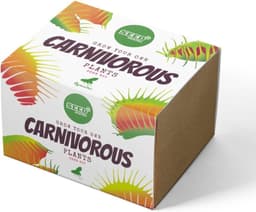
Seed Pantry Seed Pantry seed kit

Best value

Seed Pantry Seed Pantry seed kit
3.2/10about £15.00
On this page

Water that will not load the pot with minerals

Rainwater is the default. The RHS also allows distilled water, or boiled and cooled tap. If boiled tap becomes the habit, refresh the compost, because minerals build up. Leaving a jug overnight does not remove hardness. In much of southern and eastern England the damage shows as a crust, and as a plant that stops making dew or pitchers. In the growing season use a saucer of about 2.5 cm. Do not stand the pot in a deep bowl. In winter, water and tip the excess away: moist in summer, just moist in winter. A tin with no hole should not be the permanent pot. Do not use water-softener salt water.

Compost with no feed in it

Multipurpose compost is the wrong bag. It feeds bedding plants, and that feed burns roots from nutrient-poor bogs. The RHS says use a peat-free carnivorous compost or sustainably harvested sphagnum, not a general mix and not houseplant fertiliser at half strength. Half strength is still fertiliser. England announced a retail peat ban for 2024. It was not in force, so peat can still be on the shelf. Buy a mix labelled for carnivorous plants anyway. Only the Seed Pantry listing states peat-free compost. Do not assume the other two kits contain the same mix. The Carnivorous Plant Society says coir must be salt-free and rinsed, and that it is a poor long-term mix for flytraps and sundews unless you repot. If the medium arrives mouldy, which Gift Republic reviewers often report, do not sow into it. Repotting a healthy arrival into multipurpose is how it is dead by August.

Light and insects

Flytraps and Sarracenia want direct sun. A south-facing window is the indoor version. A north room is the wrong room. Cape sundews need light strong enough to keep the glue on the leaves. If a sundew stops being sticky, change the water and the light before you reach for food. Pitchers that stay pale and lid-closed are telling you the same thing. You do not have to feed them on a schedule. Do not poke traps for guests, drop in meat, or mist fertiliser over the leaves. The trap count and the winter die-back for Dionaea are on Venus flytrap care in the UK.

The winter rest

Black traps in winter can be dormancy. Mush, a sour smell and a warm wet pot are rot. Snip the dead growth. Do not bin the plant because it looks finished in January. Temperate species want a cool rest, around the unheated porch or glasshouse Gardeners' World puts near 7°C, not a radiator. Sources differ on the exact floor, so there is no single legal degree. The shared point is cool, bright enough, and only damp. Tropical pitchers do not take that chill. If nothing has sprouted, the choice between waiting and buying a plant is seeds or a plant.

Common questions

Can I use tap water if I leave it out overnight?
No. Standing water does not lose the minerals that harm these plants. The RHS default is rainwater or distilled water. Boiled and cooled tap is a second choice, and if you use it often you should refresh the compost because minerals build up. A hard-water area makes the damage faster.
How deep should the saucer be?
About 2.5 cm in the growing season is the RHS figure for carnivorous plants in active growth, so the mix stays boggy. In winter, water and discard the excess so the crown sits damp, not in a pool. A tin or cachepot with no hole should not be the permanent saucer.
Do I have to feed them flies?
No. A plant in a bright window will catch what it needs, and a flytrap can go more than three months without an insect. A few catches a year are enough. Meat, cheese and fertiliser are not substitutes. If you offer a live insect, it should be small enough for the trap to seal.
Why has the plant gone black in winter?
A temperate flytrap or Sarracenia often dies back in winter while the crown stays alive. That is dormancy if the pot is cool and only damp. Rot is a warm room, a sour wet mix and a mushy crown. Keep the winter plant. Do not restart it on a radiator to wake it up.
Can I use houseplant fertiliser at half strength?
No. Fertiliser is what these plants are adapted to avoid. Half strength still loads the pot with salts their roots do not want. If the leaves look hungry, fix light and rainwater first. Feed is the way a healthy plant is burnt, not the way it is rescued.
Is peat illegal to buy?
Not on the strength of the sources used here. The government announced a retail ban for 2024, and a 2026 ministerial letter said the legislation still needed parliamentary time. You should still prefer a peat-free carnivorous mix, because that is the RHS line, not because a shop sale is a criminal offence.

Related pages

Sources

Public UK sources named below. amazon.co.uk prices, stars and review counts on these three listings are the figures used for this comparison. Page updated 21 October 2026.

  1. RHS carnivorous plants growing guide (retrieved 21 October 2026)
  2. RHS carnivorous plants overview (retrieved 21 October 2026)
  3. RHS Venus flytrap (retrieved 21 October 2026)
  4. GOV.UK CITES imports and exports (retrieved 21 October 2026)
  5. Wildlife and Countryside Act 1981 (retrieved 21 October 2026)
  6. NNSS purple pitcher plant (retrieved 21 October 2026)
  7. Defra horticultural peat announcement (retrieved 21 October 2026)
  8. Consumer Rights Act 2015 (retrieved 21 October 2026)