Independent comparisons. We may earn from shop links. More info

Salt water softener vs electronic descaler

Updated: 17.10.2026

The practical answer to salt water softener vs electronic descaler is that only the salt unit softens water. Ion exchange removes calcium and magnesium and replaces them with sodium. Eddy or Water-King leaves the water chemically hard. Choose salt when the minerals must go and you can provide salt, a drain and suitable plumbing. Choose an electronic trial only if you accept unchanged hardness. Peter F. used amazon.co.uk extracts from 15 October 2026 and public UK sources. There was no laboratory test. Both types sit in the [water softening systems comparison](/hub/hot-water/water-softening-systems) because the listings often share one search. A qualifying purchase through our links can earn us a commission at no extra cost to you.

The practical answer to salt water softener vs electronic descaler is that only the salt unit softens water. Ion exchange removes calcium and magnesium and replaces them with sodium.

Our top picks

AquaHouse AquaHouse 9 litre

Best overall

AquaHouse AquaHouse 9 litre
7.1/10about £399.99
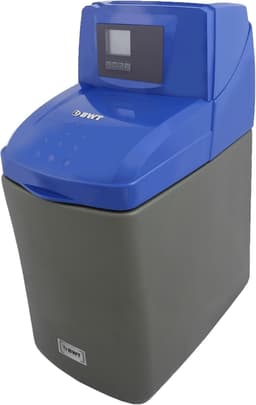
BWT BWT WS355

Rank 2

BWT BWT WS355
8.9/10about £599
Eddy Eddy ED6002P-UK

Alternative

Eddy Eddy ED6002P-UK
8.1/10about £139
On this page

What each type changes in the water

An ion-exchange softener passes hard water through resin. Calcium and magnesium attach, sodium takes their place, and salt brine regenerates the resin. AquaHouse, BWT and iSpring describe that treatment. The water is chemically softened. You still need a cold feed, a brine drain, an overflow, a bypass and salt. An electronic conditioner wraps coils around a pipe. Sellers say this changes how minerals crystallise. The Drinking Water Inspectorate, and Scottish drinking-water guidance, say physical conditioning does not change the composition, so it does not soften. A hardness test downstream should still find calcium and magnesium. Ion exchange raises sodium. An electronic device adds none, because it removes nothing. That is not equivalent softening.

What Eddy and Water-King actually claim

Eddy was listed at £139 with 4.1 from 452 ratings. Its material says hardness remains unchanged, and that treated minerals are less likely to adhere. Other fields mention carbon and ultraviolet treatment, although the product is a coil. Use the current manual, not every marketplace attribute. Water-King was listed at £270 with no star line. The title says “proven to soften”, yet the treatment is electronic, and the Inspectorate does not class an unchanged composition as softened water. A countertop field also conflicts with aerials on a pipe. Ask for the exact instructions. Advertising Standards Authority guidance says conditioners should not be presented as equivalent to softeners, and that scale-reduction claims need qualification because results vary. Treat the electronic unit as a reversible trial, not as salt-free ion exchange.
AquaHouse AquaHouse 9 litre

Testsieger

AquaHouse AquaHouse 9 litre
7.1/10about £399.99

What reviews can and cannot demonstrate

Eddy reviews include powderier deposits, easier cleaning, changes at kettles and showers, and no noticeable improvement. Those are single homes. They do not prove hardness was removed, and a comment that hair feels different is not a chemical analysis. If you trial one, define success first. Photograph the same kettle or shower screen, keep cleaning intervals comparable, and record the supplier’s hardness result. Judge whether deposits are easier to manage, and expect the hardness test to stay hard. Unchanged hardness is not a failure if the seller promised conditioning rather than removal. The Inspectorate suggests sale-or-return, because a home may not match the flow behind some treatment ideas. Eddy advertises a 12-month money-back route. That is a seller claim. Check the current terms and keep the written conditions.

Choose by outcome, plumbing and uncertainty

Choose a salt softener when you want measurably softened water and you can support the cabinet, the salt, a compliant brine drain and overflow, an untreated drinking outlet, and regular refilling. The trade-off is cost, disruption and sodium. A supplied drain hose is not the whole job, which is why the sequence sits on the how to install a water softener page. Choose an electronic conditioner when plumbing rules out a salt unit and you will accept chemically hard water. A lower price can make a home trial rational only where coils and power are allowed. Do not choose it if an appliance requirement calls for softened water. If you are unsure, start with the supplier’s hardness figure. The order of those checks is the water softener buying guide. Buy ion exchange when the ions must go. Buy Eddy or Water-King only if you accept that hardness remains.

Common questions

Does Eddy soften water?
No. Eddy is an electronic conditioner, and its own listing says hardness remains unchanged. It may claim to affect how minerals form deposits, but calcium and magnesium stay in the water. Treat any easier cleaning, or a change in scale texture, as a home-trial outcome, not as evidence that the supply has become soft.
Why does Water-King say it is proven to soften?
Marketplace wording can use soften broadly. UK official guidance defines softening by a change in composition. An electronic coil that leaves calcium and magnesium in the water is not equivalent to ion exchange. Ask for evidence tied to the exact claim and model, and do not rely on the title alone.
If my kettle improves, is the water soft?
Not necessarily. Deposits may look different, or come off more easily, while a hardness test still finds the same minerals. A cleaner kettle can support a limited conditioning claim in your home. It does not prove chemical softening. Test hardness separately if removal is the result you need.
Which type adds sodium?
Ion-exchange salt softeners add sodium as they replace calcium and magnesium. That is why an untreated kitchen drinking tap is normally kept, and why artificially softened water should not be used for infant formula. Electronic conditioners do not add sodium, because they do not exchange or remove the hardness ions.
Which type needs salt and a drain?
A salt-based ion-exchange unit needs regeneration salt, a brine drain with an air gap, and a separate visible overflow. Eddy and Water-King do not regenerate resin, so they need neither salt nor brine drainage. They need coils fitted as instructed, and power for the controller.
How can I compare the result at home?
Record the starting hardness and photograph one repeatable scale location. Keep water use and cleaning intervals as similar as you can, then judge the amount of deposit and how easily it comes off after the seller’s stated trial period. Keep hardness removal and easier cleaning as separate outcomes, and keep proof of purchase for any refund claim.

Related pages

Sources

Public UK sources from the digest of 16 October 2026, and amazon.co.uk extracts dated 15 October 2026.

  1. Drinking Water Inspectorate: domestic water filters and softeners (retrieved 16 October 2026)
  2. Drinking Water Inspectorate: water hardness (retrieved 16 October 2026)
  3. Drinking Water Inspectorate: hardness map (retrieved 16 October 2026)
  4. Drinking Water Inspectorate: drinking water standards (retrieved 16 October 2026)
  5. NHS: making up baby formula (retrieved 16 October 2026)
  6. DWQR Scotland: water conditioning (retrieved 16 October 2026)
  7. WRAS approvals directory, section 2450 (retrieved 16 October 2026)
  8. Which?: how to buy the best water softener (retrieved 16 October 2026)