Whitefly on tomatoes: sticky leaves in the greenhouse

Sticky leaves and a white cloud under glass usually mean whitefly on tomatoes. What the RHS and Gardeners' World suggest, and why no spray dose is.
On this page

You are watering under glass, you brush a leaf, and a small white cloud lifts off the underside. The leaf feels tacky where you held it. That cloud is the usual first meeting with whitefly on tomatoes, and it is easy to mistake for dust or for a larger green bug that happens to be in the house. The plant is still standing. The fruit may still be swelling. The useful job is to name what the insect does, to stay with what two UK guides actually suggest, and to stop before a dose this page never read.
A qualifying purchase from a product link can earn us a commission, at no extra cost to you. Packet notes below come from amazon.co.uk listings in the tomato seeds comparison. Nobody here ran a glasshouse trial, and no pesticide label was opened.
In short
Glasshouse whitefly is a sap feeder under cover. It leaves a sticky excretion, and Gardeners' World says it may transfer disease. French marigolds and basil are tips, Encarsia is the biological control that guide names, and this article does not give a spray dose.
What greenhouse whitefly does
The insect you disturbed is the adult. It was sitting out of sight, which is why the upper surface can look clean while the underside is busy. Gardeners' World describes whitefly under cover as sap-sucking, and it says the insect may transfer disease. The RHS grow-guide problem list names glasshouse whitefly in the same role: a sap feeder that excretes a sticky substance, honeydew. The problem label used here does not become a cleaning manual for fruit, and it does not become a mould guide.
Sap feeding takes the plant's own juice. A few adults on a large vine are a nuisance you can watch from one watering to the next. A leaf that stays tacky, with a thicker cloud each time you pass, is a heavier load on the same plant. The sources do not print a count per leaf at which the crop is finished. Gardeners' World does not say the insect always kills the tomato. It says the feeding matters, and that passing on disease is possible. One cloud on one afternoon is not a diagnosis.
The mistake at this stage is to inspect only the upper surface, decide the plant is clean, and meet a tacky truss a fortnight later. Check the underside when you water. In a warm greenhouse that visit can be most days, and morning is a practical time because you are already at the bench and the adults fly when the leaf moves. The dedicated RHS whitefly profile is not a source for this article, so the days from egg to adult are not stated. What you can see, the cloud and the sticky film, is the evidence these sources support.
What the guides actually suggest
Gardeners' World names Encarsia as the biological control for whitefly under cover. Encarsia is a tiny parasitic wasp, used because it attacks whitefly on the leaf, not because it is a liquid you mix in a watering can. Suppliers publish their own release rates on the product they sell. Those rates are absent from the Gardeners' World page used here, so this article will not invent a number of cards per square metre, a temperature window, or a repeat interval. If you order Encarsia, follow that supplier's sheet. A broad insecticide in the same week is a common way to waste a living control. This page still will not name the insecticide.
The RHS grow guide asks you to open the vents so pollinators can reach the flowers. That is a pollination step, and it sits beside a second limit from Gardeners' World. An open house is also a route for blight when the weather is wet and warm. Venting remains how a greenhouse tomato sets fruit if you are not tapping the trusses yourself. It is also how spores and adult insects move. Shutting every vent for a month is not, on these pages, a whitefly cure, and it can spoil the set. The greenhouse or outdoor tomato guide is where that choice of house versus bed is set out. It does not add a pesticide rate.
If the crop is already in the border, you are maintaining plants you have. The tomato seeds comparison records what the packets state about habit and position. It does not rank varieties by whitefly resistance, and no such trial is in the sources here. Just Seed Sungold F1 is the top pick in that set, at £3.65 with 4.5 from 111 amazon.co.uk reviews, because the title states F1 and 10 seeds. That is a seed decision, not a claim that this orange cherry escapes glasshouse whitefly.
Basil and marigolds, as tips
Gardeners' World says French marigolds, Tagetes, are thought to deter whitefly. "Thought to" is the strength of the sentence. The page does not report a count of insects before and after, and it does not tell you how many marigolds to set per tomato. A few Tagetes in the pots, or along the path between the rows, is the tip gardeners repeat. The whitefly claim stops at the tip.
Basil is a thinner source. Bullets on Meldon listings for Ailsa Craig and Moneymaker place basil among the tomatoes and say the scent deters whitefly. That is a seller's line on a packet, not a trial with a result you can quote. Grow the basil if you want the leaves for the kitchen. Expecting one pot to clear a sticky greenhouse asks more of those bullets than they hold. The same boundary covers any other scented herb you might tuck under the trusses.
Marigolds and basil do not stand in for looking, and they do not stand in for Encarsia if you have chosen the biological route Gardeners' World names. A companion plant is an extra, started early enough to be in flower, not a rescue planted the afternoon you first see the cloud. Where you have room for one extra pot, a marigold matches the guide that mentions a deterrent. Basil matches a seed listing, which is a weaker footing.
What this article will not dose
You can buy products labelled for crops under glass. No pesticide label was opened, so there is no product name, no dilution, and no harvest interval here. A homemade soap mix is the same kind of recipe, and it is left out on purpose. If you spray, the label in your hand is the instruction, including whether that product may be used on tomato and how long you wait before you pick.
Green shield bugs are the other mix-up on the same Gardeners' World tomato page. They are described as harmless. They are larger than whitefly, the back is shield-shaped, and they do not rise as a white cloud when you brush the foliage. Killing them because the tomatoes feel sticky treats the wrong animal. Leave them. The pest you are tracking is the small white adult on the underside and the tacky film it leaves. If you are unsure which is which, disturb one leaf over a sheet of paper. Whitefly lift and settle again. A shield bug does not perform that cloud.
A mesh sheet is a different purchase. The vegetable protection net comparison is a sibling page for growers covering a bed. It is not evidence that a net replaces the vents, and it is not evidence that a net clears whitefly already living on greenhouse tomatoes. Adults inside the house are not stopped by a product you have not fitted over that crop. This article does not claim a hole size that excludes them. Use the net page when the job is a covered outdoor row. Use the checks above when the job is whitefly on plants already under glass.
Sticky leaves are a reason to act. They are not an order to pull every plant that evening. Keep fruit that is clean and ripening, and treat a worsening coat of honeydew as the point where a labelled product or Encarsia belongs in the plan. The sources do not give a score at which the vine is finished. The dose stays on the label you choose to read.
Common questions
What is the white cloud when I brush the plant?
Do marigolds stop whitefly?
Does basil work against whitefly?
What is Encarsia?
Are green shield bugs the same as whitefly?
Will whitefly kill the tomato crop?
Can I spray whitefly, and with what?
Does a protection net replace the vents?

Products Compared publishes British-English buying guides based on amazon.co.uk listings and public UK sources. We do not run a lab and we do not invent test scores.
Related articles

Hardening off tomato plants
A couple of weeks outside, the RHS 16°C line, and the packets that say 12°C.
Tomato blight after a wet July
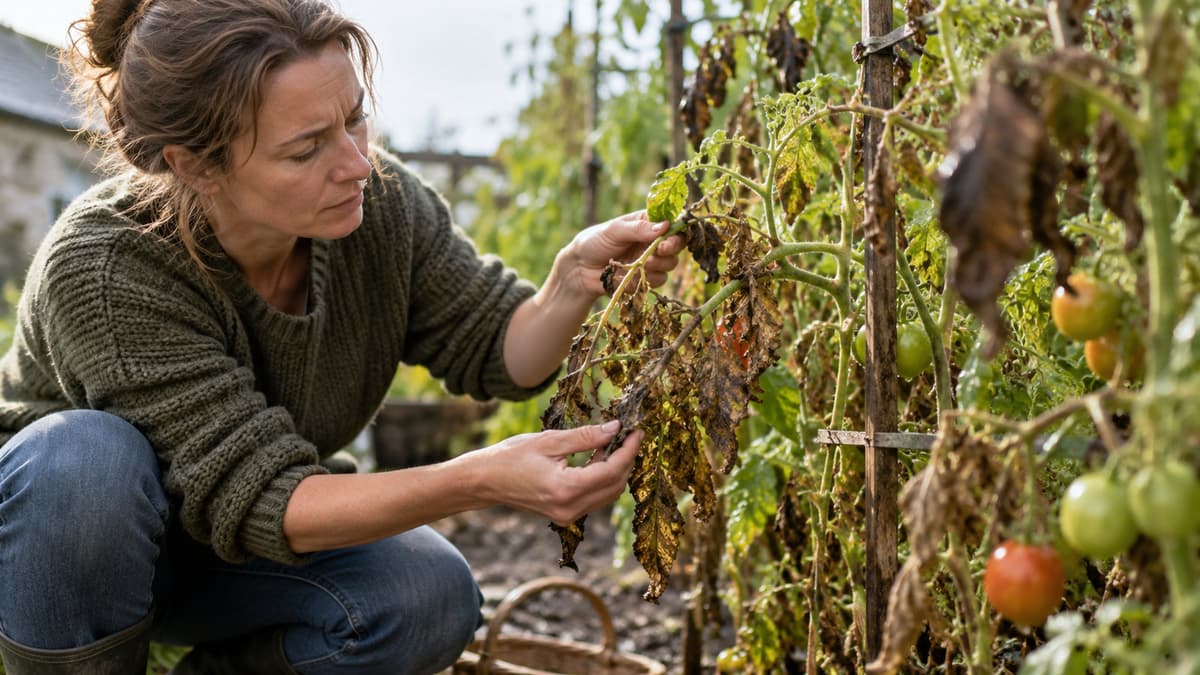
Brown collapsed leaves after warm wet weather, and why open vents cut both ways.

Blossom end rot on tomatoes
A black patch at the flower end is tied to uneven water, not a poor packet.