Save tomato seed: the F1 limit, and the rights page

Saved seed from an F1 tomato will not come true next year. What Sungold, heirloom wording and UK plant breeders' rights do and do not let you claim at home.
On this page

You want to save tomato seed from fruit you liked. Next year's packet is a small cost, and saving your own feels like the obvious economy. For an F1 variety the economy fails in a particular way. Gardeners' World says you can save seed, and that F1 varieties will not come true. That is the horticultural limit this page will stand on.
The legal limit is narrower than a yes or a no. GOV.UK's plant breeders' rights guidance says producing or reproducing a protected variety needs authority. No home-garden exemption was found on that page. This article is not legal advice, and it will not tell you that saving seed at home is always allowed or always forbidden. It also will not give you a fermentation recipe. The sources used here do not provide one.
In short
Save tomato seed only if you can accept what the next generation will be. F1 varieties will not come true. In this amazon.co.uk set, only Just Seed Sungold F1 is titled as an F1. Open-pollinated seed can still be blurred by cross-pollination, which is a rule of thumb, not a line on the GOV.UK rights page. Heirloom does not mean organic. Selling saved seed is a different question from sowing it yourself.
The horticultural limit that is certain
Gardeners' World puts the seed-saving point in a single sentence: you can save seed, and F1 varieties will not come true. An F1 is the first generation of a cross. The plants you buy are that generation. The seed inside the fruit is the generation after, and it does not reliably repeat the parent you liked. You may still get tomatoes. You should not label the envelope with the variety name and expect the same plant.
If the packet said F1, buy fresh seed next year to grow that variety again. If it did not, you are in a less certain place. Open-pollinated plants are what gardeners mean by seed that can come true, and they can still cross when one tomato flowers beside another. That is a rule of thumb, not a line on the GOV.UK plant breeders' rights page, and this article will not invent an isolation distance. Save from a healthy plant that matched the fruit you wanted. Late blight can already be in the fruit, so a blighted row is a reason to buy a fresh packet. The tomato seeds comparison is the set this hub looked at on amazon.co.uk. A qualifying purchase through that comparison can earn us a commission, at no extra cost to you.
F1 is not a genetically modified label. Schedule 3 of the seed marketing regulations says genetically modified seed must be stated where that applies. The letters F1 name a hybrid generation, not that statement. Look for a GM line if that is what you are checking, and do not treat the absence of F1 as a full description of the breeding.
Sungold F1 in this set
Only one packet in the eleven is titled F1: Just Seed Sungold F1. It is the top pick because of how the listing scored, not because saved seed will replace it. The seed you scoop out is the next generation, so if you want this orange cherry again you buy the packet again. The Royal Horticultural Society lists Sungold as an Award of Garden Merit cordon. That is a variety note, not a germination test of this amazon.co.uk packet, and the listing does not state the habit. A height attribute is neither a cordon instruction nor a bush instruction. Keep the pinch decision off the question of whether the seed inside the fruit is Sungold. It is not.
The F1 or open-pollinated guide sets the buying choice out at packet level. Use it while you still have the empty packet. If you only have the fruit, look up the name before you dry anything. Sungold with F1 in the title is the clear case in this set. A name with no F1 and no other breeding note is the unclear case.
What heirloom means on a listing
Heirloom is not a legal class, and it is not a synonym for organic. On the JustSeed listings and on Black Krim, organic wording appears and stays unverified. We did not check a certificate. A title that says organic, or a bullet that quotes a registration number, is the seller's text until someone checks the register. Do not save seed because it said organic and tell yourself the next generation inherits a standard you never confirmed.
Ailsa Craig's 1925 date is printed on the Meldon listing. That tells you Meldon states 1925. It does not tell you whether plant breeders' rights apply, whether the seed in your fruit will match the packet, or whether the crop was organic. Meldon also states an indeterminate habit, which matters when you train the plant and does not answer the saving question. An old name can still be an F1 in somebody's catalogue. In this set the F1 title is on Sungold, not on a date.
Black Krim is a named beefsteak with an organic line we did not verify. Silence on habit is not a seed-saving method. If you want the same beefsteak next year, buy a fresh packet whose breeding you understand, and use the buying guide to see what the listing states. Write on the envelope the variety you started with, the year, and saved, and note if it stood beside other tomatoes. Two open-pollinated varieties in one small greenhouse can flower together. The fruit looks like the plant you picked. The seed may not. The sources do not give a metre gap, so this page will not invent one.
What the rights page does not say
GOV.UK's plant breeders' rights guidance is about protected varieties. Producing or reproducing a protected variety needs the rights holder's authority. Farm-saved seed is a separate route with its own conditions. It is not a sentence that private gardens may always save tomatoes, and it is not a synonym for seed from the allotment. No home-garden exemption was found on that page. That absence is not a ruling that your kitchen is illegal, and it is not a ruling that your kitchen is in the clear. Do not quote farm-saved seed, or this article, as a home-garden licence.
This article does not look up Ailsa Craig, Sungold, Moneymaker, Black Krim or any other name on the rights register. A 1925 date is not that search. An F1 title is not that search. If the variety is protected, read the GOV.UK page and get advice before you treat a blog as permission. If it is old and unprotected, the rights page may not be the rule that binds you. Which of those is true is a register question this comparison did not measure.
Selling is a different act from keeping seed for your own sowing. The article on GB rules and standards covers Schedule 3: the required phrase, the species, the variety, the year and the supplier. That piece is about what a marketed packet must show. It is not a licence to trade. Plant breeders' rights sit on top if the variety is protected.
What this article will not teach
There is no soak time here, no number of days on a plate, and no germination test for saved seed. A step-by-step ferment is a real technique in other books. This research did not open a seed-saving method page, so this article will not invent the clock. If you already know a method from a source you trust, use that source for the jars and the drying. Use this page for the decision that comes first: F1 or not, and what you will not claim about the law.
Sungold F1 from this set goes back to a bought packet next spring if you want Sungold. An open-pollinated fruit from a healthy plant, grown apart from other varieties as far as your garden allows, is the only candidate worth a label, and you write saved rather than a guarantee. A blighted fruit is not a candidate. Unverified heirloom or organic wording is not a status you can pass on. Prices in the comparison were in GBP on amazon.co.uk when that pass was made, and prices move. F1 will not come true, and the rights page does not hand you a home-garden exemption in the text we used.
Common questions
Will saved Sungold seed grow Sungold?
What is an F1 tomato?
Are F1 tomato seeds genetically modified?
Is it legal to save tomato seed in the UK?
Will open-pollinated seed always come true?
Does heirloom mean organic?
Can I sell the tomato seed I save?

Products Compared publishes British-English buying guides based on amazon.co.uk listings and public UK sources. We do not run a lab and we do not invent test scores.
Related articles

GB rules and standards seed packet: what it covers
Schedule 3 requires the phrase, the species, the variety, the year and the supplier.
Tomato blight: spotting the collapse after a wet July
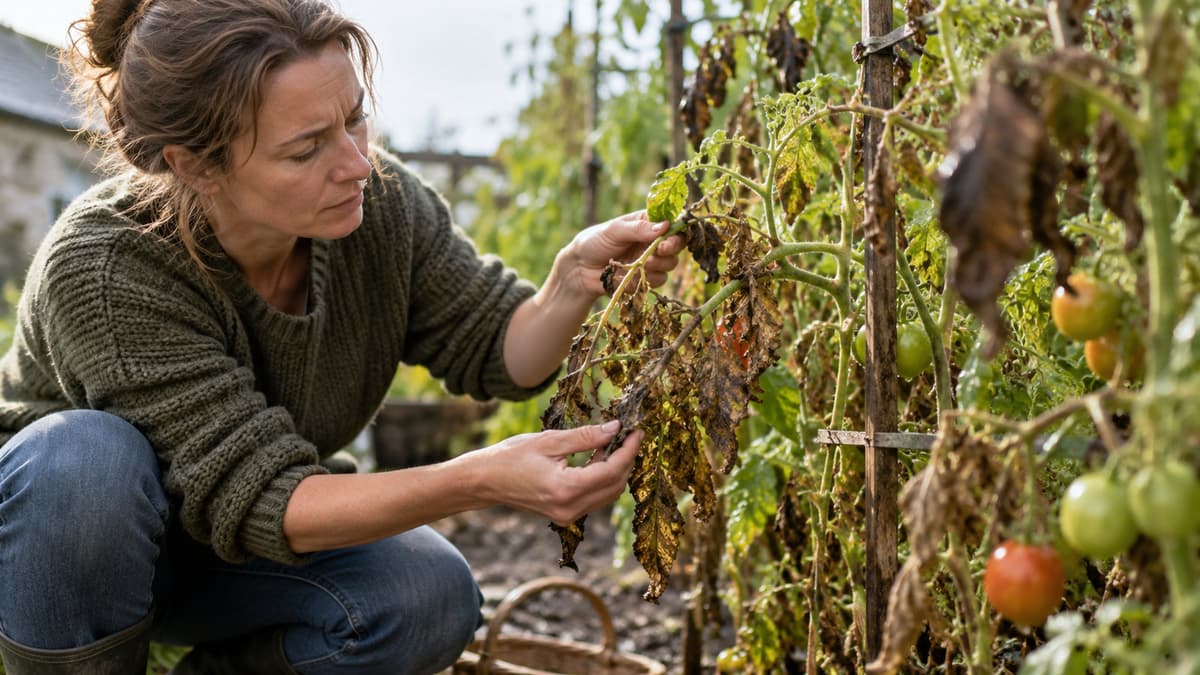
Brown collapsed leaves after a wet July are late blight. Do not save seed from a sick plant as a shortcut.

Pinch out tomato side shoots: read the habit first
Read the habit before you pinch. Sungold's listing does not state cordon or bush.