Independent comparisons. We may earn from shop links. More info

How to fit a privacy screen on timber or chain-link

Updated: October 2026

The roll is on the patio, the fence is already there, and the black clips in the box will not grip the arris rail. This is how to fit a privacy screen made of HDPE mesh or an artificial ivy roll, on timber, chain-link or a railing, without treating a loose sheet as finished. By the end you should know where to tie, when to throw the supplied clip away, and when to stop because the posts lean or the cloth would stand above the legal height. Product ranking stays on the [privacy screen comparison](/hub/hedges-and-privacy-screens/privacy-screen). Peter F., 20 October 2026. The spacing below is UK supplier practice, not a British Standard. A qualifying purchase can earn a commission at no extra cost to you.

The roll is on the patio, the fence is already there, and the black clips in the box will not grip the arris rail.

Our top picks

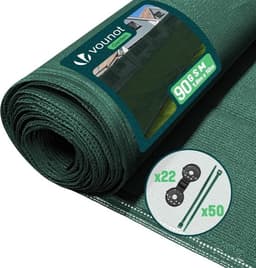
VOUNOT VOUNOT green net 1.8 x 10 m

Best overall

VOUNOT VOUNOT green net 1.8 x 10 m
9.0/10about £15.19
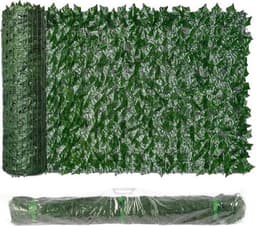
Vinclus Vinclus ivy 1200 leaves

Alternative

Vinclus Vinclus ivy 1200 leaves
9.0/10about £21.99
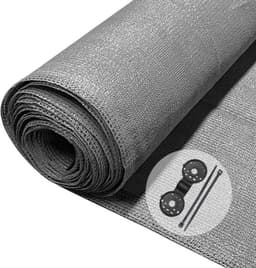
VOUNOT VOUNOT grey net 1 x 10 m

Preis-Tipp

VOUNOT VOUNOT grey net 1 x 10 m
8.8/10about £12.99
On this page

Check the fence before you open the pack

A privacy screen does not stiffen a rotten panel. If a post rocks, or a gravel board is soft, fix that before you hang 10 m of cloth. UK Garden Supplies and Primrose both start from a firm fence. A sheet tied to a moving post becomes a sail. Lay the cloth out against the fence you measured. The green VOUNOT net is 1.8 x 10 m and arrives folded, according to reviews. The grey VOUNOT and FunkyBuys nets are 1 x 10 m. The Amazon Basics sheet is about 0.91 x 3.05 m, so a long run needs more than one pack. Some buyers of the denser Vinclus ivy describe 2.5 m rather than the 3 m title. Cut only after you have offered the piece up. A 1.8 m net on a lower rail can project above the panel, which is a height question, not a style one. Count the fixings before you start a ten-metre run. VOUNOT states 50 cable ties and 22 clips. Amazon Basics includes 20 zip ties of 300 mm. FunkyBuys does not state a count, and reviews say the clips fail. If you are short, buy more UV-resistant ties before you are halfway along the panel with one hand on the cloth. Which net or ivy roll to have bought is on best privacy screen.

Timber panels

On a closeboard or lap panel, ignore the railing clip if it will not close on the arris rail. VOUNOT reviews say the clips suit a railing and fail on timber. Use cable ties through the hem, or galvanised staples, into timber that is still sound. Do not staple a long slash through the face of the cloth. Primrose and UK Garden Supplies suggest a fixing about every 100 mm along the horizontal edges and about every 500 mm down the verticals. Treat that as their rule of thumb, not as a standard we tested on these ASINs. On a 1.8 m panel that means a top run, a bottom run, and a line around the middle. A sheet tied only at the corners will drum. Keep the top line level, and tension the cloth so it is snug without pulling the hem into a pucker. For an ivy roll, fix the plastic grid, not the leaves. Cut with scissors and staple or tie through the backing into the rail. One Vinclus review says leaves pull off the grid. Another says they stayed put. Do not staple through a leaf. If the strip looks sparse once it is flat, overlap a second short piece rather than stretching the grid until it shows.

When you should stop

Stop if the posts lean or you are about to build a new fence rather than dress an old one. A fencer is the right call when the structure is the problem. Stop as well if the finished top would exceed the usual height limit. In England, a means of enclosure over 2 metres, or over 1 metre next to a highway used by vehicles, is not permitted development. Wales uses the same pattern. Scotland and Northern Ireland differ, and a listed building is outside the householder allowance. A 1.8 m net added above a low panel needs a check before the first tie. Leave the sheet off the ground on chain-link by about 10 cm, as Wire Fence suggests, so it does not sit in a puddle. On timber, a small clearance stops the hem wicking, unless you are specifically trying to close a gap under a gravel board and the cloth is not dragging. Do not use this mesh as a pool barrier or a stair gate. It is a visual screen. Folding room dividers are not fitted to a fence, and they are not covered here. If you are still choosing between cloth and leaves, that argument is privacy netting or artificial ivy. The job-first check is the privacy screen buying guide.

Common questions

Where do I start on a closeboard panel?
Start at one end, with the top edge level, and fix the hem to the arris rails and the posts. Use ties or staples about every 100 mm along the top and bottom, and about every 500 mm vertically, as a supplier rule of thumb rather than a British Standard. Keep some tension so the sheet does not drum. A corner-only fixing is what flaps off in the first strong wind.
What if the black clips will not grip the arris rail?
Leave them in the box. VOUNOT reviews say the clips suit a railing and fail on a wooden fence. Use the cable ties through the hem, or staples into sound timber. One grey-net review found the supplied ties too short, so have longer UV-resistant ties ready before you start a ten-metre run.
How do I fix mesh to chain-link?
Tie through the fence mesh at short intervals along the top and bottom, and keep the sheet about 10 cm off the ground so it does not drag in the soil. Railing clips are the wrong fitting for wire. If a bay of chain-link already sags, sort the fence before you add a screen that will pull it further.
How do I fix an ivy roll to timber without stapling the leaves?
Cut the roll to length and fix the plastic grid with staples or ties into the rail or the panel frame. The leaves are the cover, not the structure. One review says leaves pull off, and another says they stayed on, so do not staple through a leaf to make sure. Overlap a second strip if the first looks sparse once it is flat.
Should the sheet touch the ground?
On chain-link, leave about 10 cm clear, which is the clearance Wire Fence describes, so the hem stays out of mud and out of the mower. On a timber panel, a small gap stops the cloth wicking water. Close a gap under the gravel board only if the hem is not left dragging on the soil.
When does adding height above the panel need permission?
When the finished enclosure would go over 2 metres, or over 1 metre beside a highway used by vehicles, the usual English permitted-development allowance does not cover it. Wales is the same pattern. Scotland and Northern Ireland are separate, and listed buildings are excluded. Check with the council before you tie a tall net above an existing panel.

Related pages

Sources

Public UK sources named below. amazon.co.uk prices, stars and review counts are from the ten listings in this comparison. Page updated October 2026.

  1. England, Class A means of enclosure (retrieved 21 October 2026)
  2. Planning Portal, fences, gates and walls (retrieved 21 October 2026)
  3. GOV.WALES, fences, gates and garden walls (retrieved 21 October 2026)
  4. Scotland, Circular 1/2024, Class 3E (retrieved 21 October 2026)
  5. Anti-social Behaviour Act 2003, section 66 (retrieved 21 October 2026)
  6. GOV.UK, high hedges: complaining to the council (retrieved 21 October 2026)
  7. Premier Netting, shade netting for privacy (retrieved 21 October 2026)
  8. Consumer Rights Act 2015 (retrieved 21 October 2026)