Independent comparisons. We may earn from shop links. More info

Midge proof fly screen: fine is not the weave count

Updated: October 2026

Dusk on the west coast, or beside a still pond, and a white net that stopped the houseflies is already letting the small ones through. A midge proof fly screen is a weave question before it is a brand question. If the listing does not state a midge mesh, you should not treat a fine sheet as one. This page is from Peter F. on 20 October 2026. It uses supplier pages that print thread counts, and the amazon.co.uk listings in this comparison, which mostly do not. We did not count threads under a lens and we did not run a midge test. A qualifying purchase can earn a commission at no extra cost to you. The shopping table is the [insect screen comparison](/hub/hedges-and-privacy-screens/insect-screen).

Dusk on the west coast, or beside a still pond, and a white net that stopped the houseflies is already letting the small ones through. A midge proof fly screen is a weave question before it is a brand question.

Our top picks

On this page

Why ordinary fly mesh disappoints

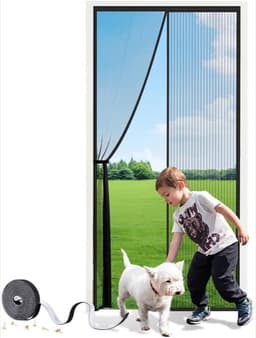
Midges are smaller than the flies a kitchen sheet is bought to stop. A hole that looks tight from the sofa can still be a door to something with a wingspan around a millimetre and a half. The Scottish Shutter Company, writing about their own insect screens, states a Highland midge wingspan of 1.4 mm and contrasts that with ordinary mesh. You do not need to live in a bothy for the same disappointment. Still water, marshes, and the coast produce the same tiny biters, and a suburban garden next to a pond can do it on a still evening. A sheet that reviewers praise for wasps can still fail you there. The word fine does not close that gap. Polyester, acrylic, and high density are material moods, not hole sizes. In this comparison the popular window sheets, including both tesa Insect Stop sizes, do not print threads per inch. YANGTE's bullets ask whether the net keeps midges out and never answer with a count. One reviewer of that four-pack said really tiny flies still got in. A 4.2 from thousands of reviews means a lot of people stopped ordinary insects. It does not mean the mesh was measured against a midge. Pet mesh is a different problem again. Simple Screens separate a tougher pet weave from both fly mesh and midge mesh. A curtain a dog can push through is solving a walk-through. It is not solving a 1.4 mm insect. If your issue is a cat pushing a frame, that is strength and fixing, discussed on how to fit a fly screen, not a finer hole.

What 20 by 20 means in supplier pages

Shops that sell midge mesh say what they mean, and they do not all use the same sentence. Simple Screens and Premier Environment both treat about 18 by 16 threads per inch as standard fly mesh, with better airflow for houseflies, and 20 by 20 or tighter as the midge grade. Premier's midge-mesh page describes 20/20 as about 56 percent open and about 15 g/m², and sells that cloth by the metre. On 19 October 2026 that page showed £22 plus VAT, which is £26.40 including VAT, before any frame. The Scottish Shutter Company describes 20-20 mesh with holes they state at about 0.6 to 0.8 mm, against their stated 1.4 mm wingspan, and they say airflow on their comparison is about 40 percent lower than standard mesh. That 40 percent is their comparison, not a figure we measured on an amazon sheet. Those pages are selling their own goods. Magnetic Flyscreen lists a 20 by 20 midge window screen in a DIY frame at about £79 to £119. That price band is the clue. A white net at about £4 or about £7 on amazon.co.uk is not quietly the same specification because the title says mosquito. If you need the weave, you are shopping a stated 20 by 20, or tighter, from someone who prints it. Airflow is the trade-off those suppliers admit. A tighter weave moves less air, which matters in a small bedroom on a hot night and under Approved Document F if someone is tempted to block the only vent and call the mesh the ventilation. The mesh is not a trickle vent. For pollen rather than midges, Premier also points at a further mesh grade. That grade is not in this amazon set, so a hay-fever claim would be invented if we attached it to any of these ASINs.

What these listings actually state

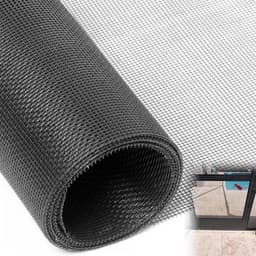
Two rows print a number. Neither is labelled midge mesh. Yeasing, B0CZ9734J6, is black fibreglass, 1.2 by 2.5 m, about £7.85, 4.5 from 22 reviews. The bullets say a mesh diameter under 1.5 mm. There is no tape and no frame. Under 1.5 mm is not the same claim as 0.6 to 0.8 mm holes, and it is not a 20 by 20 thread count. A 1.5 mm opening sits next to the 1.4 mm wingspan those shutter fitters quote, so it is the wrong side of comfortably smaller if you take both supplier figures at face value. One buyer reported a chemical smell. Another expected metal. You can staple this roll to timber, as a reviewer did, and you still have not bought a stated midge weave. Amig ME01, B0DYF7PRWZ, states grey fibreglass at 17 by 15 and 100 g/m², in a white aluminium frame, 100 by 70 cm, extendable to 190 cm, at about £36.39 with 4.1 from 538 reviews. Seventeen by fifteen is coarser than the 18 by 16 fly grade on those supplier pages, let alone 20 by 20. It is useful because it is a real number, and it tells you this is not the Highland mesh. The frame also needs a roller-shutter slot. Buying it because it is the expensive screen does not buy a finer hole. Everyone else is silent. The tesa 110 by 130 cm sheet, the one with 4.2 from 11,242 reviews, says polyester. The 100 by 100 cm tesa says acrylic. SMALUCK's door curtain says polyester and does not state a weave. MOEGFY does not name a fibre. Solkraes is a 3 by 10 m polyester piece described as fine or dense, with 14 reviews. BKSAI claims fibreglass and does not state an aperture, and one Velux reviewer said very small insects still passed. Silence is the result.

What to do if you live with midges

Ask for 20 by 20, or a stated hole around the 0.6 to 0.8 mm range those specialists print, before you pay. If the page will not say, leave it. In this comparison that means leaving the best-supported window sheet and the best-supported door curtain, even though both are sensible for wasps and houseflies. Which of those is which, for ordinary insects, is on best fly screen UK. For midges, a trade mesh at £26.40 a metre including VAT, or a framed 20 by 20 screen nearer £79 to £119, is the honest price band from the supplier pages checked here. You still measure the frame, and you still do not cover a required vent. If you are only fighting houseflies in a Midlands suburb, you do not need that tighter weave, and the airflow penalty is a cost without a benefit. If you are in the Highlands, the islands, on the coast, or next to still water, a standard sheet is the wrong product even when the stars are excellent. Fit is still necessary. A 20 by 20 screen with a gap at the handle admits midges through the gap, which no thread count can fix. The insects you can name are the ones to shop for. A listing that will not name the hole has already answered you.

Common questions

Will any fine white net stop midges?
Not on the strength of the word fine. White MOEGFY and YANGTE sheets in this set do not state a weave. A YANGTE reviewer said really tiny flies still got through, and the listing's own midge question is unanswered. A net can be fine enough for wasps and useless for midges. Look for 20 by 20 or a stated small hole, not for the colour.
What weave should I look for?
Supplier pages aimed at UK midges point to 20 by 20 threads per inch, or tighter. They treat about 18 by 16 as ordinary fly mesh. The Scottish Shutter Company states holes of about 0.6 to 0.8 mm on their 20-20 mesh, against a stated 1.4 mm Highland midge wingspan. Those are their figures. If a listing prints neither a thread count nor a hole size, you do not have this specification.
Which products in this comparison state a number?
Yeasing states an aperture under 1.5 mm and does not state 20 by 20. Amig states 17 by 15, which is a fly-mesh neighbourhood and not the midge grade. The other nine listings do not print a weave. The largest review counts sit on those silent pages, so popularity is not a substitute for the number.
Is under 1.5 mm the same as 20 by 20?
No. Under 1.5 mm is a single aperture ceiling on the Yeasing bullets. The specialist pages cite holes nearer 0.6 to 0.8 mm for 20 by 20 mesh. A ceiling of 1.5 mm can be about the same size as the wingspan they quote, which is not a comfortable margin. Do not merge the two claims into one product.
Do I lose airflow?
Suppliers say yes. The Scottish Shutter Company states about 40 percent less airflow on their midge mesh versus standard mesh. That is their comparison, not a test of these amazon listings. Premier still recommends 18 by 16 when the job is houseflies and airflow. In a small room, a tighter screen plus a covered trickle vent is a ventilation problem, not a comfort upgrade.
Are midges only a Scottish problem?
No. Highland and island evenings are the famous case, and the same insects bother coasts, marshes, and still water elsewhere in the UK. A loch, a canal, or a garden pond is enough. If your insects are wasps in a city kitchen, ordinary fly mesh is the right brief. If they are the tiny biters at dusk, it is not.

Related pages

Sources

Public UK sources named below. amazon.co.uk prices, stars and review counts are from the 11 listings in this comparison. Page updated October 2026.

  1. legislation.gov.uk, Regulation (EC) No 852/2004 Annex II (retrieved October 2026)
  2. Food Standards Agency, setting up your food business premises (retrieved October 2026)
  3. Approved Document F, 2026 (retrieved October 2026)
  4. Consumer Rights Act 2015 (retrieved October 2026)
  5. Simple Screens, measuring and mesh (retrieved October 2026)
  6. Premier Environment, fly screens for UK homes (retrieved October 2026)
  7. The Scottish Shutter Company, insect screens (retrieved October 2026)
  8. amazon.co.uk, tesa Insect Stop 110 × 130 cm (retrieved October 2026)