Independent comparisons. We may earn from shop links. More info

Russian vine climber: shed cover, not Japanese knotweed

Updated: October 2026

You want the shed cover you have seen under a white-flowered tangle, or you worry the plant is Japanese knotweed by another name. A Russian vine climber can do that job on your own land and can also fill a gutter and a shared fence. It is not knotweed, and it is not banned from sale. The about £13.99 Carbeth listing is one row in the [hardy climber comparison](/hub/hedges-and-privacy-screens/hardy-climber). It was checked in October 2026 against the Wildlife and Countryside Act 1981, the RHS and the non-native species portal. We did not grow it. A qualifying purchase can earn a commission at no extra cost to you.

You want the shed cover you have seen under a white-flowered tangle, or you worry the plant is Japanese knotweed by another name.

Our top picks

On this page

Russian vine is not Japanese knotweed

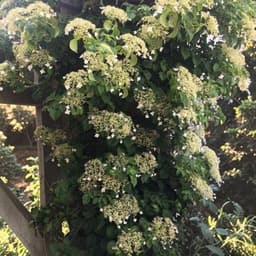
The plant on this listing is Fallopia baldschuanica, sold as Russian vine, sometimes called mile-a-minute. Japanese knotweed is Fallopia japonica. Schedule 9 of the Wildlife and Countryside Act 1981 lists Fallopia japonica. It does not list Fallopia baldschuanica. Virginia creeper, Parthenocissus quinquefolia, is on that schedule and is not in this basket. The mix-up is understandable and still wrong. Knotweed is a thicket of hollow canes that spreads from rhizomes and is the subject of GOV.UK guidance on preventing spread. Russian vine is a twining climber with creamy-white flower panicles, deciduous, and the problem is top growth that smothers, not a Schedule 9 listing. Owning knotweed in a garden is not the same legal point as planting a Schedule 9 species in the wild, and neither point makes this vine an offence to buy. The statute text does not say that it is banned. It remains on the RHS nuisance list, and the NNSS portal records it as a non-native that smothers other plants and starts neighbour disputes. Legal to plant in your garden is not the same as wise to plant on a boundary.

What the about £13.99 listing actually is

Carbeth’s Russian vine is one plant in a 9 cm pot at about £13.99, with 3.8 from 256 amazon.co.uk reviews, the largest review file in this comparison. The bullets call it a deciduous climber for full sun or partial shade, for fences, trellis, pergolas and walls, with creamy-white flowers from late summer into autumn. The height attribute says 12 m. The RHS range is about 8–12 m and H7, so the seller’s figure matches a mature size, and a normal British winter is inside the hardiness rating. BBC Gardeners' World describes something around 10 m of growth in a plant that is not knotweed. What arrives is not 12 m. Reviewers repeatedly say the plant is tiny, a starter rather than a screen. One reviewer says it becomes invasive and needs support. A special-features line on the same page says dishwasher safe, flame resistant and non-marking sole, which is catalogue junk, not care advice. Ignore it. A 9 cm deciduous plant gives you a cane to tie and water. The speed people remember is the established vine, which is also the speed that reaches a gutter. The figures we use are the RHS ultimate size and the BBC’s around 10 m.

Where it belongs, and where it does not

It belongs on a large structure on land you control, where you can reach the growth and you accept a hard prune every winter. A big shed in the middle of your own plot, with no neighbour’s roof in the line of growth, is the case this comparison allows. Sun or partial shade both appear on the listing and in the BBC guide. You still put up a strong support first, because it twines rather than clinging with pads. It does not belong on a shared fence. The growth does not stop at the arris rail, and the NNSS record of disputes is the practical warning. It does not belong where it can enter a gutter, lift a tile, or run into a tree you meant to keep. BBC Gardeners' World says avoid a shared boundary and avoid roofs. A winter screen is the wrong hope as well: it is deciduous, so the shed wall shows again after leaf fall. The high-hedge route in England and Wales, under the Anti-social Behaviour Act 2003, is for a line of two or more mostly evergreen shrubs over 2 m. One deciduous climber sits outside that definition. That does not make the neighbour happy if your vine is in their gutters. A cool north wall wants the climbing hydrangea, which is the subject of the north-facing wall page.

Cutting it back

Prune hard in late winter or early spring, which is the BBC timing, while you can see the framework and before the nesting season. Take it back to a strong framework on the support you meant it to use, and cut out stems heading for the roof. A light tidy in summer only encourages the tangle. The RHS plant notes also point at a hard late-winter prune and a strong support. Planting distance, if you do go ahead, is the same 30–60 cm off a wall covered on how to plant a hardy climber. Do not dump the prunings in the wild, on a verge, or over the back fence into scrub. The vine is not Schedule 9, and loose stems that root where they touch the ground still spread it. Bag them for council garden waste if your council takes woody prunings, or let them dry and burn only where your local rules allow. We are not recommending a stump killer. Call a professional when the growth is in a roof or a gutter you cannot reach safely, or when you are no longer sure the plant is Russian vine rather than knotweed. A dead 9 cm delivery is a seller issue under the Consumer Rights Act 2015. A small live plant is often what this listing sold.

Common questions

Is Russian vine the same as Japanese knotweed?
No. Russian vine is Fallopia baldschuanica, a deciduous twiner with creamy-white flower panicles. Japanese knotweed is Fallopia japonica, a cane-forming plant. They share a genus and a reputation, which is why photos get mislabelled. The GOV.UK knotweed guidance is about japonica, not this climber.
Is it illegal to buy or plant in a UK garden?
Schedule 9 lists Japanese knotweed and Virginia creeper, not Fallopia baldschuanica. Sellers, including this about £13.99 amazon.co.uk listing, can offer it. Planting it in your garden is not the offence people import from knotweed articles. It is still a nuisance if it smothers a boundary, which is why the RHS and the NNSS portal warn you off.
Will the 9 cm Carbeth plant cover a shed, and how fast?
It can cover a large shed once it is established, which is why people buy it, and the seller’s 12 m line matches the RHS mature range of about 8–12 m. The plant in the box is a 9 cm starter, and reviews often say it arrives very small. Do not expect a hidden shed in the first season. The later speed is the reason it also reaches gutters.
Can I put it on a shared fence?
No. BBC Gardeners' World says avoid a shared boundary, and the NNSS portal links the plant to neighbour disputes. The vine twines and keeps growing past the fence you paid for. Use it on a structure in the middle of land you control, or pick a different climber from the comparison.
Will it give winter privacy?
No. The listing calls it deciduous, and the leaves fall. You see the shed or the fence again in winter. A mostly evergreen hedge line is what the high-hedge rules are about, and one deciduous climber is outside that definition. Winter cover means a different plant.
How do I prune it without making it worse?
Cut it hard in late winter or early spring, back to the framework on the support, and remove stems heading for the roof. A gentle summer trim leaves the bulk in place. Use a support that can carry the weight. If you cannot reach the growth safely, that is the point to hire someone rather than to prune from a ladder into a gutter.
What do I do with the prunings?
Do not dump them in the wild or over a fence into rough ground. Stems can root where they lie. Use your council’s garden-waste route if it accepts woody material. The plant is not on Schedule 9, and careless disposal still spreads it. Knotweed waste rules are for Fallopia japonica, which is a different disposal problem.

Related pages

Sources

Public UK sources named below. amazon.co.uk prices, stars and review counts are from the ten listings in this comparison. Page updated 21 October 2026.

  1. RHS, Fallopia baldschuanica (retrieved 21 October 2026)
  2. NNSS, Russian vine (retrieved 21 October 2026)
  3. Wildlife and Countryside Act 1981, Schedule 9 (retrieved 21 October 2026)
  4. GOV.UK, high hedges, trees and boundaries (retrieved 21 October 2026)
  5. RHS climbing hydrangea growing guide (retrieved 21 October 2026)
  6. RHS jasmine growing guide (retrieved 21 October 2026)
  7. RHS outdoor grapes (retrieved 21 October 2026)
  8. RHS, how to plant a climber (retrieved 21 October 2026)