Independent comparisons. We may earn from shop links. More info

Hardy climber for a north-facing wall, not a grape

Updated: October 2026

A north wall stays cool, and most flowering climbers from a sunny-border article will sulk there. The hardy climber for a north-facing wall in this amazon.co.uk set is the climbing hydrangea, not the grape and not a rose whose page only says partial sun. The [hardy climber comparison](/hub/hedges-and-privacy-screens/hardy-climber) lists ten deciduous plants. This page stays with north, and with the east walls that get the same RHS advice. The Carbeth listing was matched to the RHS climbing-hydrangea guide in October 2026. We did not grow the plants. A qualifying purchase can earn a commission at no extra cost to you.

A north wall stays cool, and most flowering climbers from a sunny-border article will sulk there.

Our top picks

On this page

Why the climbing hydrangea is the north-wall plant here

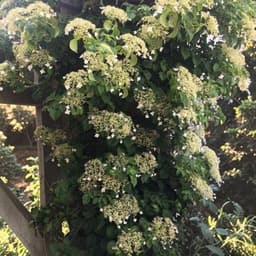
The listing that names the job is Carbeth’s pack of two Hydrangea petiolaris in 9 cm pots, about £17.99, with 4.2 from 77 reviews. The bullets say it thrives in shade and partial shade and on difficult north-facing walls, and they call it a vigorous self-clinger for brick, fences and arches. Flowers are a creamy-white lacecap in summer. The plant is deciduous. Full sun is asked on the page and is not claimed, which is the right way round for this wall. The RHS growing guide points climbing hydrangea at north or east walls, describes a slow start and then strong growth, and the plant profile puts it higher than 12 m with a spread of about 4–8 m, hardiness H5, in a sheltered spot. One plant can cover a house wall after it gets going. BBC Gardeners' World adds the wait you should budget: several years to establish and flower. Reviews describe healthy plants that are still small, including a buyer in north-east Scotland, and little cover in year one. Two 9 cm pots are a start on a long wall, not a curtain. Evergreen climbing hydrangeas such as Hydrangea seemannii are a different plant and are not this ASIN. Ivy is not in this basket. The decision order for sun as well as shade is the buying guide.

It clings later, so tie it while it is young

Self-clinging does not mean you lean the pot against the brick and walk away. Aerial roots form as the plant establishes. Until then the RHS says support it, and BBC Gardeners' World suggests short canes across the gap. Soft twine, checked each summer, is enough. The planting distance is on how to plant a hardy climber: about 45 cm off a solid wall in the RHS training notes, inside a 30–60 cm range, because the base of a wall is a rain shadow even on the north side. A sound wall is the surface BBC Gardeners' World has in mind when it says aerial roots should not damage the masonry. A crumbling wall, a loose render, or a lightweight fence panel is a different surface. The mature plant is heavy. A panel that already rocks in a gale is the wrong host, however well the 9 cm plant behaves in year one. Gloves are worth wearing when you tie and prune. The RHS lists climbing hydrangea as a skin allergen. Prune after flowering if you need to keep windows clear, which is the BBC timing. The leaves will fall whatever you do with the secateurs.

Honeysuckle and roses on the same wall

The other flowering plants in the basket are the ones people try when they want scent or colour on the same dark fence. Treat them as substitutes only where the wall is not in deep shade all day. Lonicera Red World is about £17.99, with evening scent claimed and 4.4 from 19 reviews, and the listing has no sunlight attribute at all. The RHS climbing-honeysuckle guide says dappled shade is the better spot and that too much shade means few flowers. The common honeysuckle profile does list a north-facing aspect for that species, at about 4–8 m and H6. We do not claim Red World is Lonicera periclymenum. The name on the box is Lonicera Red World, and the pack size conflicts: the title says two pots, the count says one. On a fully north fence that never gets sun, do not buy it for a flower display. On an east fence with morning light, it is a maybe, and you still need wires because it twines. The Blue Magic roses print partial sun and nothing stronger. Partial sun is not a north-wall recommendation from their own attributes. The Carbeth 3 litre rose says full sun or partial shade, with a colour conflict on the page, and it still has to be tied. If your wall never sees the sun, skip the roses in this set.

What you will not get

You will not get a green wall in January. The hydrangea is deciduous. So are the other plants here where a leaf habit is stated. Winter privacy is a different category. You will not get a shade grape by trusting the Easy Plants listing. That black grape at about £14.99 has a sunlight attribute that says shade, in a 14 cm pot, 80–85 cm including the pot, with 3.9 from 12 reviews. The RHS wants outdoor grapes on a south or south-west wall. A taller plant on delivery does not make it the north-wall climber. Russian vine is listed for full sun or partial shade and will grow in a gloomy corner more readily than a grape, and it is still the wrong plant if the fence is shared or a gutter is above it. Call a professional when the growth meets a gutter or a roof you cannot reach, or when fixing wires means drilling a wall you may not own. A flimsy fence that cannot carry a mature hydrangea is a carpenter’s problem before it is a planting problem. A 9 cm hydrangea against a sound north wall, tied for the first years and watered in the dry strip, is the honest version of this job.

Common questions

What can I plant on a north-facing wall from this set?
Start with the Carbeth climbing hydrangea, two 9 cm plants at about £17.99. The listing and the RHS both name north or east walls. Honeysuckle has no light line on its page and may flower poorly in deep shade. The roses here say partial sun. The grape’s shade attribute is not RHS grape advice.
Will the climbing hydrangea cover the wall in the first year?
Do not plan on it. The plants arrive in 9 cm pots, reviews describe small healthy plants, and BBC Gardeners' World allows several years before a climbing hydrangea is established and flowering. The RHS ultimate size, higher than 12 m, is a mature plant, not the first summer.
Does it need a trellis if it is self-clinging?
It needs a tie or short canes until aerial roots attach, even though the listing calls it self-clinging. After that it can grip a sound wall without a permanent trellis. A weak fence may still need a stronger support because the mature plant is heavy. Keep the ties soft so they do not cut the stem.
Will honeysuckle flower on a fully north-facing fence?
The RHS says too much shade means few flowers on climbing honeysuckle, and dappled shade is the better bet. This Red World listing does not state a light level, so we cannot claim it will perform on a dark fence. An east wall with some morning sun is a fairer test, and you still provide wires.
Can I put a climbing rose on a north wall?
Not from these listings. The Blue Magic roses say partial sun. The Carbeth 3 litre rose says full sun or partial shade and must be tied, with a colour wording that conflicts. Shade-tolerant named roses exist in nursery catalogues and are not the plants compared here. If the wall is truly north, use the hydrangea.
Will I still see the fence in winter?
Yes. The climbing hydrangea drops its leaves, and the other plants in this set are not sold as evergreen screens. You are choosing summer flowers on a cool wall, then bare stems. An evergreen climber is a different search.

Related pages

Sources

Public UK sources named below. amazon.co.uk prices, stars and review counts are from the ten listings in this comparison. Page updated 21 October 2026.

  1. RHS, Fallopia baldschuanica (retrieved 21 October 2026)
  2. NNSS, Russian vine (retrieved 21 October 2026)
  3. Wildlife and Countryside Act 1981, Schedule 9 (retrieved 21 October 2026)
  4. GOV.UK, high hedges, trees and boundaries (retrieved 21 October 2026)
  5. RHS climbing hydrangea growing guide (retrieved 21 October 2026)
  6. RHS jasmine growing guide (retrieved 21 October 2026)
  7. RHS outdoor grapes (retrieved 21 October 2026)
  8. RHS, how to plant a climber (retrieved 21 October 2026)