Independent comparisons. We may earn from shop links. More info

How to plant a hardy climber clear of the rain shadow

Updated: October 2026

The plant is on the doorstep in a 9 cm pot, a 2 litre or 3 litre rose pot, or a bare-root wrap, and the usual mistake is to tuck it into the dry crack where the wall meets the paving. This is how to plant a hardy climber so rain can reach the roots and the stems have something to hold. Species choice sits on the [hardy climber comparison](/hub/hedges-and-privacy-screens/hardy-climber). The steps follow RHS and BBC Gardeners' World notes, plus what these amazon.co.uk listings say about pot size and planting months, checked in October 2026. We did not plant these ASINs. A qualifying purchase can earn a commission at no extra cost to you.

The plant is on the doorstep in a 9 cm pot, a 2 litre or 3 litre rose pot, or a bare-root wrap, and the usual mistake is to tuck it into the dry crack where the wall meets the paving.

Our top picks

On this page

Put the support up, then dig away from the wall

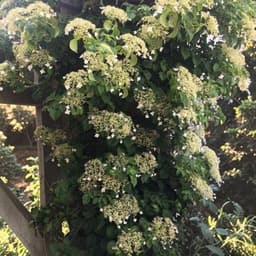
Put the wires, trellis or arch in place before you dig. The RHS wants that order for most climbers, with wires about 5 cm off a wall and about 30–45 cm apart, and the stems fanned rather than left as one vertical whip. A self-clinging hydrangea is the exception later, not on day one. If you are drilling into a wall, only do it on a wall you own. A party wall or a fence you share is a conversation before it is a rawlplug. Dig the hole 30–60 cm out from the base of a wall, which is the RHS span. BBC Gardeners' World uses 30–45 cm and names the reason: the rain shadow. Brick and fence panels shed water, so the soil in the crack stays dry even when the lawn is wet. About 45 cm from a solid wall is the RHS training figure if you want one number inside that range. You still do not plant in the gap under the gravel board. Move the hole out, and lean the stems back to the support with a cane. Whether that support should be wires, a trellis or a fence the hydrangea can grip later is the hardy climber buying guide.

Pot-grown climbers, including a tiny 9 cm plant

Set a pot-grown climber at the same depth it was in the pot. Soak it first if the compost is dry or the rootball has shrunk from the sides, which is common with mail-order 9 cm pots. Reviews on the Russian vine, the jasmine and the hydrangea often describe a very small plant. That size is often what the listing sold. It is not, by itself, a reason to bury the stem deeper in the hope it will look bigger. The Carbeth jasmine, Russian vine and honeysuckle, and the two hydrangeas, are 9 cm starters. The Blue Magic roses in 2 litre pots are listed at 35–45 cm on arrival. The Carbeth climbing rose is a 3 litre pot, pruned back between September and April, with no arrival height given. The grape is the tallest on the day: 80–85 cm including a 14 cm pot. None of those heights is a covered fence. Water the planting hole, backfill, and firm without compacting the soil into a brick. Container roses can go in whenever the soil is workable, which is the RHS line, including summer if you water. Do not expect a 9 cm hydrangea to cling and flower in the same season. Gloves matter with that plant, because the RHS lists it as a skin allergen. Which of these plants belongs on a cool wall is on the north-facing wall page, not in the planting hole.

Bare-root Blossomtime

Blossomtime is the odd one in the basket. It is about £21.65, shipped bare root with soil wrapped around the roots, arriving at 35–45 cm, with a mature height on that listing of 90–120 cm. Bare-root roses want the dormant window. The RHS says roughly November to March, and not into frozen or waterlogged ground. The Blue Magic planting line, including this bare-root rose, says January to May and September to November. That runs later than the dormant window. If the plant arrives in April or May and the roots are still bare, get it in promptly while the soil is moist, and do not wait for a diagram to match both calendars. If the ground is frozen, heel it into a temporary trench of moist soil rather than leaving the roots in a heated porch. We do not state a graft depth. These listings do not settle it, and BBC Gardeners' World and other rose pages do not agree. Four reviews sit on this ASIN, and one says a plant arrived poorly and has not thrived. Open the wrap on the day. If the roots are black, brittle and dry, that is a seller conversation, not a deeper hole.

Tie in, then water

Use soft twine or a flexible tie in a loose figure of eight, so the stem can thicken. Wire, cable ties and string pulled tight are how canes get cut by July. Fan the stems across the wires instead of tying one shoot straight up, which is the RHS training note. A young hydrangea gets the same soft ties until it holds itself. A rose never gets to skip them. Then water the dry strip, not only the lawn beyond it. Through the first summer, check the soil at the rootball after a spell of dry weather. A wall can leave that patch dry when the rest of the bed looks fine. A 9 cm plant has almost no reserve. Limp leaves on arrival may be thirst. Stand the pot in water, then plant. A dead plant, as opposed to a small one, is a problem with the seller under the Consumer Rights Act 2015. Photograph it before you compost it. Stop and call a professional when growth is already in a gutter or a roof you cannot reach safely, when the wires would go into a wall you may not own, or when you suspect Japanese knotweed rather than the climber you ordered. Do not spray a weedkiller into the bed as a shortcut.

Common questions

How far from the wall or fence should I plant?
Plant 30–60 cm out from the base, which is the RHS range for climbers, so you are not in the dry rain shadow. About 45 cm suits a solid wall. BBC Gardeners' World uses 30–45 cm for the same reason. Lean the stems back to the trellis with a cane rather than planting in the crack.
Do I put the wires up before the plant goes in?
Yes. The RHS wants the support in place first for most climbers. Wires about 5 cm off the wall, spaced roughly 30–45 cm, give you something to fan the stems onto. A hydrangea still needs a tie or a short cane until it clings. Do not fix wires to a wall you may not own.
How do I tie it without cutting the stem?
Use soft garden twine in a loose loop or a figure of eight, and retie as the stem thickens. Hard wire and tight cable ties cut the bark by midsummer. Spread the shoots into a fan. A climbing rose needs those ties for life. A hydrangea needs them only until the aerial roots attach.
When can I plant the bare-root Blossomtime?
The RHS dormant window is about November to March, if the soil is not frozen or waterlogged. The listing also prints January to May and September to November. Soak the roots, plant at least 30 cm off the wall, and if frost has locked the ground, heel the rose into moist soil until you can dig.
Can I plant a potted rose in summer?
Yes, if the soil is workable and you water through dry spells. The RHS allows container roses outside the bare-root window. A 2 litre plant at 35–45 cm or the 3 litre Carbeth rose will still need ties and the rain-shadow watering. Summer planting does not make a small rose cover the fence that year.
What do I do if the 9 cm plant arrives limp or dry?
Soak the pot before you judge it. Many of these listings are starters, and a small plant is often what was sold. If it is dead rather than thirsty, contact the seller with photos. That sits under the Consumer Rights Act 2015. Do not bury the stem deeper to hide a short plant.

Related pages

Sources

Public UK sources named below. amazon.co.uk prices, stars and review counts are from the ten listings in this comparison. Page updated 21 October 2026.

  1. RHS, Fallopia baldschuanica (retrieved 21 October 2026)
  2. NNSS, Russian vine (retrieved 21 October 2026)
  3. Wildlife and Countryside Act 1981, Schedule 9 (retrieved 21 October 2026)
  4. GOV.UK, high hedges, trees and boundaries (retrieved 21 October 2026)
  5. RHS climbing hydrangea growing guide (retrieved 21 October 2026)
  6. RHS jasmine growing guide (retrieved 21 October 2026)
  7. RHS outdoor grapes (retrieved 21 October 2026)
  8. RHS, how to plant a climber (retrieved 21 October 2026)