Independent comparisons. We may earn from shop links. More info

Central heating pump noisy

Updated: 22 October 2026

You can hear the airing cupboard from the landing: a new whine after a swap, or a flutter that sounds like the old Grundfos did years ago. Before you order another pump from amazon.co.uk, work through air, speed, and duty. Those checks need a radiator key, a glance at the pressure gauge, and about ten minutes. This page is fault-finding for UK wet systems. Sizing sits on the [heating pump buying guide](/hub/heating/heating-pump/sub/heating-pump-buying-guide). When the checks say the pump itself has failed, the ten listings are on the [heating pump comparison](/hub/heating/heating-pump). Peter F. matched the symptoms to those listings and public UK guidance. There was no lab test. A qualifying purchase can earn a commission at no extra cost to you.

You can hear the airing cupboard from the landing: a new whine after a swap, or a flutter that sounds like the old Grundfos did years ago.

Our top picks

Trident Trident TP25-60-130

Best overall

Trident Trident TP25-60-130
9.2/10about £42.99
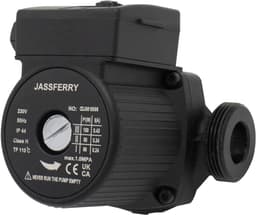
JASSFERRY JASSFERRY

Alternative

JASSFERRY JASSFERRY
9.2/10about £37.99
Anesty Anesty

Best value

Anesty Anesty
8.6/10about £35.90
On this page

Normal hum versus fault noise

Every circulator moves water and will hum lightly when the boiler calls for heat. A steady low tone on speed 1 is normal in UK reviews of Trident and JASSFERRY rows. Fault noise is sharper: a high-pitched whine on speeds 2 and 3, rattling cavitation when air is present, or a pump that vibrates the cupboard enough to wake someone. Reviews of the Trident TP25-60-130 often describe whine easing after about two weeks of bedding-in. That is anecdotal, not a promise your unit will do the same. Grinding or clicking with falling heat suggests bearing wear or a blockage. That is different from a whine you can still tune.

Air in the pump and radiators

After any pump work, micro-bubbles collect at the pump vent and in upstairs radiators. Bleed the top-floor radiators until water runs without a hiss, then open the pump bleed screw carefully, with a towel ready. System pressure may drop. On a sealed system, refill through the filling loop to the cold band in the boiler manual. If the noise drops at once, you have saved a mis-order. Persistent gurgling in one radiator points to local air or a TRV, not necessarily the pump. A hot pump body with cold pipes downstream can mean an air lock or a seized impeller. If the shaft will not spin when it is safe to check, stop forcing it. The drain-down sequence, if you do replace it, is on how to replace a central heating pump. On a sealed combi, pressure that falls every time you bleed points to a filling loop left slightly open, or a pinhole elsewhere. A new pump will not hold that pressure. Note the gauge before and after you vent the pump screw. If it falls below the manual’s minimum cold line, top up slowly and recheck the unions you last disturbed. An open-vented tank in the loft behaves differently. Noise can track a low header sucking air at the pump inlet, which sounds like cavitation until the ball valve refills the tank.
Trident Trident TP25-60-130

Testsieger

Trident Trident TP25-60-130
9.2/10about £42.99

Try a lower speed before you return it

Three-speed pumps tempt you to run speed 3 when the hall feels cold. UK review patterns say start on speed 1, confirm the radiators heat after bleeding, then raise one step at a time. Middle speeds on the Trident TP25-60 are where whine reports cluster. Backing down often beats a warranty return. An inverter pump still needs a sensible duty. More speed is not a substitute for balancing. If only the upstairs radiators stay cold while downstairs overheats, balance before you buy a boost pump. Boost fixes some duty problems and adds noise when it is the wrong class for the house.

Wrong duty or a boost mismatch

A standard 6 m circulator on a circuit that needed boost head can whine and struggle. A boost pump on an already balanced terrace can roar on high speed. Compare the pump type on the old label with what you fitted. A like-for-like duty beats an upsell from a noisy symptom alone. A reversed flow arrow after install causes performance noise. Confirm the arrow matches the old orientation in your photo before you buy a second pump. If you fitted a boost or inverter row because the listing promised quiet running, remember seller decibel figures were not measured here. The BP25-10, B0F4RLF2JR, had four UK reviews on the 20 October 2026 read, behind a 4.5 star line and a seller decibel claim. A boost unit can still roar on speed 3 when the circuit was sized for a gentle 25-60. Step down, balance, then reassess before you treat the purchase as faulty.

When to replace the pump

Replace when the impeller seizes, a hot motor and no flow, when the shaft seal leaks after a re-seat, or when the bearings grind after air and speed are sorted. For a standard 130 mm swap, the Trident TP25-60-130 has the review depth, 860 UK reviews, and the Anesty is best value at about £35.90. Stepping off UPS hardware is covered on Grundfos pump replacement. Call an engineer for gas, for persistent leaks at the unions, or for a single cold radiator that balancing will not fix. A blockage is not cured by a louder pump.

Common questions

Is whining normal on a new pump?
A mild hum on speed 1 is normal. A sharp whine on high speed often improves after bleeding and after you drop a speed. UK reviews cite about two weeks of bedding-in for some Trident units. That is not guaranteed. Grinding with falling heat is a different fault.
How do I bleed the pump screw?
Many systems allow a vent-only turn without a full isolation, and you should still follow the pump manual. Open the pump bleed slowly until water appears, then close it. Keep a towel under the screw. Top up a sealed system if the gauge has fallen below the boiler manual’s cold band.
Should I try speed 1 first?
Yes. Speed 1 after a full bleed is the first free fix for whine reports on three-speed circulators. Raise one step only if radiators stay cold. Speed 3 as the default is where UK whine comments cluster, including on the Trident TP25-60.
The pump is hot but the pipes are cold. Is it seized or air?
Both are possible. Check whether radiators show any flow, and whether the impeller will spin when it is safe to try. Seizure, a hot motor and no flow, needs a replacement. Air needs venting at the upstairs radiators and the pump screw. If the shaft will not turn, stop forcing it.
It flutters like the old Grundfos. Should I replace it again?
Flutter often means air or a speed that is too high. Replace again only after those checks, and only if you have confirmed a mechanical fault: a seized impeller, a leaking shaft seal, or grinding bearings. A second pump will not fix air you have not bled.
Noise with only upstairs radiators cold: pump or TRV?
Bleed and balance upstairs first. A stuck thermostatic radiator valve can mimic pump failure, and so can air in one radiator. Buy a boost pump only when a standard 6 m unit has already failed to lift a circuit that balancing did not fix.
How long should bedding-in last?
Review anecdotes mention one to two weeks, including whine on the Trident TP25-60 easing after about two weeks. If the noise worsens, or the heat falls, do not wait that out. Grinding, a leak, or a hot motor with no flow is not bedding-in.
When is noise a safety issue?
Electrical buzzing, a burning smell, a leaking seal, or a hot motor with no flow: isolate the power and call a professional. Gas smells and anything inside the boiler gas section are Gas Safe work. Do not keep running a pump that is leaking at the shaft.
Can a dirty system make a new pump noisy?
Yes. Sludge and magnetite grit wear an impeller faster and can mimic bearing whine. If you opened the system for the swap, plan inhibitor. When several radiators never heat evenly, a heating engineer’s power-flush advice is the next step, not another circulator on the same dirty water.

Related pages

Sources

Public UK sources named below. amazon.co.uk prices, stars and review counts on these ten listings were taken from the listing files read on 20 October 2026. Page updated October 2026.

  1. Wilo UK, replacing circulating pumps (retrieved 20 October 2026)
  2. Electrical Times, Wilo compliance checker (retrieved 20 October 2026)
  3. Ideal Heating, Part L and flow temperature (retrieved 20 October 2026)
  4. Approved Document L, Volume 1 (dwellings) (retrieved 20 October 2026)
  5. Grundfos UPS3 installation guidance (retrieved 20 October 2026)
  6. Grundfos, how to find a pump replacement (retrieved 20 October 2026)