Independent comparisons. We may earn from shop links. More info

Kids ear defenders for fireworks

Updated: 21 October 2026

You are packing for Bonfire Night, or for another short display, and the listing promises fireworks in the title. Kids ear defenders for fireworks are a short-event tool you put on before the first bang, at a distance the display already set, with a quiet place you can actually walk to. They do not make the sky silent, and they do not replace standing further back. The twelve listings are on the [Kids ear defenders comparison](/hub/hearing-protection/kids-ear-defenders). Peter F. used public UK sources and the amazon.co.uk files. No display was metered. A qualifying purchase can earn a commission at no extra cost to you.

You are packing for Bonfire Night, or for another short display, and the listing promises fireworks in the title.

Our top picks

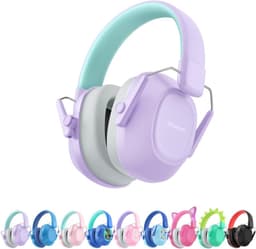
iClever iClever EM01, purple

Best overall

iClever iClever EM01, purple
9.6/10about £13.99
Alpine Alpine Muffy Kids, blue

Alternative

Alpine Alpine Muffy Kids, blue
9.2/10about £24.95
On this page

Distance and the 120 dB limit

The Office for Product Safety and Standards sets out firework noise evidence in which consumer fireworks are limited to 120 dB(A) at the approved distance. That limit is about the firework as sold. It is not a test of a muff, and the line about no permanent damage when instructions are followed is about operating the firework, not about a brand of cups. The same note cites WHO peak guidance of 120 dB for children and 140 dB for adults. Doubling the distance cuts the level by about 6 dB. Closer than the rope is louder, including for a child who is already wearing muffs. Manchester University NHS Foundation Trust says smaller ear canals raise sound pressure. Clinic blogs sometimes suggest roughly 50 to 60 metres. That distance is not a statutory rule in the OPSS note. Use the organiser’s line, then more distance if you can. A muff is not a licence to stand at the rope because the title said 29 dB. Gloucestershire Hospitals still names fireworks as a short event where defenders are the exception they allow.

Put them on before the first bang

Practise at home on a quiet afternoon, with the pair you will actually take. Cups that go on as the first shell bursts rarely seal, because the child jumps and the cushion lands on the ear. The National Autistic Society’s Bonfire Night page lists defenders as one strategy and asks for a quiet place as well. Pack that exit before you pack the muffs: a side street, a car, a hall doorway you have walked to in daylight. If the band is so tight you are tempted to stretch it on a box all week, stop at the limit on how to fit kids ear defenders. A slack band at the display is a worse tool than a snug one you seat yourself. Take them off only once you have moved away. A few minutes off in the noise throws away most of the protection.
iClever iClever EM01, purple

Testsieger

iClever iClever EM01, purple
9.6/10about £13.99

What the muff cannot do

No listing in this set claims silence. iClever states SNR 29 dB, adds reductions up to 46 dB in some scenarios, and says earmuffs cannot eliminate noise. Shop the 29 if you shop iClever. Do not shop the 46. ProCase blue states SNR 27 dB and names fireworks. The cartoon ProCase states NRR 24 dB, which is not that SNR and not that model. Alpine’s title says 25 dB and the spec says 21 dB. Do not repeat Alpine’s 1 out of every 8 kids bullet. Lookka does not print a decibel figure, though reviewers mention fireworks night. A review shared by the £9.99 and £12.99 pages says the pair did not block much firework noise. That is one buyer in a shared file, not a rate. A broken seal wipes out a small gap between two ratings. If the cups fail on the night, move away. The order of checks is the kids ear defenders buying guide.

After the display

Ringing, pain, a blocked feeling or a drop in hearing that does not settle is a GP or 111 matter. It is not a prompt to order a higher number before morning. If the goods split or do not match the listing, the Consumer Rights Act 2015 gives a 30-day short-term right to reject. One review on the £14.99 sparse page reports breakage within a fortnight. That is one review, not a failure rate. Leave the school plan and all-day wear on ear defenders for autistic children. What you can finish tonight is the pair you have already fitted, on before the bang, further back than the rope if you can, and an exit if the cups come off.

Common questions

Do kids ear defenders block all firework noise?
No. They reduce it when the seal holds. iClever’s listing says earmuffs cannot eliminate noise, and its 46 dB line is not the SNR 29 dB figure. A shared review on the £9.99 and £12.99 pages says firework noise still came through. Alpine’s title and spec do not even agree with each other, at 25 dB and 21 dB. Treat any of those numbers as what the page prints, not as silence at the rope.
When should the cups go on?
Before the first bang, after a practice at home. Seating them during the opening volley is how the cushion misses the ear. The National Autistic Society pairs defenders with a quiet place you can retreat to. Take them off after you have moved away, not in the middle of a salvo. A few minutes off in the loudest stretch wastes the point of wearing them, which is the same picture HSE gives employers about removing protection.
Does standing further away still matter if the child is wearing muffs?
Yes. OPSS cites a 120 dB(A) limit at the approved distance, and about 6 dB less when distance doubles. Closer is louder with or without cups. The muff is not permission to ignore the rope. A 50 to 60 metre figure appears in clinic blogs and is not the statutory distance in that OPSS note. Use the display’s own line, then more room if you have it. Smaller ear canals, which Manchester University NHS Foundation Trust describes, are a reason to care about both distance and the seal.
What is the UK firework noise limit, and what does it not prove about a product?
Consumer fireworks in the OPSS evidence are limited to 120 dB(A) at the approved distance. The instructions-followed comment in that material is about how fireworks are operated, not about a muff brand. It does not prove that any kids ear defenders prevent permanent hearing damage. It does not rank SNR 27 against SNR 29. HSE’s workplace table is a separate document and is not a Bonfire Night buying chart.
Are earplugs a better idea for a young child at a display?
Not as a substitute drawn from this set. All twelve listings are over-ear muffs. Clinic pages say plugs are hard to fit in a young ear, and a plug that is half in is not the protection on the packet. This page does not recommend a plug ASIN. If the muff will not seal, move back and use the quiet exit. Do not improvise with adult plugs because the children’s pair was left at home.
What should you do if ears ring, hurt, or hearing drops after the display?
Contact a GP or 111 if ringing, pain, discharge, dizziness or a hearing change does not settle. Do not wait to see whether a different SNR would have been enough. Sudden change is a clinical question. A split headband or a pair that does not match the listing is a separate consumer point: the Consumer Rights Act 2015 includes a 30-day short-term right to reject. One fortnight-breakage review is not a category rate.

Related pages

Sources

Public UK sources named below. amazon.co.uk prices, stars and review counts are from the twelve listings in this comparison. Page updated 21 October 2026.

  1. HSE, Hearing protection (retrieved 21 October 2026)
  2. Control of Noise at Work Regulations 2005, regulation 4 (retrieved 21 October 2026)
  3. BSI, BS EN 352-1:2020 (retrieved 21 October 2026)
  4. GOV.UK designated standards notice 0118/25 (retrieved 21 October 2026)
  5. Gloucestershire Hospitals, Sound sensitivity in children (retrieved 21 October 2026)
  6. Hull University Teaching Hospitals, Sound sensitivity in children (retrieved 21 October 2026)
  7. National Autistic Society, Bonfire Night (retrieved 21 October 2026)
  8. Consumer Rights Act 2015 (retrieved 21 October 2026)