Independent comparisons. We may earn from shop links. More info

Kids ear defenders buying guide

Updated: 21 October 2026

Titles on amazon.co.uk mix 26 dB, SNR 27.4 dB, NRR 24 dB and noise cancelling headphones as if they were one specification. A kids ear defenders buying guide has one job: the order of checks, before you compare models. Fit comes first, then the number with its real name, then what a certification line does not prove, and only then age, fold and price. The [Kids ear defenders comparison](/hub/hearing-protection/kids-ear-defenders) holds the twelve listings, from about £7.97 to £24.95. Peter F. used those files and public UK sources. There was no laboratory test. A qualifying purchase can earn a commission at no extra cost to you.

Titles on amazon.co.uk mix 26 dB, SNR 27.4 dB, NRR 24 dB and noise cancelling headphones as if they were one specification. A kids ear defenders buying guide has one job: the order of checks, before you compare models.

Our top picks

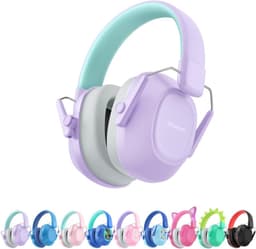
iClever iClever EM01, purple

Best overall

iClever iClever EM01, purple
9.6/10about £13.99
Alpine Alpine Muffy Kids, blue

Alternative

Alpine Alpine Muffy Kids, blue
9.2/10about £24.95
On this page

Fit before the number

A pair that stays on for the outing beats a higher figure worn for ten minutes. That is a rule of thumb from the review pattern in this set and from the Health and Safety Executive’s point on comfort, not a measured gap between two ratings. Reviews keep returning to clamp force, sliders a young child cannot open, and cups that come off. The blue ProCase listing already warns that the band starts a little tight. If the child pulls the cups off, the printed decibels are not the sound at the ear. Try them on at home while it is quiet. Hair, a hat or glasses under the cushion is a leak, which is why how to fit kids ear defenders exists. The Control of Noise at Work Regulations 2005 set action values at 80 and 85 dB(A). A family at a display is not an employer, and none of that means you should buy the highest number.

Read the name on the number

SNR is the European single number. NRR is the US figure under ANSI S3.19. They are not the same unit, and this page does not convert one into the other. Read the word next to the digits. Alpine Muffy Kids is the clearest split in this set: the title says 25 dB, and the specification lines say 21 dB. You cannot pick one of those as the true attenuation from the file. iClever states SNR 29 dB and also reductions up to 46 dB in some scenarios, and says earmuffs cannot eliminate noise. Those are not one figure. Blue ProCase states SNR 27 dB. The red-and-blue ProCase, a different model, states NRR 24 dB. Lookka prints no decibel figure. Dr.meter prints SNR 27.4 dB in the title only. Three sparse pages say 28 dB SNR in the title and then stop. A title figure with no spec line is a weaker claim. Six shop links here do not match the details ASIN. Keep the /dp/ ASIN.
iClever iClever EM01, purple

Testsieger

iClever iClever EM01, purple
9.6/10about £13.99

What a certification line does and does not say

BS EN 352-1:2020 covers earmuff construction, performance, marking and user information. It is not a certificate that a colourway was tested on children in the UK, and a bullet that says CE EN 352-1 does not become that certificate. GOV.UK designated-standards notice 0118/25 records that the standard does not require the attenuation figure on the product. A missing number on the shell is not, by itself, proof that the listing is fake. You still have to read the page. Alpine’s title is the only one here that prints both CE and UKCA. That marking is a Great Britain market rule, not a child-size fit. Do not add an ANSI S3.19 line to an SNR printed beside it, as on the blue ProCase. Do not claim that any pair prevents permanent hearing damage. Alpine’s line about 1 out of every 8 kids is not verified here.

Age line, then fold and price

Lookka says 6 months to 14 years. Alpine says up to 16. Purple iClever EM01 says kids, teens and adults at 390 g. The pink EM01 says ages 5 and up at 240 g. Same model name, different age line. A 3–16 sentence does not mean one headband fits every child in that range. ProCase blue’s reviews include a 3-year-old and a 12-year-old, and a buyer who says the pair is not suitable under 5. The head in front of you is the test. Fold, a bag and price come last, once the cups will seal. Alpine names a travel bag and 174 g at about £24.95. ProCase blue states a fold and no bag, at about £8.99. Shelf prices here run from about £7.97 to £24.95. A leaflet band of about £10 to £20 is not this scrape. If the page will not say SNR or NRR at all, a lower price does not fill that gap. Who should skip a named pair is on best kids ear defenders.

Common questions

Is SNR the same as NRR?
No. SNR is the European single number. NRR is the US figure associated with ANSI S3.19. This guide does not convert one into the other. The blue ProCase states SNR 27 dB. The cartoon ProCase states NRR 24 dB and is a different model. Treating those two lines as the same product is the mistake the labels are there to stop. If the page does not name either unit, as Lookka does not, you do not have a number to compare.
Is a higher SNR always safer for a child?
No. A broken seal wipes out a small gap between two ratings, and HSE warns employers against cutting sound so far that speech and warnings disappear, with a guide level around 70 dB at the ear. A family at a firework display is not an employer, and the workplace SNR table is not a Bonfire Night buying chart. iClever’s SNR 29 dB is the highest named SNR in this set, and the listing still says the muffs cannot eliminate noise. The 46 dB scenario line is a separate claim.
Does CE EN 352-1 in a bullet mean the pair was tested on children in the UK?
No. BS EN 352-1:2020 is the earmuff standard for construction, performance, marking and user information. A bullet that names it is a claim on that listing. It is not evidence that a UK lab tested that colourway on children. Notice 0118/25 records that the standard does not require the attenuation figure to be printed on the product. Alpine is the only title in this set that prints both CE and UKCA, and that marking still does not settle fit.
Why do titles say noise cancelling when the pair has no battery?
Because the phrase is used on passive muffs in this category. None of the twelve listings is a powered Bluetooth headphone, a radio defender or a pair of earplugs. The reduction, where it is printed, comes from the shell, the cushion and the foam. iClever’s own bullets say the muffs cannot eliminate noise. If you need a charged headset, you are in a different product, and these pages will not become one because the title borrowed the words.
When do fold, a bag and price matter?
After fit, a named SNR or NRR, the certification wording as a claim, and the age line against this head. A fold helps a festival bag. A bag is named on Alpine, not on most of the cheaper rows. Price in this scrape runs from about £7.97 to £24.95, and a low price does not add a specification table where the listing left one out. The model-by-model skip cases, including shared review pools, stay on the best page rather than in this order of checks.

Related pages

Sources

Public UK sources named below. amazon.co.uk prices, stars and review counts are from the twelve listings in this comparison. Page updated 21 October 2026.

  1. HSE, Hearing protection (retrieved 21 October 2026)
  2. Control of Noise at Work Regulations 2005, regulation 4 (retrieved 21 October 2026)
  3. BSI, BS EN 352-1:2020 (retrieved 21 October 2026)
  4. GOV.UK designated standards notice 0118/25 (retrieved 21 October 2026)
  5. Gloucestershire Hospitals, Sound sensitivity in children (retrieved 21 October 2026)
  6. Hull University Teaching Hospitals, Sound sensitivity in children (retrieved 21 October 2026)
  7. National Autistic Society, Bonfire Night (retrieved 21 October 2026)
  8. Consumer Rights Act 2015 (retrieved 21 October 2026)