Independent comparisons. We may earn from shop links. More info

Ear defenders for autistic children

Updated: 21 October 2026

The school hall, the hand dryer or the shop is already too much, and the amazon.co.uk title says the muffs are for autism. Ear defenders for autistic children can belong in a short plan for a place that is overwhelming. They are a poor tool when they stay on for ordinary noise all day. This page is that distinction. Prices and the twelve rows are on the [Kids ear defenders comparison](/hub/hearing-protection/kids-ear-defenders). Peter F. used NHS and charity pages plus the listing files. There was no clinical assessment. A qualifying purchase can earn a commission at no extra cost to you.

The school hall, the hand dryer or the shop is already too much, and the amazon.co.uk title says the muffs are for autism. Ear defenders for autistic children can belong in a short plan for a place that is overwhelming.

Our top picks

On this page

What the NHS leaflets allow

The NHS page on hyperacusis says not to wear earplugs or muffs all the time, because that can increase sensitivity. Short-term use may help in very noisy environments. It also says not to avoid noise completely. Autism is listed among associated conditions. The page does not name a product. Gloucestershire Hospitals says avoid defenders except short-term situations such as fireworks, because everyday sound matters. Hull University Teaching Hospitals says a reduced level can increase sensitivity. A school hall is not automatically a firework display. Cups on from the corridor until the gate is the routine wear those leaflets warn against. They still allow a pair for a short loud event. They do not allow a brand, an SNR or a plan to live in them. Derbyshire Healthcare mentions about £10 to £20. That band is the leaflet’s, not the £7.97 to £24.95 range in this scrape. Bonfire Night timing stays on kids ear defenders for fireworks.

A school or shop plan that is more than a pair

The National Autistic Society’s school guidance includes ear defenders, a quiet space, a warning before alarms, and paper towels instead of loud hand dryers. The cups are one item on that list. They are not the list. EPUT suggests trying defenders on a teddy first, and says not to use noise-reducing earphones constantly. That note is general advice, not a recommendation of these ASINs. Plan the moment the cups come off, somewhere quieter than the place you left. If they come off in the same roar, the child learns that off means worse. Dr.meter’s UK reviews name school halls, crowds, hand dryers and trains. ProCase blue’s reviews name school and busy places. Those are buyer texts, not a clinical endorsement, and Dr.meter’s size is disputed in the same file. How the cushion should sit is on how to fit kids ear defenders.
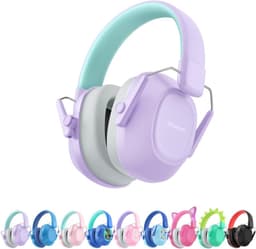
iClever iClever EM01, purple

Testsieger

iClever iClever EM01, purple
9.6/10about £13.99

What an autism title on amazon.co.uk actually states

Several of these twelve are passive muffs with autism, sensory or concentration in the title. What the page then states, when it states anything, is foam, a shell and a number. None of them is a powered Bluetooth headphone. Noise cancelling in the title is the passive-muff habit in this category. iClever prints SNR 29 dB and a separate up to 46 dB scenario line, and says the muffs cannot eliminate noise. Dr.meter prints SNR 27.4 dB in the title only. A word in the title does not add a wear-time limit or an NHS recommendation. The NHS has not recommended these ASINs. A 4.5 from 16,403 reviews on Dr.meter is a large buyer sample. It is not a trial of autism support. The order of buying checks is the kids ear defenders buying guide.

When to stop and call someone

Call a GP or 111 for sudden hearing change, pain, discharge, dizziness, or ringing that does not settle. That is not a fitting step, and a higher SNR does not solve it. Sound sensitivity that stops school, sleep or eating belongs with the clinician an Alder Hey leaflet points families towards, not with a new pair. If the child is more distressed every time the cups come off, take the Gloucestershire and Hull leaflets to that conversation. You can still own a pair for the short loud place. The decision is whether today’s problem is a muff for an hour, or a pattern that has outgrown a product page.

Common questions

Does the NHS say children should wear ear defenders every day?
No. The NHS hyperacusis page says not to wear earplugs or muffs all the time, because sensitivity can increase, and not to avoid noise completely. Short-term use may help in very noisy environments. Gloucestershire Hospitals says avoid routine defenders except short loud events such as fireworks. Hull says a reduced sound level can increase sensitivity. None of those pages names a listing in this set.
When do the leaflets still allow a pair?
For a short loud situation, not for ordinary noise as the default. The NHS allows short-term use in very noisy environments. Gloucestershire names fireworks as the kind of exception. A school hall or a shop can be overwhelming and still not be that exception if the cups never come off. The National Autistic Society includes defenders as one school support among a quiet space, alarm warnings and quieter hand drying. The pair is allowed inside a plan. The plan is not wear them all day.
What else belongs in a school plan besides the cups?
A quiet place the child can use, a warning before alarms, and a way to dry hands that is not a roaring dryer. That is the National Autistic Society’s school list, with defenders as one option on it. EPUT suggests a trial on a teddy and warns against constant use of noise-reducing earphones. Agree when the cups come off, and do it somewhere quieter than the hall. Buyer reviews that mention school are experiences, not a prescription for your child’s timetable.
Can a child become more sensitive if the cups stay on for ordinary noise?
Yes, that is the risk the leaflets describe. The NHS says all-the-time use can increase sensitivity. Hull says a reduced level can increase it. Gloucestershire says everyday sound matters and routine defenders should be avoided. A child who only copes in muffs and is more upset when they come off is the pattern those pages are pointing at. Short use in a genuinely loud place is the use they still leave open.
Are noise cancelling kids headphones on amazon.co.uk powered?
Not in this set. The twelve listings are passive muffs: a band, two cups and foam. Titles still say noise cancelling and, on several, autism. There is no battery and no Bluetooth in these files. iClever states that earmuffs cannot eliminate noise. If you need powered cancellation, these pages are the wrong product, however the title is written.
Who should see a GP or 111 instead of buying another pair?
Anyone with sudden hearing change, ear pain, discharge, dizziness, or ringing that does not settle. Sensitivity that stops school, sleep or eating needs the clinician route the Alder Hey material points to, rather than a different colour of muff. A child who deteriorates each time the cups come off needs that conversation too. Another £8 listing does not answer those signs.
Which listings mention autism in the title, and what does that not prove?
Dr.meter, iClever EM01, Floriogra and several unbranded 28 dB titles use autism or sensory wording. Lookka’s title is aimed at children and babies without putting a clinical claim in the same breath, and buyer reviews still mention sensory use. The word does not prove an NHS endorsement, a wear-time limit or a powered headset. It proves the seller chose that phrase. Read the SNR or NRR, if the page prints one, and the fit, on the buying guide.

Related pages

Sources

Public UK sources named below. amazon.co.uk prices, stars and review counts are from the twelve listings in this comparison. Page updated 21 October 2026.

  1. HSE, Hearing protection (retrieved 21 October 2026)
  2. Control of Noise at Work Regulations 2005, regulation 4 (retrieved 21 October 2026)
  3. BSI, BS EN 352-1:2020 (retrieved 21 October 2026)
  4. GOV.UK designated standards notice 0118/25 (retrieved 21 October 2026)
  5. Gloucestershire Hospitals, Sound sensitivity in children (retrieved 21 October 2026)
  6. Hull University Teaching Hospitals, Sound sensitivity in children (retrieved 21 October 2026)
  7. National Autistic Society, Bonfire Night (retrieved 21 October 2026)
  8. Consumer Rights Act 2015 (retrieved 21 October 2026)