Independent comparisons. We may earn from shop links. More info

5 mm plug weld hole

Updated: 23 October 2026

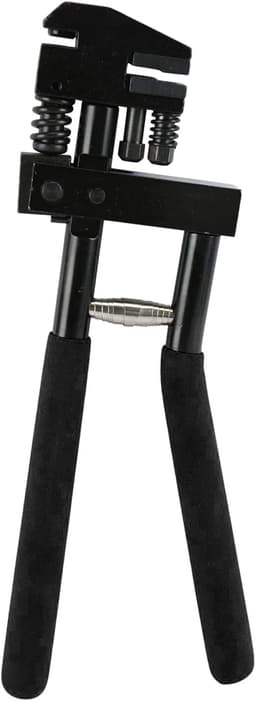
You have a 5 mm punch in a panel flanging tool and a patch that needs welding, and it is easy to treat that punch as the repair specification. A 5 mm plug weld hole is the disc these pliers cut in the upper sheet of a lap. It is the thin end of one car maker’s mild-steel chart, and it is not UK law, not an 8 mm general figure, and not a butt joint. The Products Compared editorial team set this page against the nine amazon.co.uk listings in the [panel flanging tool comparison](/hub/hand-tools/panel-flanging-tool), captured on 22 October 2026. No strength percentage was measured. A qualifying purchase can earn a commission at no extra cost to you.

You have a 5 mm punch in a panel flanging tool and a patch that needs welding, and it is easy to treat that punch as the repair specification.

Our top picks

AB Tools AB Tools AN053

Best overall

AB Tools AB Tools AN053
6.2/10about £29.99
AB Tools AB Tools TE159

Best value

AB Tools AB Tools TE159
6.6/10about £20.27
On this page

A plug weld is a hole in the top sheet

A plug weld fills a hole in the upper sheet so the weld metal joins it to the sheet underneath. You can see the hole before you weld. A resistance spot weld fuses two sheets between electrodes, and there is no punched hole to measure. The plier only helps the first of those joints. It punches. It does not spot-weld. You step one edge so the upper sheet sits near flush, then you punch that upper sheet where the welds will go. Club 80-90 describes it as flange, punch the upper sheet, puddle the holes. The lower sheet is solid under the hole. If you punch both, or so close to the edge that the rim breaks out, you have a notch. AB Tools TE159 reviews call that land very thin. A joggled lap is still a lap, not an open butt. No strength number for that comparison is in this research. The squeeze and the scrap test are on the how to use a joggler page.

Where 5 mm comes from, and where it stops

Eight of the nine pliers state a 5 mm punch. That is a tool fact. Toyota’s mild-steel note for plug welds says 5 mm or more under 1.0 mm, 6.5 mm or more from 1.0 mm to 1.6 mm, 8 mm or more from 1.6 mm to 2.3 mm, and 10 mm or more above that. It is one maker’s table, not a UK statute and not a rule for every badge in a British garage. I-CAR’s CRN-1803 note, where the maker is silent and the flange is wide enough, often gives 8 mm. The same note separates the nugget you can see from the fused nugget you only prove by cutting the joint up. A tidy 5 mm cap is not that test. The manual, when it exists, wins over both the plier and the general note. High-strength steel, a bonded flange, and a structural section sit outside both numbers. If your patch is 1.2 mm, that Toyota chart is already asking for 6.5 mm or more.
AB Tools AB Tools AN053

Testsieger

AB Tools AB Tools AN053
6.2/10about £29.99

The one listing that also says 7 mm

AB Tools AN053, B01N6900LS, is the exception inside the nine. The title says 5 mm. The pin-hole line says 7 mm, and a bullet says a half turn creates a 7 mm punch. The file does not resolve the conflict. At £29.99 it is not a misprint you can ignore if your weld note names one diameter. Measure the punch that arrives. Seven millimetres is not on the Toyota thin-sheet line, and it is not the I-CAR 8 mm figure. It does not make a compromise specification. The other eight ASINs state 5 mm without that second number. FreeTec’s red EL7750 file adds a different conflict, a cutting width of 22 cm beside a 5 mm punch, which is a width error rather than a second hole size. Do not average the two printed numbers into about 6 mm.

Strength, moisture, and the manual

No source in this set gives a percentage for a joggled lap versus a butt, or for 5 mm versus the original spot. The MIG Welding Forum thread splits three ways. Some contributors want an air tool for a curve. Some prefer a butt weld so there is no overlap. Several worry that a joggled overlap holds water. That worry is not a corrosion rate, and none of these pliers is sold with sealer. On a road car, the joint is the vehicle manual’s, or a body shop’s if you cannot follow it. A hobby patch on a non-structural skin, in thin mild steel, with a hole size matched to a chart you can name, is the narrow case these 5 mm punches resemble. The Health and Safety Executive expects fume from mild steel, including a short plug weld, to be controlled. Coatings come off first. The hand joggler vs air flanger page does not change the hole. Use 5 mm when the chart you are following still says 5 mm and the land around the hole survives. Step up, or stop, when the sheet is thicker or the panel is structural.

Common questions

What is a plug weld, as distinct from a resistance spot weld?
A plug weld fills a hole you punched or drilled in the upper sheet, joining it to solid metal underneath. A resistance spot weld fuses two sheets between electrodes and does not need that hole. The joggler’s punch is for the plug. It does not replace a spot welder, and a neat cap on the hole is not proof of the fused size underneath.
Why do these pliers punch 5 mm?
Eight of the nine amazon.co.uk listings state 5 mm. That matches the thin end of Toyota’s mild-steel chart, which says 5 mm or more under 1.0 mm. It is a common tool size for thin sheet, not a universal repair hole. The chart’s next step, from 1.0 mm to 1.6 mm, is already 6.5 mm or more.
When does a chart ask for a larger hole?
On that Toyota mild-steel table, at 1.0 mm and above. From 1.6 mm to 2.3 mm the same table says 8 mm or more, and above 2.3 mm it says 10 mm or more. I-CAR’s general note, if the maker is silent and the flange is wide enough, is often 8 mm. High-strength and structural panels follow the vehicle manual instead of either shortcut.
What does AN053’s 7 mm line change?
It means that one listing contradicts itself: 5 mm in the title, 7 mm in the details and in a half-turn bullet. It does not create a new standard between the Toyota 5 mm line and the I-CAR 8 mm note. Measure the punch if you buy it. Do not average the two printed numbers.
Does an overlap need sealing?
The forum worry is that a joggled overlap can hold water. No corrosion rate is attached to that comment, and none of these pliers is sold with sealer. If you close a lap on a car, protecting the seam is a separate decision. The punch diameter does not seal it.

Related pages

Sources

Sources from the research digest, last checked on 22 October 2026.

  1. HSE, mild steel welding fume (retrieved 22.10.2026)
  2. HSE, protect your workers from welding fume (retrieved 22.10.2026)
  3. HSE WL3, coatings off before welding (retrieved 22.10.2026)
  4. HSE, PUWER overview (retrieved 22.10.2026)
  5. Consumer Rights Act 2015, section 22 (retrieved 22.10.2026)
  6. ASTA S-JF51P panel flanging tool (retrieved 22.10.2026)
  7. Frost, joggler with hole punch (retrieved 22.10.2026)
  8. Club 80-90, general joggler notes (retrieved 22.10.2026)