Independent comparisons. We may earn from shop links. More info

How to use a joggler

Updated: 23 October 2026

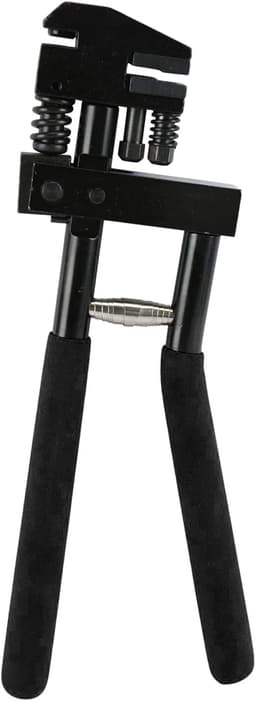
You have the plier in your hand, and the first squeeze has done nothing or marked a crown you did not mean to touch. How to use a joggler is a sequence for a lap in thin sheet: which edge gets the step, how many passes, when the head is on the punch, and when you stop. The Products Compared editorial team drew this from UK hobby write-ups and from amazon.co.uk reviews in the [panel flanging tool comparison](/hub/hand-tools/panel-flanging-tool), captured on 22 October 2026. It is not a vehicle repair manual, and it does not rank the nine pliers. A qualifying purchase can earn a commission at no extra cost to you.

You have the plier in your hand, and the first squeeze has done nothing or marked a crown you did not mean to touch.

Our top picks

FreeTec FreeTec EL7750 black

Best overall

FreeTec FreeTec EL7750 black
8.6/10about £19.95
Nielsen Nielsen CT2288

Alternative

Nielsen Nielsen CT2288
6.4/10about £25.49
AB Tools AB Tools TE159

Best value

AB Tools AB Tools TE159
6.6/10about £20.27
On this page

Set the joint before you squeeze

A joggler makes a lap, not an open butt. The step is a recess so the upper sheet can sit near the face of the lower one. On a typical patch you joggle the edge that will sit underneath, so the new skin drops into the recess, and you punch the upper sheet. If you step the wrong piece, the hole and the overlap will not line up. Club 80-90’s hobby note describes running the tool along the edge, then punching the upper sheet and plug-welding those holes. Cut a scrap strip of the same thickness before the real panel. None of the nine listings states a step depth, so this page cannot give you a measured offset. A crown, or a tight curve, is a poor first squeeze. The die wants a fairly straight edge. If the panel is structural, high-strength, or the manual specifies a butt or a resistance weld, put the plier down. That class decision sits on the hand joggler buying guide.

Form the step in more than one pass

One hard squeeze on 1 mm mild steel is the mistake these reviews and the hobby notes keep correcting. Club 80-90 says to run along the edge and squeeze more than once. The Nielsen CT2288 review that succeeds says 1.2 mm mild steel on a restoration, in several passes. Walk the jaws along the edge, overlap each bite with the last, and let the step grow. Stop if the second pass still only burnishes. On Veyera GSS56, about 1.5 mm steel would not punch or flange, and 1 mm steel left a mark and two lines. Nielsen’s other UK reviews say the joggle is poor on 1 mm, or the jaws are not flush. More passes polish a witness line. They do not deepen a die that is not reaching. A mild curve is the only workaround in the UK hobby note: short slots in the step so the edge can follow. That is not a fix for a crown. Do not file the jaws as a normal step.
FreeTec FreeTec EL7750 black

Testsieger

FreeTec FreeTec EL7750 black
8.6/10about £19.95

Turn the head fully, then punch

The punch and the flange are two positions of one head. Leaving the head between them marks the sheet without cutting a hole, or flanges with the punch still proud. Listings describe a rotary switch, a swivel, or a half turn. Turn until the head seats, then try the punch on the same scrap, not on the car. If the scrap only dimples, the head is not home, the sheet is too thick, or the punch is blunt. Keep the hole off the very edge. AB Tools TE159 reviews call the land between the hole and the edge very thin. A hole that breaks out tears the overlap and leaves nothing for the weld to sit in. You want a rim of parent metal around the hole, on the upper sheet, over solid metal underneath. Eight listings say 5 mm. One also says 7 mm. Diameter is the 5 mm plug weld hole page.

Fit, clean, and stop

Offer the upper sheet into the recess and see where it rocks. Clamp the lap so the hole stays over metal, not over a gap. Skill Shack’s order is to clean before you tack, tack at short intervals, about every inch in that description, and weld both sides when you can reach. A plain lap, without a joggle, is the fallback when the joggler will not fit. Use it rather than scarring a crown. Coatings come off before any weld. The Health and Safety Executive’s WL3 guidance is about removing paint, underseal and zinc. Mild-steel welding fume is still fume. HSE expects local exhaust indoors and suitable respiratory protection where capture falls short, including outdoors. If you cannot set that up, do not tack just to see. Call a body shop when the panel is structural, when the lap will not close, when fume cannot be controlled, or when the tool has cracked. At work the plier is work equipment under PUWER 1998. A hobbyist is not that duty-holder. A cracked handle is still a reason to stop.

Common questions

Do you joggle the old panel or the patch?
You joggle the edge that will sit underneath the overlap, so the other sheet can drop into the recess, and you punch the upper sheet. On many patches that means the old panel’s edge, but the vehicle joint decides it. Stepping the piece that should stay flat puts the hole in the wrong skin. Try the arrangement on scrap before you commit the panel.
Which way does the head turn before a punch?
Fully onto the punch, until it seats. These pliers describe that as a rotary switch, a swivel, or a half turn. A head left between flange and punch will mark or slip. Confirm the position on scrap. The page does not give a clockwise rule, because the listings do not share one.
How close to the edge can the hole sit?
Far enough that a rim of metal remains between the hole and the edge of the overlap. TE159 reviewers called that land very thin, which is the failure you are avoiding. A hole that breaks the edge tears the lap. Exact millimetres are not printed on these nine listings, so use the scrap and look at the rim before you punch the car.
What has to be clean before a tack?
The overlap, both faces you will weld, with paint, underseal and zinc removed first. Skill Shack’s order is clean, then tack at short intervals, and weld the far side if you can reach it. HSE treats the fume from that weld, including mild steel, as something you control with extraction or suitable respiratory protection. A flanged edge does not exempt the weld.
When do you stop and call a body shop?
When the panel is structural or high-strength, when the manual’s joint is not a lap you can make, when fume cannot be controlled, or when the plier has cracked. Also stop if scrap of the same thickness will not move after more than one pass. This sequence is for a short, thin, non-structural edge you can rehearse. It is not a substitute for the vehicle procedure.

Related pages

Sources

Sources from the research digest, last checked on 22 October 2026.

  1. HSE, mild steel welding fume (retrieved 22.10.2026)
  2. HSE, protect your workers from welding fume (retrieved 22.10.2026)
  3. HSE WL3, coatings off before welding (retrieved 22.10.2026)
  4. HSE, PUWER overview (retrieved 22.10.2026)
  5. Consumer Rights Act 2015, section 22 (retrieved 22.10.2026)
  6. ASTA S-JF51P panel flanging tool (retrieved 22.10.2026)
  7. Frost, joggler with hole punch (retrieved 22.10.2026)
  8. Club 80-90, general joggler notes (retrieved 22.10.2026)