Independent comparisons. We may earn from shop links. More info

Gas barbecue balcony UK: check the rules first

Updated: 16.10.2026

Ask your building contact before buying a balcony gas barbecue. There is no single UK-wide answer, but leases, building fire policies and council landlord rules often prohibit cooking and LPG storage. A compact Weber may fit and still be forbidden. This gas barbecue balcony UK guide explains the checks. It does not label any product balcony safe. For dimensions of the eight single-burner models, use our [main comparison](/hub/grills-and-barbecues/weber-gas-barbecue). Permission for patio furniture does not imply permission for LPG.

Ask your building contact before buying a balcony gas barbecue. There is no single UK-wide answer, but leases, building fire policies and council landlord rules often prohibit cooking and LPG storage.

Our top picks

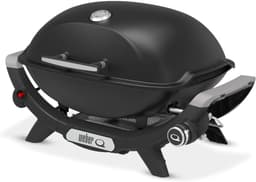
Weber Weber Q2100N gas grill

Best overall

Weber Weber Q2100N gas grill
9.4/10about £419.00
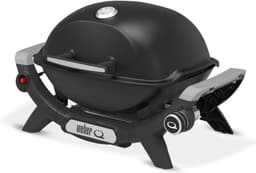
Weber Weber Q 1100N gas barbecue

Alternative

Weber Weber Q 1100N gas barbecue
8.8/10about £289.00
On this page

There is no one rule for every UK balcony

The practical gate is usually your contract and building policy. Private leases can prohibit barbecues, naked flames, smoke or fuel storage. Social landlords and housing associations may set explicit fire-safety conditions, while a managing agent can impose rules for the whole block. Your contents or buildings insurance may add another restriction. Ask a precise question in writing: may you operate a portable LPG barbecue on this private balcony, and may you store its cartridge or cylinder there or inside the property? Include the appliance type and fuel, not only the word barbecue. Keep the response. If the answer is vague, ask the building’s fire-safety contact rather than assuming silence means consent.

What landlords and councils often prohibit

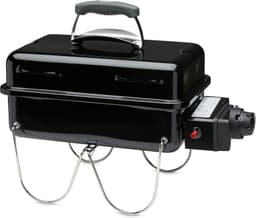
Published council guidance shows how strict building rules can be. Sandwell Council says barbecues are not allowed on balconies because of fire risk and also warns against storing bottled gas there. Harrow’s tenancy guidance prohibits barbecues, fuel containers and gas bottles on balconies. These are examples of local landlord rules, not proof of one national ban. A policy may ban LPG cylinders inside the home, in communal areas, on escape routes or on balconies. It may also prohibit smoke, nuisance or a risk of falling embers. A gas grill produces no charcoal embers, but it still has an open flame, hot grease and pressurised fuel. Do not assume a small cartridge receives an automatic exemption. A Go-Anywhere at 5.22 kg takes less room than a 19 kg Q model, yet both use flammable gas. A communal garden may have a designated barbecue area even when private balconies are banned. Ask whether that space can be used and where cooled appliances and fuel may be stored afterwards. If balcony cooking is prohibited, do not place the grill just inside an open door. These gas barbecues are outdoor appliances.
Weber Weber Q2100N gas grill

Testsieger

Weber Weber Q2100N gas grill
9.4/10about £419.00

LPG outdoors, ventilation and low spots

The Health and Safety Executive explains that LPG is flammable and heavier than air. If it leaks, it tends to sink and can collect in drains, recesses and other low points. Height above the street does not change that. A high-rise balcony can still have solid balustrades, drainage channels, storage boxes or enclosed corners where gas accumulates. Balconies also concentrate combustible materials. Artificial grass, timber decking, privacy screens, cushions, planters and stored cardboard may sit close to the grill. Grease can flare, and the lid and body remain hot after the burner is turned off. You need a stable level surface, clear space and an escape route that the barbecue, hose and people do not obstruct. If you smell gas or suspect a leak, do not ignite the barbecue or operate electrical switches nearby. Turn off the supply only if it is safe, move people away and follow manufacturer and emergency guidance. Never search for a leak with a flame.

Storing cartridges, cylinders and the grill

Permission to cook does not automatically include permission to store fuel. Check the lease and the fuel manufacturer’s instructions for both the connected cartridge and spares. Your written approval should address storage separately. Scottish model-tenancy notes, council conditions and individual landlords may impose different storage expectations. Keep approved containers upright, protected from damage and away from heat or ignition sources. Do not store LPG in a low enclosed space where leaked gas could collect, or on a communal escape route. If your building offers no compliant storage location, that may rule out the purchase. Allow the barbecue to cool completely before covering, folding or moving it through the building. Empty and clean the grease tray so hot fat does not spill. A lid lock or folding legs assist transport. They do not make a hot appliance safe to carry into a lift. Fuel connections differ across these models. Read our gas bottle or cartridge guide before deciding what you would need to store.

Checklist before buying a compact Weber

First, obtain a written answer from the person or organisation that controls the building rules. Ask about use, fuel storage, communal spaces and any time or nuisance conditions. Second, read the exact model manual and measure the balcony with all required clearances, not merely the grill’s footprint. A Q with side tables may be much wider in use than in storage. Third, check insurance, neighbour impact and the route through the building. Identify a lawful storage location for the cold grill and every fuel container before ordering either. If your balcony is prohibited but a private garden or approved communal area is available, our buying guide can help match portability and grate size to that location. Once permission, fuel and placement are settled, the how-to-use guide covers lighting and shutdown.

Common questions

Is it legal to use a gas barbecue on a balcony in the UK?
There is no single answer for every balcony. Your lease, tenancy, building fire policy, landlord rules and local guidance may prohibit it even where no general national ban applies. Northern Ireland and Great Britain also do not share every gas-law detail. Get written permission before buying.
Does my landlord have to allow a barbecue?
No general rule in the sources used here requires a landlord or managing agent to permit balcony barbecues. Many housing providers ban flames and LPG storage for fire-safety reasons. Read your agreement and ask the responsible building contact for a written decision.
Can I store a gas canister on the balcony?
Only if the fuel instructions and your building or tenancy rules allow that exact storage arrangement. Some published council rules prohibit bottled gas on balconies. LPG containers must also be protected from heat, damage and enclosed low spots, so physical outdoor space alone is not enough.
Is a small Go-Anywhere treated differently?
It is easier to carry and occupies less space than a stand or cart model, but it still uses LPG and produces an open flame and hot grease. A rule banning barbecues, flames or gas storage can apply regardless of grill size. Ask about appliance type and fuel explicitly.
What about a communal garden?
A communal garden may be an option only if the landlord or managing agent permits barbecues there. Ask whether there is a designated area, what fuel is allowed, and how the appliance and cylinder must be transported and stored. Do not assume shared outdoor space is unrestricted.
Who should I ask before purchase?
Start with the landlord or housing association if you rent, or the managing agent or freeholder if you own a leasehold flat. Ask the building fire-safety contact where one exists and check your insurer’s conditions. Keep the answer in writing and include LPG storage in the question.

Related pages

Sources

Listing prices, stars and review counts are from amazon.co.uk on 15 October 2026. The public sources below cover LPG, the gas-safety regulations, outdoor barbecue standards and cooking temperatures.

  1. HSE: About LPG (retrieved 15 October 2026)
  2. Gas Safety (Installation and Use) Regulations 1998, regulation 2 (retrieved 15 October 2026)
  3. Gas Safety (Installation and Use) Regulations 1998, regulation 26 (retrieved 15 October 2026)
  4. BSI: BS EN 498:2012, outdoor LPG barbecues (retrieved 15 October 2026)
  5. Food Standards Agency: Cooking your food (retrieved 15 October 2026)
  6. GOV.UK: UKCA and CE in Great Britain (retrieved 15 October 2026)
  7. amazon.co.uk listings for the eight Weber gas barbecues (retrieved 15 October 2026)