Independent comparisons. We may earn from shop links. More info

How to fit a ventilation grille

Updated: 16 October 2026

The cover is already in your hand, and the hole is already in the wall, the soffit, or the plinth. This is how to fit a ventilation grille on an opening that exists. It stops before a new core through a cavity wall and before any bathroom wiring. Prices and the twelve listings sit on the [ventilation grilles comparison](/hub/grills-and-barbecues/ventilation-grille). The Products Compared editorial team used amazon.co.uk extracts and public UK fitting guidance, checked on 15 October 2026. We did not fit these covers ourselves. Amazon links can earn a commission if you buy, at no extra cost to you.

The cover is already in your hand, and the hole is already in the wall, the soffit, or the plinth. This is how to fit a ventilation grille on an opening that exists.

Our top picks

On this page

Check the opening before you drill

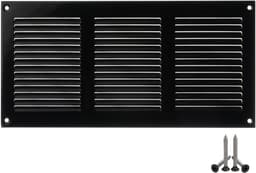
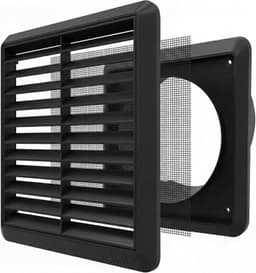
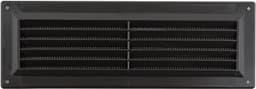
Measure the hole, then the cover’s stated opening, then the face. The face is the part that must overlap. On the large white Awenta the face is 300 × 300 mm and the grille opening is 250 × 250 mm. On the small Awenta the face is 150 × 150 mm and the grille is 115 × 115 mm. The Map louvre is 260 × 90 mm overall and suits openings up to 229 × 76 mm, with screw holes spaced at 245 × 76 mm. The Kair face is 155 × 155 mm, and the useful part for a fan is the 100 mm male spigot. Hold the plate over the hole before you mark anything. A plate with no spigot, such as either Awenta or a Repa cover, only works when the duct already finishes inside the wall. Most of these boxes leave screws out. LIRAST names screws, and some reviewers still had none. Awenta gives four caps and says the screws are absent. Buy plugs suited to the wall you actually have.

Fix the plate and seal the edge

Mark through the cover’s own holes, drill, and plug. Drive the screws until the flange sits flat, and stop before the plastic bows. Reviewers call the Vent Systems 300 mm plate and some Awenta covers thin or slightly flimsy, so a screw tightened hard in one corner will dish the face. Run an exterior sealant around the flange, on the wall side, and keep it off the blades and the mesh. A bead across a louvre blocks the air path. On a soffit, Kair reviewers say the face is hard to prise off overhead. If you can only reach that soffit from a ladder, fit the cover when you can still get both hands to it. A flexible duct on the Kair spigot wants a worm-drive clip as well as a push-fit. The listing does not include a clip. The blades on this Kair do not hinge.

Let condensation run outwards

Warm, wet air from a bathroom or a kitchen cools in the duct and drops water. That water should run to the outside grille, not back to the fan. A short through-wall run wants a slight fall outwards. Checkatrade’s through-wall guide and the Manrose CF100 sheet both describe that fall to the external grille. If your existing hole slopes the other way, a new cover will not correct it. A duct that stops in the loft is unfinished. A vertical rise to a roof terminal needs a condensate trap, because water cannot drain uphill. None of these twelve listings states an IP rating. One Vent Systems review says a plate stopped the rain. That is one comment.

Where you stop

Stop when the opening does not exist yet. A new core through a cavity wall needs a sleeve, a fall, and a clear path that does not bridge the cavity with rubble. Stop when the fan is in a bathroom and the cable is still to be run. Bathroom electrics in England and Wales sit under Part P, and the practical handoff is an electrician. The Planning Portal says a domestic extractor fan does not generally need planning permission. A listed building still needs consent. Part F still applies either way. Stop if the hole is a boiler flue. Mesh over a flue is a carbon-monoxide risk. Stop if you are about to reduce a cooker-hood duct to whatever plate you already bought. A 9 × 3 in Map louvre is an air-brick cover. It is the wrong last piece on a 100 mm fan.

Common questions

Do I need screws if the box has none?
Yes, unless you are only clipping a spigot into a duct that is already fixed and the face is not taking any load, which is a rare case on an outside wall. LIRAST names screws in the components line. Awenta, Repa, and the Vent Systems 300 mm page say they are not included, and Kair reviewers say the same. Buy plugs that suit masonry or timber on your wall. This page does not give a universal screw length, because the wall thickness and the plug are yours.
How do I open the Kair face to clean the flyscreen?
The listing says you flick the louvre open with a flat screwdriver. Reviewers say the face clips tight, that instructions for removal are missing, and that a thin blade is what they actually use. On a soffit the same move is awkward because you are working overhead. Clean it while you can still reach it with both hands. Several reviewers also call the screen soft, and one replaced it with stainless mesh.
Should the duct slope towards the grille?
Yes. The fall runs down to the outside grille so condensation leaves the building. Checkatrade and the Manrose CF100 sheet both describe that outward slope. A sag back towards the fan holds water and can drip indoors. A duct that ends in the loft is unfinished. A vertical run up to a roof outlet needs a condensate trap, because the water cannot climb to the terminal.
Do I seal around the plate?
Seal the flange to the wall or the soffit so rain does not track behind it. Keep the sealant off the louvres, the mesh, and the free openings. A bead across the blades looks tidy and blocks the air path. None of these listings prints an IP rating, so the seal is doing work the packet does not claim. One review saying a cover stops the rain is a comment, not a weather test.
Can I drill a new hole through the wall myself?
This page assumes the opening is already there. A new core, especially through a cavity, needs a sleeve, a slight fall outwards, and a clean cavity that you do not fill with debris. That is a different job from screwing on a cover, and it is where a lot of DIY fan guides begin. If you are at the pilot-hole stage, use a through-wall guide or a fitter, then come back here for the plate, the seal, and the mesh.
Does fitting a cover need planning permission?
The Planning Portal says a domestic extractor fan does not generally need planning permission. A listed building still needs consent before you change the outside. Building regulations still apply: Part F for ventilation, and Part P where the electrical work is in a bathroom. Screwing a like-for-like cover over an existing hole is the small end of that. Cutting a new opening, or wiring a fan, is the end where you check before you drill.

Related pages

Sources

Listing prices, stars and review counts are from amazon.co.uk extracts dated 15 October 2026, including the shop page for B0BZPM3DZB. The public sources below cover the ventilation rules and the consumer-rights point.

  1. Approved Document F, Volume 1 (2026 PDF) (retrieved 15 October 2026)
  2. GOV.UK: Ventilation: Approved Document F (retrieved 15 October 2026)
  3. Welsh Approved Document F, Volume 1 (retrieved 15 October 2026)
  4. Manrose CF100 installation sheet (retrieved 15 October 2026)
  5. Planning Portal: extractor fan rules (retrieved 15 October 2026)
  6. Mesh Direct: insect mesh (retrieved 15 October 2026)
  7. Consumer Rights Act 2015 (retrieved 15 October 2026)
  8. amazon.co.uk: Vent Systems cover B0BZPM3DZB (retrieved 15 October 2026)