Independent comparisons. We may earn from shop links. More info

Gas regulator gauge: how much gas is left

Updated: 23 October 2026

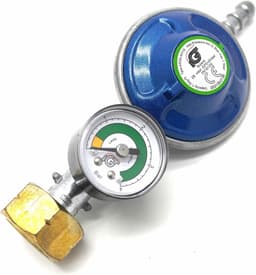
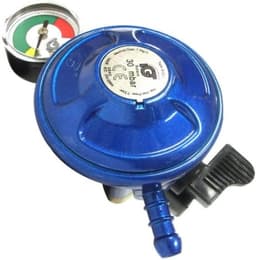
You bought a gas regulator gauge to see how much gas is left before a cook, and the needle is already arguing with you. On a full butane cylinder it can sit low. On a cold morning it can sit on zero. After weeks of sausages it can still say a quarter. A gas regulator gauge how much gas left is a vapour-pressure reading, not a kilogram reading, for as long as liquid LPG remains in the bottle. This page stays on that needle. The shortlist is the [gas regulator with pressure gauge comparison](/hub/grills-and-barbecues/gas-regulator-with-pressure-gauge). Peter F. edits DIY and tools at productscompared.co.uk. We did not run a lab test.

You bought a gas regulator gauge to see how much gas is left before a cook, and the needle is already arguing with you. On a full butane cylinder it can sit low. On a cold morning it can sit on zero.

Our top picks

On this page

What the needle is measuring

LPG in a cylinder is liquid with vapour above it. GOK and Black Cat Gas describe the same behaviour: inlet pressure stays broadly constant while liquid remains, then falls once the liquid has gone. Unlike a diving cylinder, the needle is not counting down as you cook. It shows vapour pressure, which depends on the gas and the temperature. A full butane bottle can already look low. IGT reviewers describe only a few pointer widths of travel. Propane sits higher at the same temperature, and it still does not count kilograms. A needle that finally falls and stays down on a warm cylinder means the liquid is nearly gone. Titles that say gas level overclaim that. Which millibar body to buy is the buying guide.

Cold butane and the reviews in this capture

Calor says 4.5 kg butane works effectively above about −2 °C. Below that, vapour pressure collapses. A gauge can read zero outdoors and climb after the bottle warms indoors, with no gas used. IGT reviewers report that cold zero, including on a boat, plus a narrow scale and a needle stuck around a quarter. A cold zero that recovers in the warm is temperature. A needle that will not move on a weighed bottle, in a warm place, is a failed gauge. The AOS 4.5 kg reviews only say, briefly, that the gauge shows the level. That praise does not make the dial a calibrated meter. A needle that sits still for weeks can be a normal flat trace.

Weigh the cylinder

Weighing is the contents method Calor's 4.5 kg page supports. Compare a scale reading with the tare stamped on the body. The difference is the gas. Use that stamp rather than a kilogram figure this article does not print. A bathroom scale is coarse, and it still beats a needle that stays high until the liquid is gone. Cavagna's dial sits on a 0.5–2 bar adjustable, and Tezla's on a 0.5–4 bar adjustable. Those needles show the pressure you set. They are not a barbecue contents gauge.

A hold test, not a fuel gauge

Close the cylinder valve and watch the dial for about three minutes. You are watching whether inlet pressure is trapped, not how many kilograms remain. If the needle drops while the valve is closed and the taps are off, gas is leaving a hose or a joint. The starting number does not matter. IGT reviewers already use the dial that way. It is a leak hold, not a fuel sender. A needle stuck at a quarter through weeks of cooking is a flat trace, not a quarter-full bottle. If it will not move on the hold, and the warm cylinder still weighs more than its tare, replace the regulator. A drop means you stop and follow the soap test on how to fit a gas regulator. Never use a flame.

Common questions

Why is a full butane bottle already low on the dial?
Because the needle shows vapour pressure, not weight. While liquid remains, pressure stays in a band set by the gas and the temperature, and butane at a normal UK temperature often uses only a small part of the scale. IGT reviewers describe a few pointer widths of travel. A low reading on a heavy bottle is consistent with that. It is not, by itself, an empty cylinder or a broken gauge.
Why does the gauge read zero outdoors and recover indoors?
Butane stops vaporising usefully as you approach −2 °C, which is the limit Calor states for the 4.5 kg cylinder. A cold bottle can show zero and then climb after it warms up, with the valve closed and no gas used. That matches the cold-weather reviews on the IGT listing. If the cylinder is warm, weighs more than its tare, and the needle stays at zero with the valve open, treat the gauge as failed.
Can I use the gauge to find a leak?
You can use it as a hold test, not as a sniffer. Close the cylinder valve, leave the appliance off, and watch for about three minutes. A falling needle means pressure is escaping. It does not show which joint. Brush leak-detection fluid on the joints, and do not use a flame. If bubbles remain after the joint is remade correctly, replace the regulator.
Does propane behave differently from butane on a contents dial?
Propane's vapour pressure is higher at the same temperature, so the needle can sit further up the scale on a full propane cylinder. The pattern is still flat while liquid remains, then a fall when the liquid has gone. A propane dial does not become a kilogram gauge. The bar-range dials on the Cavagna and Tezla regulators are outlet-pressure gauges for adjustable high-pressure bodies, not contents gauges for a barbecue bottle.
When is a dead gauge a fault rather than cold gas?
Cold gas recovers. Leave the cylinder somewhere warm, well above freezing, and see whether the needle climbs on a bottle that still weighs more than its tare. A fault is a warm, heavy cylinder, valve open, needle stuck at zero, or a needle that will not move on the three-minute hold. Do not heat the cylinder with a flame to force a reading. Weigh it, and replace the regulator if the warm test stays dead.

Related pages

Sources

Public UK sources used for this comparison. Listing prices, stars and review counts are the amazon.co.uk figures for these ASINs. Retrieved 22 October 2026.

  1. Liquid Gas UK: Consumer Guidance Sheet 39 (August 2020) (retrieved 22 October 2026)
  2. Calor: which hose and regulator for a gas barbecue (retrieved 22 October 2026)
  3. Calor: gas regulator FAQs (retrieved 22 October 2026)
  4. Calor: 4.5 kg butane cylinder (retrieved 22 October 2026)
  5. Camping and Caravanning Club: gas in caravans and motorhomes (retrieved 22 October 2026)
  6. Flogas: how to connect a propane cylinder (retrieved 22 October 2026)
  7. Gas Safety (Installation and Use) Regulations 1998 (retrieved 22 October 2026)
  8. GOK: does the regulator gauge show the filling level (retrieved 22 October 2026)