Stainless steel barbecue grate: fit the body first
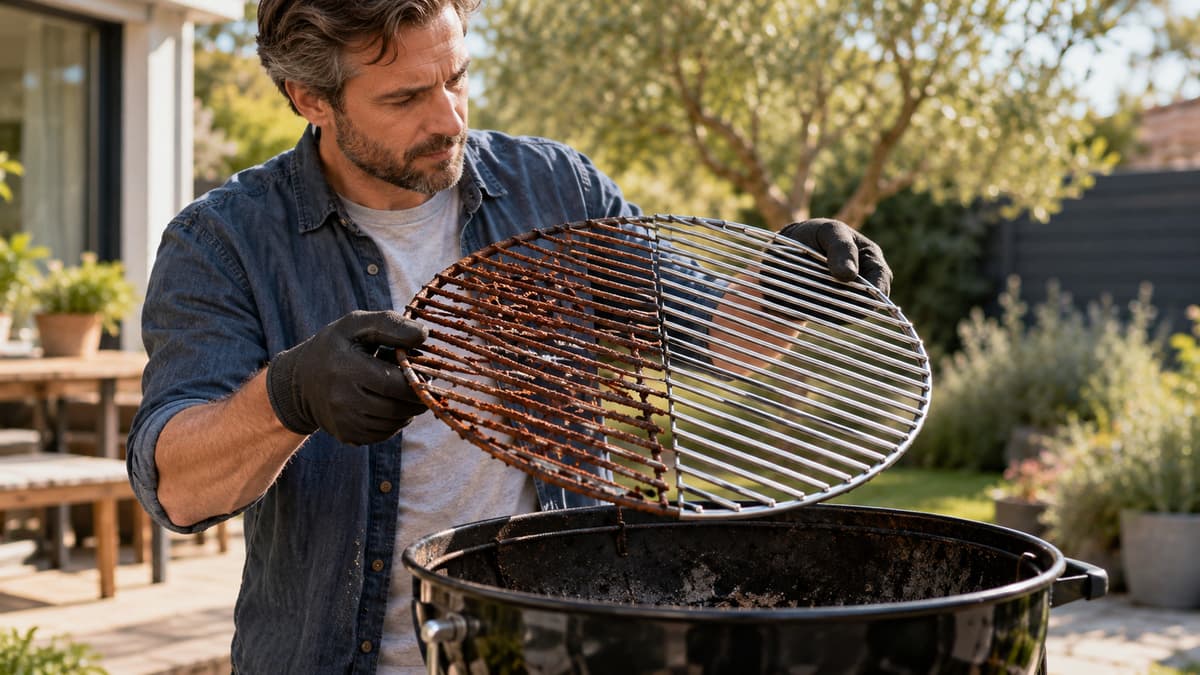
A stainless steel barbecue grate still has to match the bowl you own. Cast iron fails differently, and flaking enamel on a food grate means you replace it.
On this page
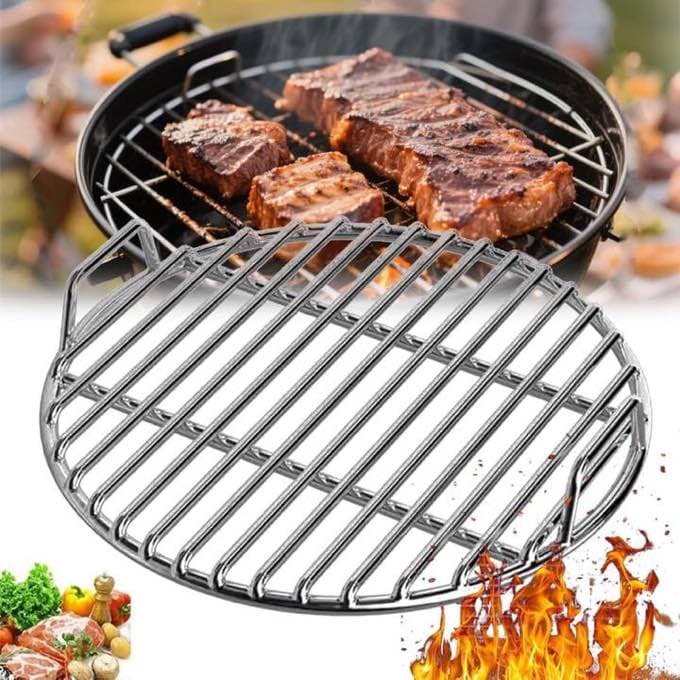
The old grate comes up in two pieces, or it comes up orange after a wet spring. You want a stainless steel barbecue grate because the photographs are silver and the last set of bars rusted. The metal is the second decision. The first is whether the new grate sits on the ledge of the barbecue you already own, measured in millimetres, rather than by the diameter printed on the lid.
A cast iron barbecue grate and a stainless one fail on different calendars. Bare iron wants a film of oil and heat. Enamel wants to stay in one piece. Stainless resists rust for longer and still stains when a cover traps rain against it. A disc that rocks, or a rectangular cart grate offered as a kettle part, wastes whichever metal you paid for.
Products Compared wrote this page in October 2026 from the grate listings in our stainless steel barbecue grill grate comparison on amazon.co.uk, from the Schickling quality case that names steels 1.4016, 1.4301 and 1.4571, from GOV.UK's statement that food has to be cooked properly, and from London Fire Brigade's instruction to let a barbecue cool until it is out. We did not run a side-by-side cook. These sources contain no test that one metal sears steak better. A purchase through our links can earn a commission at no extra cost to you.
In short
Measure the grate or the ledge on a cold barbecue before you choose stainless or cast iron. Stainless can still mark, bare cast iron needs seasoning, and flaking enamel on a food-contact grate is a reason to replace it. A Weber bowl name does not transfer to a Schickling cookbox, and a grade number does not make a loose grate fit.
Fit the grate before you choose the metal
Start when the barbecue is cold. London Fire Brigade's guidance is to let the fire cool until it is out before you handle it. Measure last weekend's grate and the ledge it sat on, both in millimetres. The number on the lid is often larger than the cooking grate. A round kettle and a rectangular cart do not share an outline, so a disc that looks close will fall through or sit proud and dump fat on the coals.
A universal grate is a listing phrase. These notes give no diameter that suits every kettle. A 57 cm Weber grate is a Weber part, and that figure is often the bowl's name rather than the width of the bars. A Schickling cart has its own cookbox. If the old grate has gone, measure the support inside the cold bowl before you order a third-party disc.
Thickness comes after the outline matches. Some makers specify 6 mm or 8 mm stainless for their own body. An 8 mm grate that rocks still cooks unevenly, and it is heavier to lift. A new grid will not repair a split bowl or a burner that will not hold a flame.
How stainless and cast iron age
Stainless steel still marks when it stays wet under a cover through a British winter, especially on scratched bars or a grade with little nickel. Clean a sound bar and dry it. Replace the grate when a bar has thinned, a weld has opened, or the grid flexes. A moving grate drops food into the fire.
Bare cast iron rusts once the seasoned layer has gone. Seasoning is a thin coat of oil heated until it bonds, then renewed after a hard wash or a damp week. Scrub a light orange film on sound iron and oil it again. Pitting that catches food, or a cracked bar, means that grate is finished.
Cast iron stays hot and is heavy to lift. The weight helps a long joint and gets in the way when you move the coals. Enamel is a glass-like coat, and oil will not rebuild a chip in it. When the enamel has flaked where food sits, replace the grate.
Leave a sealer off the bars unless that product's own page shows a food-contact finish. The grade of the grate also does not tell you the chicken is done, so check the meat with a thermometer. The grate only holds the food over the heat.
What the steel grade numbers mean
On Schickling, the maker's quality case uses 1.4016, 1.4301 and 1.4571 on different parts of the cart. That line does not name the cooking grate on a given model, and it is not a promise that any stainless grate fits any kettle. Read the numbers as grades. Read the tape measure as the fit.
- 1.4016 is a chromium steel in the family often sold as 430. It is magnetic and shows rust spots readily if it stays wet.
- 1.4301 sits with the 304 family, often sold as 18/8 or 18/10. It lasts longer in a wet garden than 1.4016 and can still tea-stain under a cover.
- 1.4571 is a 316-family steel with molybdenum and titanium. It resists longest and still marks under a soaked cover.
Keep an enamelled kettle when the grate fits and the enamel is whole. Our Weber barbecue comparison covers the kettle. A third-party grid that shares a grade number still misses the ledge when it is a few millimetres out.
Clean the grate after the fire is out
Let the fire cool until it is out, which is the London Fire Brigade limit, before you clean. Both metals hold heat after the flames have gone, and coals underneath can still be live. Tip cold ash into a metal bin. Warm ash does not belong in a plastic sack.
Brush a cold stainless grate, wash it with hot water and washing-up liquid, and dry it. A stainless title is not a dishwasher claim, and a dishwasher line on one replacement listing applies only to that listing. Detergent strips seasoning from bare cast iron, which then rusts in the drum. Damaged enamel can lift in the same wash.
Bare iron wants a scrape, a wipe, and a thin film of oil once it is dry. An overnight soak leaves it orange by Monday. Wash sound enamel with hot water, and leave a chip unfilled. Put the cover on only when the bars are dry.
Which comparison to open
Open the grate comparison when the bars have failed and the body is sound. The top pick in the stainless steel barbecue grill grate comparison is a 40 cm round stainless grate, listed at £10.88, with 3.8 from 16 ratings on amazon.co.uk. The listed size is 40 × 40 × 5 cm, with no steel grade stated.
It suits a round opening you have measured at about 40 cm. It is the wrong part for a larger kettle. Sixteen ratings are a thin sample, and the shelf price moves. Weber kettles, including a bowl people call 57 cm, belong on the Weber barbecue comparison.
A split bowl or a failed burner means the grate was never the repair. A new grid leaves a balcony ban, a tent, a garage, and a lease that already forbids the fire exactly as they stand. Match the failure you can see: spots on steel, iron that has lost its seasoning, or enamel in the food.
Common questions
Does a stainless steel barbecue grate rust?
Does a cast iron barbecue grate need seasoning?
Can I put a stainless grate in the dishwasher?
Will a 57 cm Weber grate fit a Schickling?
Is a thicker barbecue grate always better?
What should I do if the enamel on the grate has flaked?
Which page is for grates rather than a whole barbecue?
Does the grate metal change the smoke-control rule?

Peter F. is the editor for DIY & tools at productscompared.co.uk. Comparisons in this category are checked against amazon.co.uk listings, review evidence and public UK sources.
Related articles
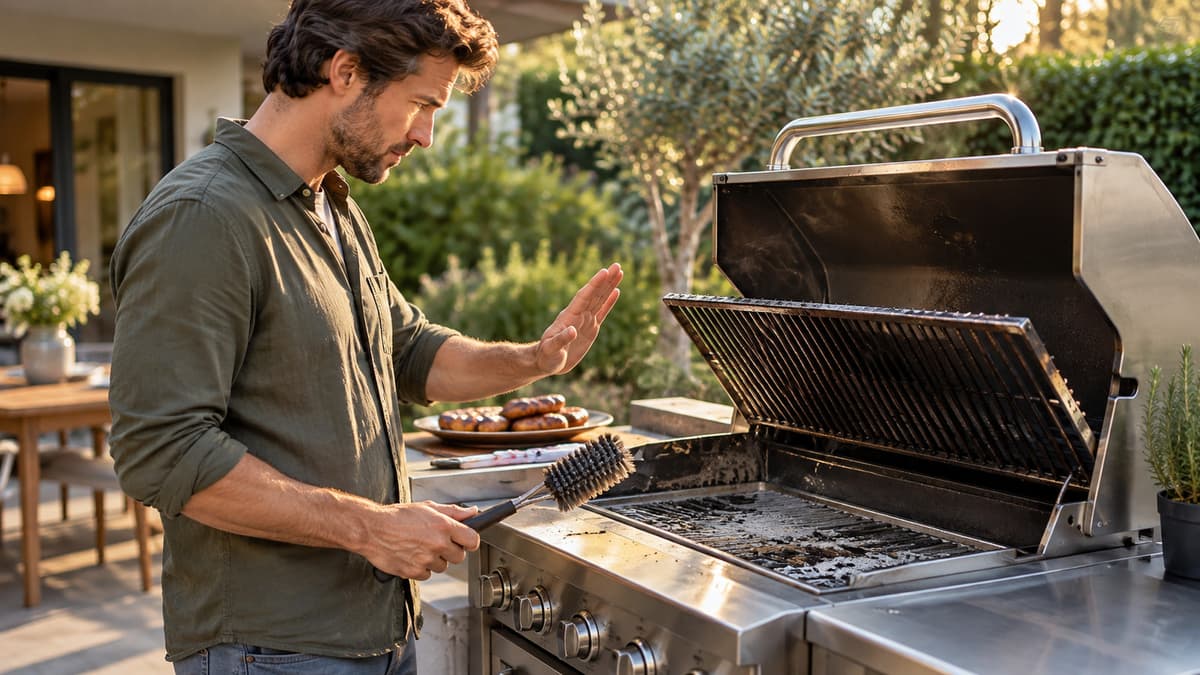
How to clean a stainless barbecue
A dull cart after a wet British winter is a cleaning job. Hot steel and the wrong chemical mark the surface.

Charcoal cart or gas cart
Heat, cleanup and the UK gas cylinder are different jobs. The cooking grate still has to fit the body you buy.

What to budget before you buy a garden barbecue
A euro list price and a missing delivery quote are not a GBP budget for a kettle or a stainless cart.