Charcoal or gas barbecue: which fuel suits you?
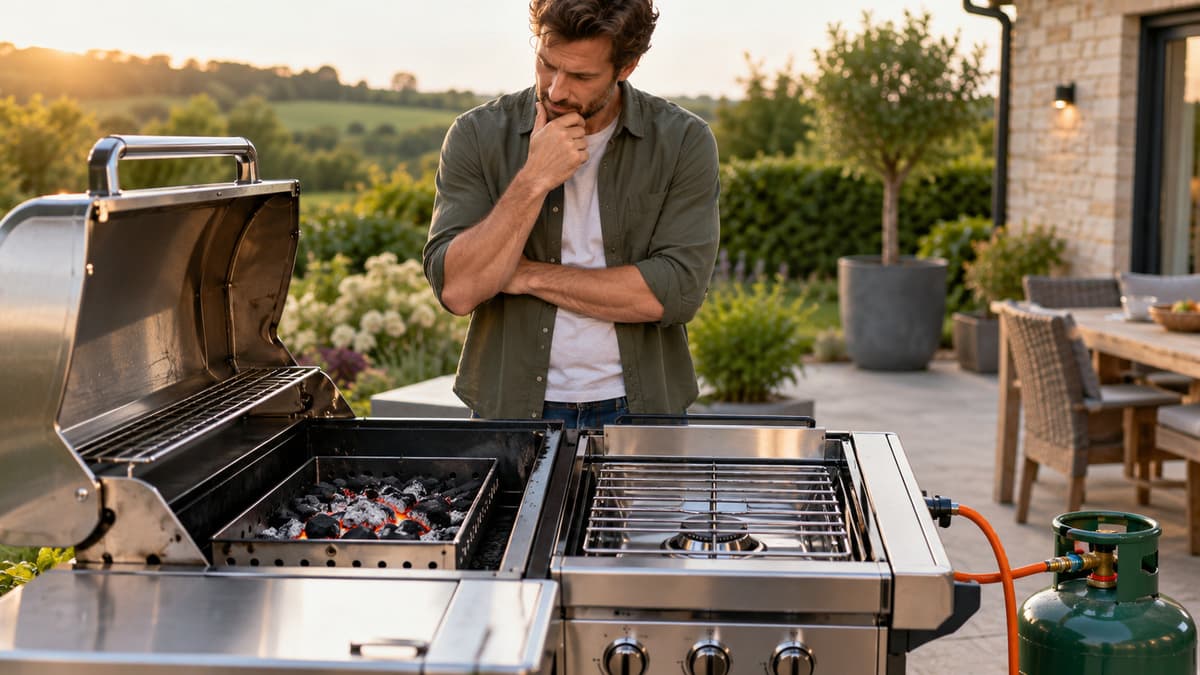
Charcoal or gas barbecue? Compare heat control, cleanup and the UK gas regulator job, and see why neither fuel belongs in a tent, awning or caravan.
On this page
In short
A charcoal or gas barbecue decision comes down to one fuel and one habit. Charcoal cooks on a coal bed you raise and vent. Gas cooks on a burner you light from a cylinder, once the regulator matches the plate on the appliance. Choose charcoal for coal flavour and a fire you tend. Choose gas for knobs on a weeknight. Neither fuel belongs in a tent, awning or caravan.
Products Compared drew on the Schickling range notes, London Fire Brigade barbecue guidance, and GOV.UK pages on outdoor fire safety and smoke control areas, in October 2026. We did not taste the fuels in a lab. A qualifying purchase through our links can earn us a commission at no extra cost to you.
Charcoal or gas barbecue: the job each fuel does
Charcoal is the fire you build. You light a bed, wait until it is ready and cook in the open air. The taste people call barbecue usually comes from that bed, and a gas flame will not imitate it however long the lid stays down. The limit is plain: we have not measured that taste, so treat charcoal flavour as your preference.
Gas is the fire you switch. The burner lights from bottled gas, you turn a knob, and you turn it off when the plates are done. That suits a weeknight when you would rather not tend coals after work. The limit sits on the cylinder: if the regulator and the plate disagree, you do not have a quicker supper. You have a barbecue you should not light.
Stainless carts split the same way. Schickling sells charcoal Willy, Walter and Profistar, and gas Henry, Hermann and Rocket. This site has no scored Schickling page, so the compared listings linked below are Weber. A maker line such as “up to 20 people” is a suitability claim, not a portion test. Buy the grate that matches your garden and the meal you actually serve.
Heat control: knobs against a coal pan
On gas, heat is a knob in front of a burner. You set it and turn it down when the outside colours faster than the middle. There is no coal pan to lift and no ash to clear, so cleanup is grease and the burner.
On charcoal, heat is the coal bed and the vents. Schickling charcoal carts use a height-adjustable coal pan with five steps, and four on the Profistar. You move the pan closer to the grate or further away, and you use the vents with that height. There is no regulator in that path, because there is no gas pressure to reduce.
London Fire Brigade tells you not to use accelerants to light charcoal. Petrol, white spirit and a splash of lighter fluid are the shortcuts to refuse. The note is London guidance, but it describes the fire you want: a coal bed in the open air, brought up by the pan and the vents.
A tight lid helps you watch the cook. It does not turn a charcoal barbecue into a gas one, and it does not make a gas one taste of coal. If you hate tending a fire, charcoal will annoy you. If you want smoke in the food, the gas knob will annoy you the other way.
The UK extra that only gas has
Charcoal needs no UK gas regulator. The hose, the cylinder and the pressure number are a gas problem only. A gas cart in the Schickling range burns propane or butane, and natural gas is not offered, so you cannot tee it into the house supply.
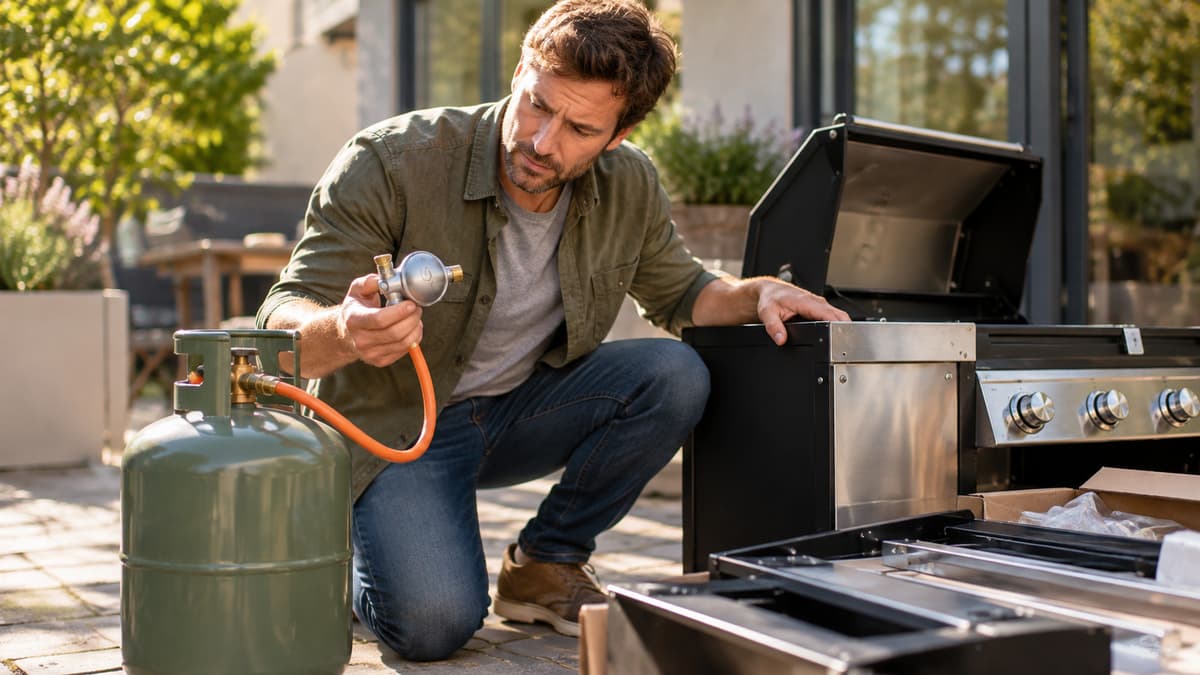
The data plate and the regulator have to state the same pressure. A Calor-style 37 mbar example and a 50 mbar PremioGas XL note both sit on the gas path. They are examples of a match you must read, not two settings you may mix because the figures look close. If the plate says one number and the regulator another, you do not re-jet the burner to average them.
A gas purchase therefore has a second errand: match the cylinder hardware before the first cook and keep that pair together. The guide to matching a UK gas cylinder to the barbecue walks through the check. Charcoal skips the errand and keeps the ash.
Safety rules that apply to both fuels
GOV.UK’s outdoor fire-safety guidance tells you to keep a barbecue out of a tent, an awning and a caravan. A tidy gas flame does not unlock the awning. A charcoal bed you can quiet with the vents does not either. A fabric roof holds the cook in a space that is not open air. Carbon monoxide from a barbecue in a closed space explains why both fuels are a risk there.
If the only dry place is under the awning, the fuel you chose does not unlock it. Wait, or use a kitchen grill. Cold means cold to the touch, in the open, before you wheel a barbecue anywhere sheltered.
Smoke control does not pick the fuel either. GOV.UK allows outdoor barbecues in a smoke control area, whether you burn charcoal or gas. That permission does not repeal a lease, a rental clause or a building rule. The article on garden barbecues and smoke control areas covers the difference. Read your lease before you buy a barbecue you are not allowed to light at your address.
How to choose between charcoal and gas
Start from the evening, then from the hardware. If the meal is about coal taste and you will light a fire without lighter fluid, charcoal is your barbecue. If the meal is a weeknight and you will keep a matched regulator on the cylinder, gas is your barbecue. Wanting both tastes describes two cooks, not one chassis with a secret switch.
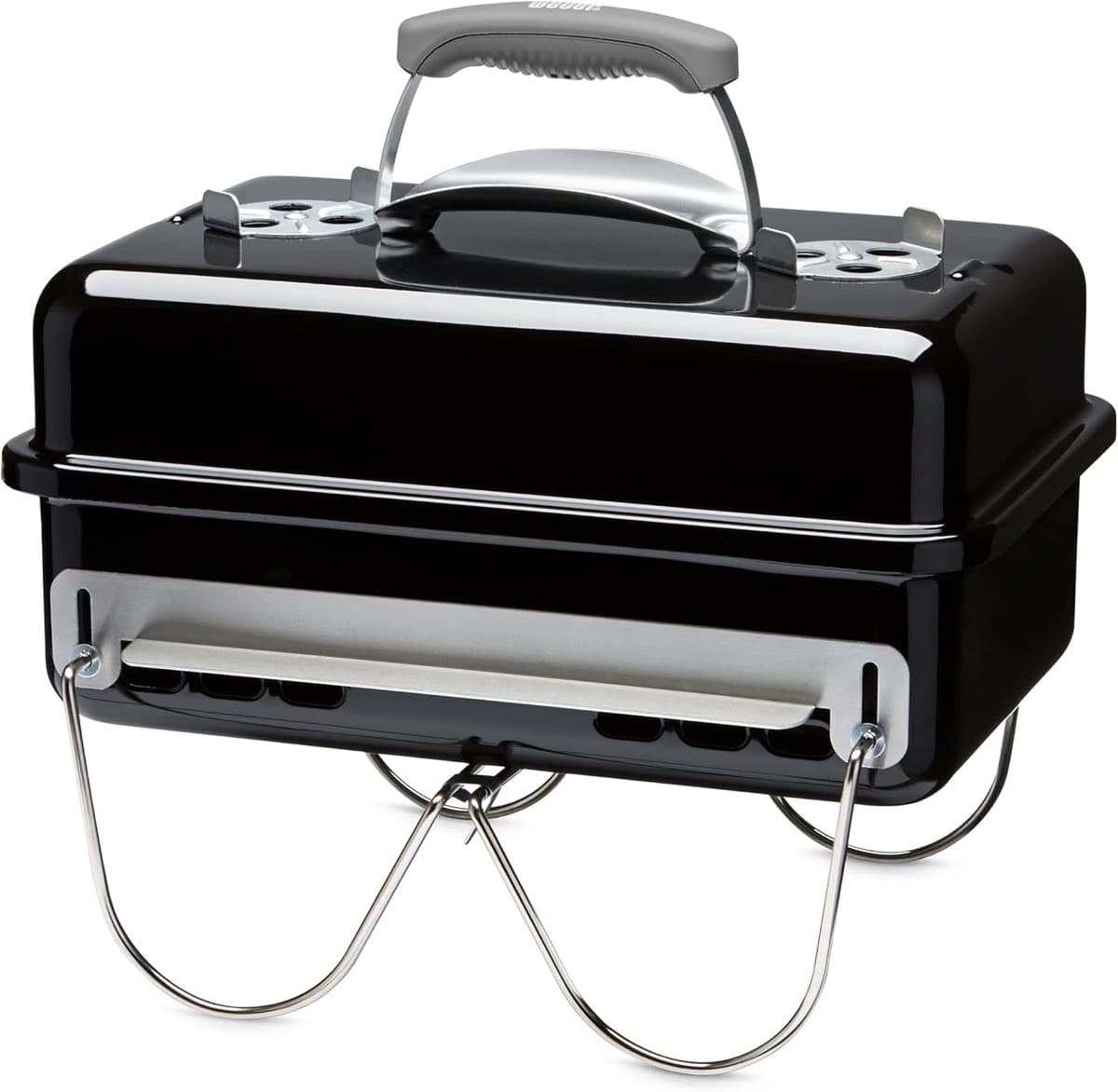
For scored amazon.co.uk listings, use the brand pages. Weber barbecues cover the charcoal set: the Go-Anywhere charcoal 1131004 is the top pick at about £100.79, and the Compact Kettle 47 cm is the best value at about £49.49. Weber gas barbecues cover the gas set, where the Q2100N is the top pick at about £419 and the Go-Anywhere gas model is the best value at about £169.99. Both pages answer a brand question. They do not crown a fuel.
Leave the headcount in the brochure. “Up to 20 people” is the maker’s claim and does not tell you whether a compact model is enough. Walk the patio, picture the cylinder or the ash pan, and buy the fuel you will still use in November.
Common questions
Which tastes more like barbecue, charcoal or gas?
Which is quicker on a weeknight?
Do I need a regulator for a charcoal barbecue?
Can I run a bottled-gas barbecue on mains gas?
Is charcoal allowed in a smoke control area?
Which is safer in a tent?
What does “up to 20 people” mean on a barbecue?

Peter F. is the editor for DIY & tools at productscompared.co.uk. Comparisons in this category are checked against amazon.co.uk listings, review evidence and public UK sources.
Related articles
Matching a UK gas cylinder to the barbecue
The regulator and the data plate have to state the same pressure before you light a gas barbecue.

Carbon monoxide from a barbecue in a closed space
Charcoal and gas both belong in the open air. A tent, awning or garage is the wrong place to finish the meal.

Garden barbecues and smoke control areas
An outdoor barbecue is allowed in a smoke control area. A lease can still stop the cook where you live.