Barbecue carbon monoxide tent: keep the cook outside

Charcoal and gas barbecues both make carbon monoxide you cannot smell. Never cook in a tent, garage, awning or caravan, and call 111 or 999 if you feel unwell.
On this page
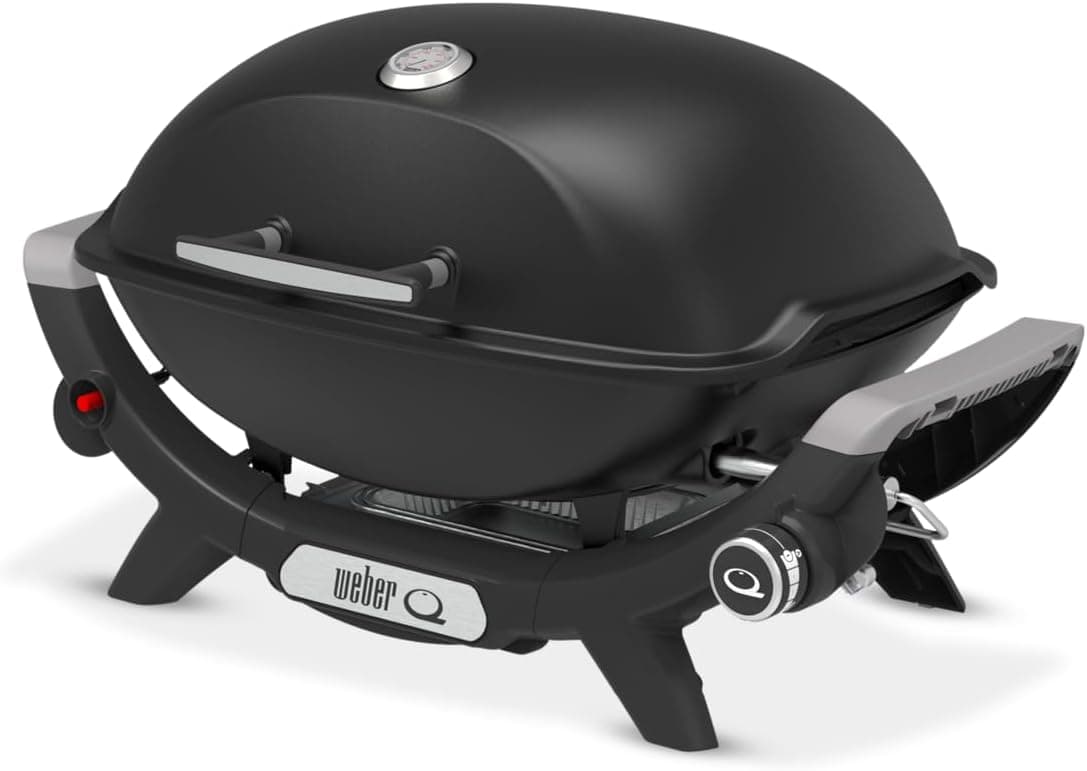
The rain starts halfway through the chicken, and the easiest move looks obvious: wheel the barbecue under the awning, into the garage or into the tent porch so the food can finish. That is the decision this page settles. A barbecue carbon monoxide tent risk, and the same risk in a garage, is not a smell you can wait for. The gas is colourless and has no odour, and charcoal and bottled gas can both produce it while the cook still looks ordinary.
The NHS says not to use a barbecue or a camping stove indoors or inside a tent. GOV.UK’s outdoor fire-safety leaflet, which applies to England, adds under an awning and in a caravan. London Fire Brigade adds the hour after the meal: smouldering ash can still give off carbon monoxide, and that can be fatal. A stainless cart, a tidy gas flame or a door left ajar is not an exception.
In short
Do not finish a barbecue in a tent, a garage, under an awning or in a caravan. Charcoal and gas both count, and you cannot smell the carbon monoxide. If you think you have symptoms, go outside and call NHS 111. Call 999 or go to A&E for breathing difficulty, sudden confusion, loss of consciousness, weakness, or chest or muscle pain, and do not drive yourself.
Why a barbecue carbon monoxide tent risk has no smell
Carbon monoxide is a poisonous gas. The NHS describes it as colourless and without a smell, so sniffing above the grate cannot tell you it is there. Smoke, soot and the odourant in bottled gas are smells you can notice, but carbon monoxide is not one of them. A charcoal smell means you can detect the fuel. It does not mean the poisonous gas is absent, and a cook that seems ordinary is not a clearance.
Gas is not a cleaner exception. The NHS lists appliances that burn gas, wood, oil or coal, and it names barbecues and camping stoves used inside as a way for carbon monoxide to build up. Our Weber gas barbecue comparison and our Weber charcoal barbecue comparison separate fuel, grate size and price. They do not name a closed-space model, because there is not one.
An alarm is not permission to stay inside. The NHS advises an audible alarm in each room with a fuel-burning appliance. GOV.UK’s camping notes say to consider one in a tent, and they still say not to cook inside it. A hallway alarm does not sample the garage you have just shut. Fit one for the boiler, and keep the barbecue outside.
Places the NHS and GOV.UK name
The NHS says never barbecue indoors, and not inside a tent. That covers a kitchen and an integral garage. The same page warns that a vehicle or a lawn mower running in a garage can let carbon monoxide build up, and a barbecue in a garage is that kind of enclosed cook. A door opened a hand’s width is not open air. No official line gives a safe gap, and this page will not invent one.
GOV.UK’s outdoor fire-safety leaflet, updated on 25 May 2022, applies to England. It says never use a barbecue indoors, in a tent, under an awning or in a caravan, whether the fuel is gas, charcoal or a disposable tray. A gazebo with walls is the same problem when the fabric holds the exhaust. Elsewhere in the UK, follow the NHS health rule and ask the local fire service about any extra fire wording.
A tent with the door tied back is still a tent. The leaflet says never cook inside one, and it says keep appliances off the walls because the fabric can catch light. A caravan is on the same never-list.
For a suspected leak from a gas appliance, the NHS gives the National Gas Helpline, 0800 111 999, day and night. A person who is unwell needs NHS 111 or 999 instead.
London Fire Brigade says never light a barbecue in an enclosed space, and not on a balcony, because sparks and embers can spread into the building. A closed balcony that behaves like an awning belongs with that rule. Our guide to balcony barbecues, leases and fire risk covers the rest. Stainless steel does not filter exhaust.
Carbon monoxide poisoning symptoms and which number to call
The NHS list of carbon monoxide poisoning symptoms includes a headache, dizziness, feeling or being sick, weakness, tiredness and confusion, chest and muscle pain, shortness of breath, a hot red face and loss of vision. Flushing can be harder to see on brown and black skin, so do not wait for a flushed look. Symptoms may come and go. They may worsen in the space and ease when you go outside. That pattern is a reason to leave, not a test you repeat by stepping back into the garage.
Stop the appliance if you can, go outside, and get advice before you go back in. Call NHS 111 if you think you have symptoms of carbon monoxide poisoning. Call 999 or go to A&E if someone is finding it hard to breathe, has suddenly become confused, has lost consciousness, is feeling weak, or has chest or muscle pain. Do not drive to A&E. Ask someone else to drive, or call 999 and ask for an ambulance.
Headache and nausea also come from sun and a heavy meal. Leave the awning before you decide which cause it is. In hospital, staff can test the carbon monoxide level in the blood. You cannot do that by looking at the coals.
Smouldering barbecue ash after the meal
London Fire Brigade says let the barbecue cool until it is properly out, because smouldering barbecue ash can give off carbon monoxide and can be fatal. No flame is not out. A grey crust can hide a bed that is still working. Putting that bowl in the garage or the tent to dodge the rain turns a finished meal into an overnight exposure.
GOV.UK says move the barbecue only once it is cool, and empty the ash onto bare garden soil, not into a dustbin or wheelie bin. Hot ash can melt the plastic and start a fire. Neither source gives a minute count for when the gas stops, so properly out means cold waste, not a surface that has lost its glow. If the weather will not let you leave the bowl outside until it is cold, do not light it.
After a gas cook, turn the cylinder off first and then the barbecue control, so gas is not left able to leak. Wheeling a connected grill into the garage to keep it dry leaves fuel in an enclosed space.
What this means for the grill you buy
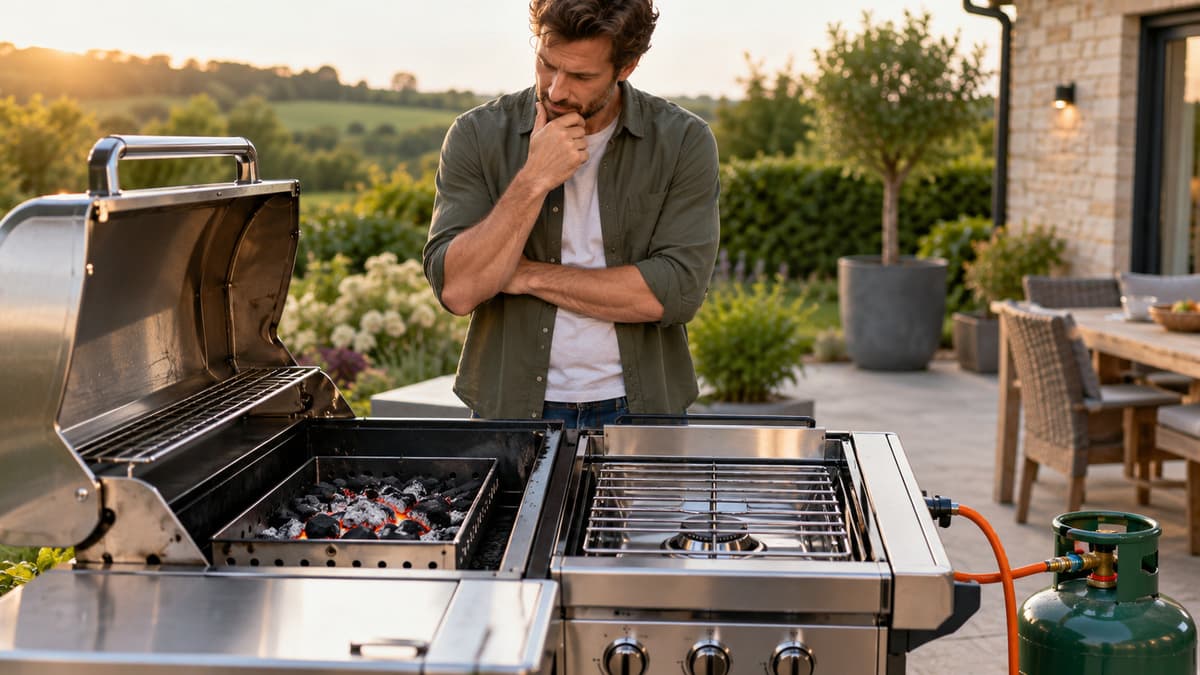
A stainless cart and a cheap kettle follow the same rule. If it burns charcoal or gas, it stays in the open. Treat a covered balcony that holds still air like the awning GOV.UK names. Steel grade, a tight lid and price do not filter exhaust. Our charcoal cart or gas cart guide covers heat and cleanup, and the choice between them does not change where you light either one.
In our single-burner Weber gas set, the Q2100N is the top pick for stated heat, grate area, equipment and review sample among those eight. The amazon.co.uk listing cites a 4.1 kW burner and about 2,065 cm², at about £419, with a 4.9 rating from 16 reviews. That score does not say you may finish a cook in a garage. More kilowatts means more fuel burned in open air. It is not a safety feature in a closed room.
Use the Weber charcoal comparison to choose taste and cleanup, then site the grill in the open. GOV.UK’s suggestion of about 5 cm of charcoal is a fuel-bed depth for outside, not a smaller load that makes a porch acceptable. If rain is the constraint, delay the cook or look at an indoor electric grill or a garden barbecue instead.
This page uses the NHS carbon monoxide pages, the England fire-safety leaflet and the London Fire Brigade barbecue page. We have not lab-tested exhaust. A qualifying purchase through our links can earn a commission at no extra cost to you.
Common questions
Can you smell carbon monoxide from a barbecue?
Is a tent safe if the door is open?
Is a gas barbecue safe in a garage when it rains?
What are the symptoms of carbon monoxide poisoning?
When do I call 999 instead of NHS 111?
Are the ashes safe once the flames are gone?
Does a carbon monoxide alarm replace outdoor siting?

Peter F. is the editor for DIY & tools at productscompared.co.uk. Comparisons in this category are checked against amazon.co.uk listings, review evidence and public UK sources.
Related articles
Charcoal cart or gas cart
Fuel changes heat and cleanup. Charcoal and gas still both belong in the open air.

Indoor electric grill or a garden barbecue
When rain stops the cook, an indoor electric grill is a different appliance from a garden barbecue.

Balcony barbecues, leases and fire risk
A covered balcony can trap fumes the way an awning does, and the lease may ban the cook.