Wood wool firelighters barbecue: smell, cubes and burn

Wood wool and white paraffin cubes light charcoal differently. Compare claimed burn time, smell on the food, and the cold-coal rule before you strike a match.
On this page
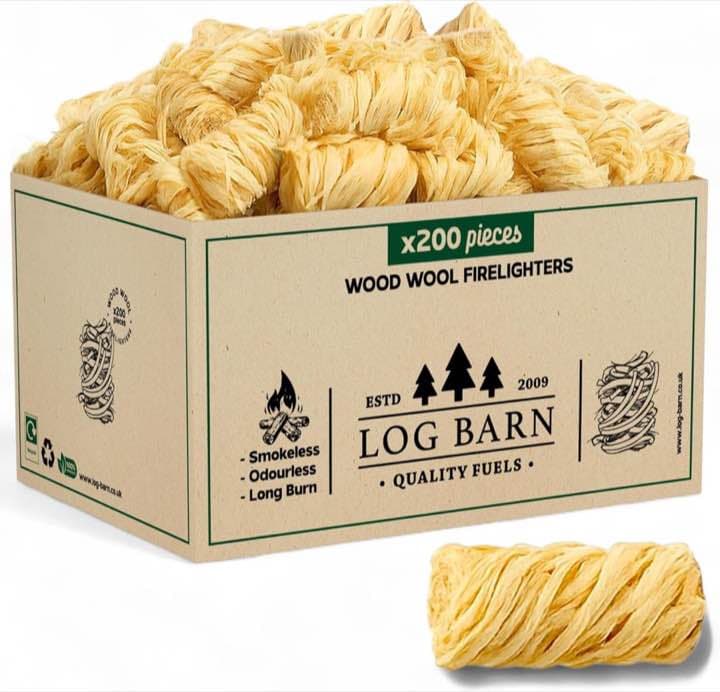
The charcoal is still cold, and the only starter under the sink is a tray of white cubes that smell of paraffin. Wood wool firelighters barbecue cooks keep beside the kettle are fine shavings held with wax, sold as a lower-odour way to light the coals. They earn a place when the last meal tasted of lighter fluid. They fail when every printed burn time is treated as one number, or when a fresh lighter goes onto coals that have already caught.
In short
Wood wool firelighters are waxed shavings. White cubes are often a paraffin firelighter, and lighter fluid is a liquid you pour. Use the count on your packet, on cold coals only, and let the starter finish before food goes on. A printed seven minutes and a printed ten to twelve minutes belong to different sellers. A chimney still helps when charcoal is slow to catch.
What wood wool firelighters are
A wood wool firelighter is a small nest of fine shavings, usually bound with wax, that you light so the fuel above it can catch. Big K's Woodies are FSC wood wool and wax, described as low odour. The maker tells you to place three or four pieces on the fuel, cover them and light them, and the bag on that page is £22. Four Seasons Fuel sells a chemical-free version with no paraffin: fifty pieces, each about 9 cm, with a burn of about ten minutes. The instructions stay with the box that printed them.
Natural on the label leaves the wax unnamed unless the listing names it. Some boxes say wood and wax and stop. Others say no paraffin. An odourless firelighter line is that maker's scent claim, worth setting beside a cube you can smell through the wrapper. Natural is a shop word, and an unnamed wax is a shop description.
Loose wood wool sold for hampers is priced by the kilogram, with no piece count and no burn time. A damp bag stalls. For charcoal, buy the waxed nests and store them dry. Barbecues, pizza ovens and fire pits appear beside log burners on these listings, so outdoor charcoal is a normal use. Keep the barbecue itself outdoors. The piece count on the packet still decides how you light.
Burn time is a maker's figure
Keep each minute figure with the seller who printed it. Big K says about seven minutes. Four Seasons Fuel says about ten. Barbequick's 200-pack page, at £19.99, claims ten to twelve minutes, and that figure is the seller's, not a burn timed for this article. An average of 7, 10 and 12 describes no packet you can buy.
Big K's three or four pieces belongs to Woodies. Log Barn's amazon.co.uk box of 200, ASIN B07FF436N5, was £12.99 in this comparison set, about 6.5p a piece. The listing says one on top of kindling, and two or three without kindling. The claimed burn is up to ten minutes, and the wax is unnamed. A barbecue usually has charcoal and no kindling, so the one-piece line is the short count. Three pieces is about 20p a lighting, and only when those pieces catch the coals.
Barbequick's £19.99 for 200 is about 10p a piece, so three or four pieces is about 30p to 40p a cook. Four Seasons' fifty pieces cover roughly a dozen to sixteen barbecues at that rate. Wind on an open bowl spends a short claim before the centre of the mound has caught. Pack size, claimed minutes and price per piece on amazon.co.uk are set out in the wood wool comparison.
Chemical cubes and lighter fluid
White lighter cubes are the ordinary barbecue firelighter in a lot of drawers. Many of them are a paraffin firelighter: a dense block that lights readily and smells of fuel before the charcoal does. The wool is shavings and wax. The cube is a compact block. Both can start cold charcoal. The smell differs, and a burn time on one packet stays on that packet.
BBC Good Food prefers natural firelighters, wood wool included, because a chemical lighter can taint food. Wood wool is the better fit when you want less of that note, once the starter has finished and the coals show a grey ash. Food that goes on while you can still smell paraffin, or while the wax nests are still flaming hard, can carry the starter into the meal.
Lighter fluid is a liquid, and petrol is the substitute the outdoor fire-safety guidance forbids. Leave fluid off any coal that has already taken a flame. A failed first attempt calls for a cool bowl and a fresh recognised lighter. Cubes still pack flat, and some cooks find they stand up to a gust better than a fluffy nest. When smell is why you are shopping, read whether the next box says paraffin or kerosene.
Cold coals only
GOV.UK's outdoor fire-safety guidance tells you to use recognised lighters or starter fuel on cold coals only, and never petrol. BS EN 1860-3:2023 is the firelighter part of the barbecue appliance series. A listing that cites it is claiming that part. A listing that never mentions it has not shown compliance. The number is a standard reference, not a quality medal.
Cold means the charcoal has not caught. After a failed try, a few coals can glow while the rest stay black. That bowl is the wrong moment for a fresh wood wool nest, another cube or a second pour. Let it cool, or rebuild on charcoal that has not burned. Starter on a smouldering fire is how a small flame reaches your face.
A chimney remains the practical tool for charcoal that is slow to catch from lighters alone. BBC Good Food keeps the chimney in the method beside natural firelighters. Wood wool can sit under the coals in the chimney, or under a mound in a Weber charcoal barbecue. Load it on a fireproof surface, light the starters, and leave it until the coals at the top are ashed. It still begins with cold charcoal.
An open stainless-steel pedestal barbecue gives the flame less shelter, so a gust can use up a seven-minute claim before the mound catches. Where the packet says three or four pieces, spread them under the charcoal. Keep your face and loose clothing back, and keep a lit firelighter out of your fingers. Wait for grey ash before food reaches the grate.
What the comparison should decide
Four checks come before the star rating. You want a counted waxed nest, because loose hamper wool is another product. You want the burn claim printed for that exact box, kept as a claim. You want a scent line that shows whether paraffin is named or absent, because natural on its own leaves the wax open. You want a piece count that fits charcoal without kindling, because one lighter on kindling will under-light a kettle of lumpwood.
Price per piece comes after those four are acceptable. A £22 bag and a £19.99 box of 200 can be compared once both counts are known. A box of fifty is a fair trial if you are still unsure about leaving cubes behind. A large count saves money only when the pieces stay easy to light and the parcel arrives dry.
A kettle with a chimney is more forgiving of a shorter claim, because the chimney holds the flame against the fuel. An open pedestal in a breeze is where seven minutes and twelve minutes stop being small print. If a box cites BS EN 1860-3, record that it claims the firelighter part. If it is silent, leave compliance blank. Keep white cubes and lighter fluid outside the wood wool rows.
Log Barn's 200 box brings a 4.7-star average from more than 22,000 amazon.co.uk reviews, a claimed ten minutes and an unnamed wax. That is a sensible shortlist piece if you light often, follow that listing's own count, and wait for ashed coals. A smaller box can still be the better first buy.
Common questions
Will wood wool make the food taste of chemicals?
How many wood wool firelighters should I use?
How long do wood wool firelighters burn?
Are white firelighter cubes the same as wood wool?
Can I put firelighters on coals that are already lit?
Do I still need a chimney starter?
Are wood wool firelighters only for wood burners?
Does natural mean a firelighter meets a standard?

Products Compared publishes British-English buying guides based on amazon.co.uk listings and public UK sources. We do not run a lab and we do not invent test scores.
Related articles

How to light charcoal safely
Cold coals, a recognised lighter, and the point at which the grate is ready for food.

Charcoal barbecues and carbon monoxide
Cooling coals keep producing carbon monoxide in a tent, a garage or a closed room.

When barbecue ash is safe to move
Grey ash can stay hot enough to damage a bin. Wait until the fuel is fully cold.