Independent comparisons. We may earn from shop links. More info

How to set up a rain collector

Updated: 23 October 2026

The box is open, the poles are loose, and the first UK shower is forecast overnight. This how to set up a rain collector guide walks soft PVC barrels and hanging cloths from an empty carton to a stable first fill, without cutting the downpipe. For which size to buy, use the [rainwater collector buying guide](/hub/garden-watering/rain-collector/sub/rain-collector-buying-guide) or the [rain collector comparison](/hub/garden-watering/rain-collector). Prices and kit lines are the amazon.co.uk listings. Peter F. did not assemble every tank in a lab. A purchase through our links may earn a commission at no extra cost to you.

The box is open, the poles are loose, and the first UK shower is forecast overnight.

Our top picks

On this page

Soft-tank assembly order

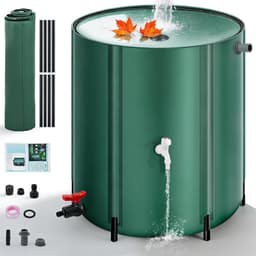
Clear a firm, level patch within reach of the spout. Soft tanks punish slopes: water leans on one strut and the zip lid sits askew. Count poles or rods, washers, the tap, stakes, straps, and any overflow spout before you force fittings. The Normodic 200 litre bullets name four rods, gaskets, a drain valve and an overflow spout. Match what you ordered. Seat poles or circular feet fully in their pockets. Fit washers on both sides of the fabric where the tap threads through. A missing washer is the usual drip. Screw the tap hand-tight, then a gentle further turn. Over-tightening cracks plastic flanges. Close the mesh lid. If poles are in the box, they are structural. Place the empty barrel under the downpipe outlet or rain chain. You are not cutting pipe on this path. Leave room for a watering can under the tap. A mid-height tap is for cans, not hose pressure. That limit shows up often in UK soft-tank reviews.

Ballast, pegging, and overflow on day one

An empty soft tank is a sail. BeGrit-style listings include stakes and straps because reviewers say unpegged empties blow across the patio. On soil, drive the stakes. On paving, strap to a wall eye or a heavy planter, or use the first water as ballast. A partial fill, sometimes about a fifth of capacity if your manual agrees, weights the base without stressing every seam. Do not leave the barrel bone-dry in a windy spot. Aim the overflow hose before rain, toward a gully, a bed that can take a soak, or a second barrel. An unplanned spill on tiles sends water under doors. Mesh is not a drinking-water filter. Check the tap on a shallow fill. A tap that only drips when the tank is fuller may need reseating. Mekturm reviews include that complaint, so fix it while the barrel is still light enough to tip. In hard frost, many owners drain and fold. Seller ranges such as −20°C to 50°C are marketing text, not a field certificate. Do not drink from the tap.

Hanging cloth without the missing frame

Four straps with hooks can hang from a sturdy fence rail, pergola beam, or branch. They cannot invent legs that appear only in the photo. Both UK reviews on the cheap blue tarp say sticks or legs were not supplied, and one unit collapsed in the first rain. Budget timber props, or skip the type. Mount the cloth as a shallow dish toward the central drain, and route the hose into a bucket that cannot tip. Litre capacity is often unstated. Expect low volume, not a 200 litre store. Wet polyester stretches, so check hooks after the first shower. If the box holds only fabric and straps, you were sold a hanging kit. When a rented balcony cannot take the load, stop and use a freestanding soft tank with poles.

When setup becomes a diverter job

Stop this sequence when the spout splash is messy, the landlord allows a pipe alteration, or you want surplus to return down the downpipe. That is a diverter job: measure the outside size, about 68 mm round or 65 mm square on many plastic pipes, mark the height from the butt inlet, and cut only to the kit. Pole assembly does not transfer another kit’s millimetre cut. The steps are on the water butt diverter page. Call a professional for cast iron, shared flat drainage, indoor non-potable plumbing, or a balcony whose load you have not checked. Ordinary gutter work often needs no Building Regulations approval, yet a bad cut still leaks into the wall. If you are only seating poles and washers, stay here.

Common questions

What order do I assemble poles and taps?
Level the site, seat poles or feet fully, fit washers and the tap, close the mesh lid, then place the barrel under the spout. Add ballast and aim the overflow before the first storm. A missing washer is the usual drip at the spigot.
How much water first for ballast?
Enough to stop the empty tank blowing away, often around a fifth of capacity if your manual agrees. Do not leave it empty on a windy patio.
How do I hang a cloth that has no frame?
Use strong existing rails or add DIY timber. Do not assume photo legs are in the box. Drain into a stable bucket. Both reviews of the cheap blue tarp in this set say the supports were missing.
How do I check for leaks at the spigot?
Fill partly, watch the washer faces and the tap nose for drips, and reseat washers before the tank is too heavy to move. A tap that only drips when the barrel is fuller still needs that check while you can tip it.
When do I stop and buy a diverter instead?
When you want a sealed pipe feed and overflow that returns down the downpipe, and you are allowed to cut plastic pipe. Measure the outside size first. Pole assembly is a different job from a cut-in fitting.
Where does overflow water go on day one?
Through a hose aimed at a drain, a bed, or a second barrel, before the tank is already full. An afterthought onto the patio sends water under doors. Mesh on the lid is not a drinking-water filter.

Related pages

Sources

Public UK sources from the research digest, plus the amazon.co.uk prices, stars and review counts in the display file dated 21 October 2026. Last reviewed 22 October 2026.

  1. Mersey Direct, water butt diverter buying guide (retrieved 21 October 2026)
  2. GRAF UK, downpipe diverter (retrieved 21 October 2026)
  3. GOV.UK, rainwater harvesting regulatory position statement (retrieved 21 October 2026)
  4. GOV.UK, when you do not need Building Regulations approval (retrieved 21 October 2026)
  5. Wessex Water, how to install a water butt (retrieved 21 October 2026)
  6. Screwfix, how a water butt diverter works (retrieved 21 October 2026)
  7. BBC Gardeners' World, water butts (retrieved 21 October 2026)