Independent comparisons. We may earn from shop links. More info

Rainwater collector buying guide

Updated: 23 October 2026

You are standing under a plastic downpipe with a watering can, and the patio floods when the gutter overruns. A rainwater collector buying guide should settle capacity, base, tap height, lid and overflow, and whether you cut the pipe at all, before you open a price table. This page runs those five checks for UK soft tanks and hanging cloths. When you are ready to match listings, use the [rain collector comparison](/hub/garden-watering/rain-collector). Shelf prices are GBP on amazon.co.uk. Peter F. checked listings and public UK sources, not a laboratory fill. A purchase through our links may earn a commission at no extra cost to you.

You are standing under a plastic downpipe with a watering can, and the patio floods when the gutter overruns.

Our top picks

On this page

Five checks before the table

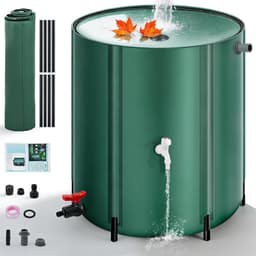
Start with capacity versus footprint. Mid-size foldable barrels in this cluster sit around 200 litres, enough for a small border and a few cans a week. The large BeGrit option prints about 380 litres in the title and 350 litres in a detail field. Keep both as printed. A larger soft store needs a level pad and room for poles. Full weight is about a kilogram per litre plus the frame. Then judge stability, the tap, and the lid. Soft PVC needs poles or circular feet, and many kits add stakes and straps. On paving, strap to a wall bracket or use the first partial fill as ballast. Empty tanks blow sideways if the stakes stay in the bag. Gravity from a mid-height plastic spigot fills a can slowly. UK reviews on the large soft tank say cans or dipping work better than a hose. Zip mesh keeps leaves out. It does not make the water wholesome. Prefer a named overflow you can hose toward a drain or a second barrel.

Soft tank, hanging cloth, or later rigid butt

The fifth check is the install path: an open soft tank under a spout with no pipe cut, a hanging cloth with real fixing points, or a cut-in diverter for a permanent store. Common plastic downpipes are about 68 mm round and 65 mm square. Measure yours. Leave cast iron to a professional. A collapsible PVC barrel is the core product here: pack-flat body, poles or feet, a screw-in tap, often a mesh lid and an overflow kit. It suits renters and seasonal allotments because you can fold it away and you usually need not cut the landlord’s pipe. You get a stated litre mark and a tap, which a hanging cloth does not. Against a rigid recycled-plastic butt you trade UV life and neat diverter geometry for convenience. The collapsible versus rigid water butt page is that fork. Measuring and cutting sit on the water butt diverter page. Hanging cloths sit about £5–£15 and drain to a bucket. Both UK reviews on the cheap blue tarp say the supports in the photos were missing, and one unit collapsed in the first rain.

Overflow and non-potable limits

An open soft top under a spout keeps filling after the tank is full unless water leaves through an overflow hose, away from doors and electrics. On a small patio, route that hose to a gully. If you later fit a diverter, success means surplus returns down the pipe when the butt is full. Treat harvested roof water as non-potable garden irrigation only. England’s Environment Agency position generally allows roof-only rain in a dedicated store without an abstraction licence. Mixing with ground or surface water can change that. Do not drink it, and do not trust seller bullets about drinking water after cleaning. Mesh reduces mosquitoes and debris. It is not purification. A full butt does not let you refill from the mains tap during a temporary use ban. Stop for cast iron or shared drainage. Soft-tank setup without cutting stays on the how to set up a rain collector page.

Price bands without bill myths

October 2026 amazon.co.uk shelf prices in this cluster, as a rule of thumb: hanging cloths and thin tarps about £5–£15; 200 litre collapsible tanks about £40–£50; larger soft tanks around 350–380 litres about £55–£65. Rigid kits with a stand and diverter in neighbouring browse nodes commonly run about £60–£150 and up. Seller bill-saving percentages are unverified. Pay for poles, a usable tap, a lid, and a named overflow before colour. A 5.0 from one or four reviews is weaker evidence than 4.4 from 25.

Common questions

How many litres do I need?
About 200 litres is a practical soft-tank start for a small border and can watering. A 350–380 litre store needs a level pad. Match litres to footprint and balcony load, about 1 kg per litre plus the frame, not to a bill-saving claim.
Soft tank or hanging cloth?
Choose a soft tank with poles when you want real capacity and a tap. Choose a hanging cloth only for low volume into a bucket, and only if you will supply strong fixing points. Skip tarps whose photos show legs that are not in the box.
Do I have to cut the downpipe?
No. An open soft tank under an existing spout needs no cut. Cut only when you fit a diverter to a permanent store. Measure the outside round or square size first. About 68 mm round and 65 mm square are common plastic sizes, not universal guarantees.
Are seller bill-saving percentages trustworthy?
No. Treat them as unverified. Use the GBP shelf price, the stated capacity, and the kit contents instead. Poles, a tap, a lid, and a named overflow matter more than a percentage in the title.
Is rainwater safe for vegetables?
Roof-harvested water is widely used for garden irrigation. It is not drinking water. Wash produce as you normally would, and never treat untreated runoff as a wholesome supply. A mesh lid is a debris screen, not a purification step.
When should I buy a rigid butt instead?
When you own the property, want several winters of permanence, prefer a child-oriented lid, and will fit a measured diverter with overflow return. Soft tanks remain the better fit for renters and seasonal pack-flat storage.

Related pages

Sources

Public UK sources from the research digest, plus the amazon.co.uk prices, stars and review counts in the display file dated 21 October 2026. Last reviewed 22 October 2026.

  1. Mersey Direct, water butt diverter buying guide (retrieved 21 October 2026)
  2. GRAF UK, downpipe diverter (retrieved 21 October 2026)
  3. GOV.UK, rainwater harvesting regulatory position statement (retrieved 21 October 2026)
  4. GOV.UK, when you do not need Building Regulations approval (retrieved 21 October 2026)
  5. Wessex Water, how to install a water butt (retrieved 21 October 2026)
  6. Screwfix, how a water butt diverter works (retrieved 21 October 2026)
  7. BBC Gardeners' World, water butts (retrieved 21 October 2026)