Independent comparisons. We may earn from shop links. More info

Water butt diverter

Updated: 23 October 2026

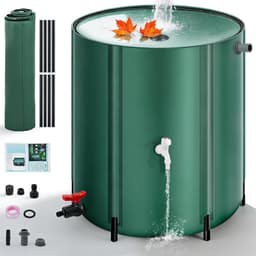
You have decided the open soft-tank splash is not enough, and you want roof water fed through the downpipe into a store. A water butt diverter takes a slice of that flow and, when the butt is full, should let surplus continue down the drain. This page covers when you need one, how to measure round versus square plastic pipe, a careful fit sequence, and when to stop DIY. The soft listings themselves are on the [rain collector comparison](/hub/garden-watering/rain-collector). Several of those tanks are meant to sit under a spout with no cut. A purchase through our links may earn a commission at no extra cost to you.

You have decided the open soft-tank splash is not enough, and you want roof water fed through the downpipe into a store.

Our top picks

On this page

When you actually need a diverter

You need a diverter when the store sits beside the pipe and you want a sealed feed, not an open top under the spout. Rigid butts on stands are the usual partner. The hose runs from the diverter body to the inlet at a marked height. Several large soft listings in this cluster say place the tank under an existing downpipe with no cutting. Cutting without measuring is the expensive mistake. Skipping a diverter when you wanted overflow to return down the pipe is the wet-patio mistake. Do not buy a diverter first for a hanging cloth or a soft barrel you will fold in November. Choose one when you are allowed to alter plastic pipe and you want surplus to return down the downpipe. A diverter switches flow and controls the fill. A filter traps debris. Some kits blend the jobs. GRAF UK explainers split diverter, filter, and filling device for that reason.

Measure twice

Measure the outside size and shape of your downpipe, not a neighbour’s. About 68 mm round and 65 mm square are common UK plastic sizes, not a guarantee. Universal packaging still fails on odd diameters and on cast iron. Match the kit to round or square. If the pipe is cast iron, heritage metal, or shared on a flat, stop. A bad collar leaks into the wall cavity. Then measure height from the butt inlet. The hose should run downhill or level, without a kink or a low loop that traps debris. Wessex Water’s install sheet stresses a level butt and a marked cut. Mersey Direct puts pipe size, inlet height, and hose route in that order. Write the millimetres down before you open the saw.

Fit sequence and first-rain check

Level the empty butt on its stand in the final place. Mark the downpipe at the height your kit specifies relative to the inlet. Do not copy another brand’s cut depth. De-burr the plastic, seat the seals square, and connect the hose with washers in place. The success test is surplus returning down the continuing pipe when the butt is full. On the first heavy rain, watch the fill, leaks at the collar, and whether water still leaves down the pipe after the overflow level. If the patio floods while the butt is full, the return is kinked, blocked, or mounted wrong. Ordinary gutter work often needs no Building Regulations approval. A crooked cut can still leak into the wall. Harvested water stays non-potable. Do not apply these millimetres to a pole kit. That assembly is the how to set up a rain collector page.

Filters, cast iron, and when to stop DIY

A leaf filter reduces gunk. It does not replace measuring. Clean it to match your tree cover, because a blocked filter looks like a diverter that has stopped. Read whether the kit is filter-led or diverter-led before you expect the same overflow behaviour. Stop DIY for cast iron, lead you might disturb, shared stacks, indoor non-potable plumbing, or a balcony load you have not checked. Do not force a plastic collar onto metal. If you only needed poles and stakes, stay with an open spout. If you are choosing permanence over pack-flat, settle that on the collapsible vs rigid water butt page, then buy a diverter matched to the pipe you measured.

Common questions

Round or square: what do I measure?
The outside size and shape of your pipe. About 68 mm round and 65 mm square are common plastic sizes. Always measure. Do not assume a neighbour’s pipe is the same as yours, and do not treat a printed standard as a guarantee.
How high do I cut?
At the height your kit specifies relative to the butt inlet, after the butt is level in its final place. Do not copy another brand’s millimetres. A hose that runs uphill or kinks will not fill the store as the diagram shows.
What if I have cast iron?
Most plastic diverter kits exclude it. Stop DIY and get advice rather than forcing a collar. A bad seal on metal can leak into the wall cavity. Heritage pipe and shared stacks belong in the same stop list.
Diverter or filter?
A diverter manages fill and overflow return. A filter traps debris. Some products blend the roles. Read which job the kit claims. A blocked filter can look like a diverter that has stopped, so clean it on a cadence that matches your trees.
Why does my butt still overflow onto the patio?
The return path to the downpipe is blocked, kinked, or mounted wrong. Fix overflow return, not just the inlet hose. On the first heavy rain, check that water still leaves down the pipe after the butt is full.
Can a soft tank use a diverter hose?
Sometimes, if the soft tank has a suitable inlet and you accept a semi-permanent pipe cut. Many soft tanks in this cluster are meant for open-spout placement instead. Do not copy diverter cut depths onto a pole kit.
Do I need Building Regulations approval?
Simple householder gutter and downpipe work often needs none. Follow the kit and stop for cast iron or shared drainage. That exemption does not make a crooked cut safe.

Related pages

Sources

Public UK sources from the research digest, plus the amazon.co.uk prices, stars and review counts in the display file dated 21 October 2026. Last reviewed 22 October 2026.

  1. Mersey Direct, water butt diverter buying guide (retrieved 21 October 2026)
  2. GRAF UK, downpipe diverter (retrieved 21 October 2026)
  3. GOV.UK, rainwater harvesting regulatory position statement (retrieved 21 October 2026)
  4. GOV.UK, when you do not need Building Regulations approval (retrieved 21 October 2026)
  5. Wessex Water, how to install a water butt (retrieved 21 October 2026)
  6. Screwfix, how a water butt diverter works (retrieved 21 October 2026)
  7. BBC Gardeners' World, water butts (retrieved 21 October 2026)