Independent comparisons. We may earn from shop links. More info

Anvil vs bypass loppers

Updated: 22 October 2026

You have just crushed a green rose stem. The bark is mashed, the cut is pale and wet, and the cane you meant to tidy is now a wound that will callus slowly, if it calluses at all. That is the usual way people discover the difference between anvil vs bypass loppers. An anvil closes one blade onto a flat block. A bypass passes one blade past another, like scissors. The plant decides which jaw you should be holding. Every listing in the [anvil loppers comparison](/hub/garden-tree-and-hedge-shears/anvil-loppers) is an anvil. If you need a passing blade, you are outside that table. This page stays with the cut. It does not rank the eleven rows. Peter F. read the listings and public UK sources. A qualifying purchase can earn a commission at no extra cost to you.

You have just crushed a green rose stem. The bark is mashed, the cut is pale and wet, and the cane you meant to tidy is now a wound that will callus slowly, if it calluses at all.

Our top picks

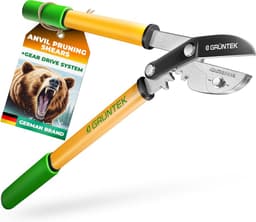
Grüntek Grüntek Grizzly 470

Best value

Grüntek Grüntek Grizzly 470
8.5/10about £24.98
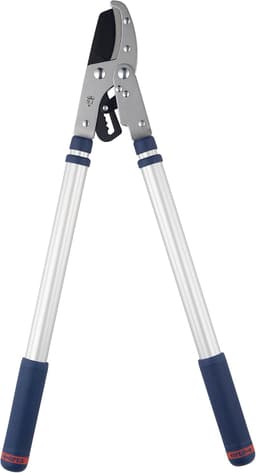
Wolf-Garten Wolf-Garten RS900T

Alternative

Wolf-Garten Wolf-Garten RS900T
8.5/10about £63.84
On this page

One blade onto a block

An anvil lopper has a single cutting edge that meets a flat face. The block supports the stem so the blade can push through wood that is dead, dry or hard. Burgon & Ball describe that jaw for work where plant health is not the point: dead wood, brush, bramble, or the rough shortening of a heavy limb. Gardeners' World put it the same way. One blade onto a flat base suits clearing dense dead wood. The force is the advantage. The flat face is also why soft green tissue mashes instead of slicing. The Arboricultural Association makes the point with secateurs, which is the small version of the same jaw. Anvil secateurs can crush soft tissue and slow the callus. Their guide is not a lab test of the loppers in this comparison. On a dry bramble the bruise does not matter, because you are removing the cane. On a live rose the bruise is the whole problem. Burgon & Ball also allow the anvil to take the weight off a heavy living limb, with a bypass making the final tidy cut. The anvil is the rough tool in that pair. If you are still choosing length and mechanism, the buying guide is the order of checks. The jaw comes before those checks.

A blade that passes

A bypass lopper has two blades. One passes the other and slices the stem, which is why it is the jaw for living green wood that should heal. Gardeners' World describe bypass loppers as slicing green stems, often with a slightly narrower cut than an anvil, and they mention cuts up to about 45 mm in their own wording. That figure is the magazine’s, for the tools in their round-up. It is not a capacity for the anvil rows here, and it is not a reason to treat every green stem under 45 mm as safe for a flat block. Live rose canes, fruit spurs, and the green leaders you are keeping on an apple tree are that kind of wood. Past the point where the RHS wants a saw, about 2.5 cm on a tree branch, the right next tool is a saw, whether your lopper is an anvil or a bypass. The climbers page allows loppers up to about 3 cm when you renovate an overgrown climber. Neither figure turns an anvil into a healing cut. Their 2026 best telescopic lopper is a Wolf bypass at £124.99 RRP. The anvil Wolf in this comparison is a different listing. A clean green cane cut with a bypass leaves a surface the plant can close. The same cane on an anvil looks finished until the bark browns back from the bruise.

Dead wood, bramble, then the healing cut

Use the anvil when the wood is dead, dry, hard, or simply being cleared. Bramble you are taking out, a dead lilac stub, last year’s buddleia cane that has already dried: the flat block is the jaw that matches, because nothing has to heal. Use the bypass when the shrub or the tree should close the wound. A rose you are deadheading back to a live bud, a fruit spur, a green hedge shoot you want to keep: the passing blade is the one that slices. You may own both. Clear the dead wood and the bramble with the anvil, then change tools before you shape what remains. Burgon & Ball’s two-step is the exception they describe, not a licence to finish on the block. If you only have the anvil today, leave the live shaping for a day when you have the other jaw or a sharp saw. Paint does not repair the mistake. The Arboricultural Association says wound paint should be avoided. The RHS, writing about cuts that bleed, says not to paint or wrap them. If you have already crushed a cane, cut back to sound wood with a bypass or a saw when you can, and leave that new surface bare. The method for seating the stem is on the how to use anvil loppers page. A ratchet anvil is still an anvil. The extra squeezes change the effort, not the fact that a blade meets a block.

What this table cannot be

Every kept row in the comparison is an anvil head. None is a bypass listing. A buyer who needs a passing blade will not find it by sorting this table on price, stars or stated centimetres. A 42 mm anvil and a 50 mm anvil are still flat-block tools. The larger number does not become a scissor. Gardeners' World’s best anvil for ease in that 2026 article is a compact compound from another brand, and their best ratchet anvil is a Spear & Jackson at a magazine RRP. Those are useful context. They are not a ranking of cut quality among the eleven amazon.co.uk rows. The English Garden has suggested that an anvil can also handle living wood. That line conflicts with Burgon & Ball and with the Arboricultural Association. This page does not follow it. If a seller title says the same anvil is for roses, hedges and 7 cm branches, read the jaw, not the adjective. Named picks, for people who have already chosen an anvil, sit on the best anvil loppers page. They still will not sell you a bypass. If you cannot work from the ground, hire an arborist, ideally an ARB Approved Contractor, when the limb could fall on a roof, a path, a person or a cable. In England a Tree Preservation Order needs written consent before you lop, and a dead look does not cancel it.

Common questions

What is the difference between an anvil and a bypass lopper?
An anvil lopper closes one blade onto a flat block. A bypass lopper passes one blade past another and slices. Burgon & Ball and Gardeners' World both tie the anvil to dead wood and dense clearance, and the bypass to living green stems. The Arboricultural Association notes that an anvil can crush soft tissue and slow callus. That note is about secateurs in their pruning guide. The same geometry is why a lopper with a block mashes a green cane. Choose the jaw from the plant. Choose the handle length only after the jaw is right.
Can I prune live roses with an anvil?
A live rose that should heal wants a bypass, or secateurs with a passing blade, not a flat block. An anvil can crush the cane and leave a bruised end that calluses slowly. If you are only removing wood that is already dead, the anvil is the matching jaw, including dead stubs inside a rose bush. Burgon & Ball allow an anvil to shorten a heavy living limb before a bypass makes the final cut. The final cut is still the passing blade. Paint will not turn the crushed cut into a clean one.
Are anvil loppers better for bramble and dead wood?
They are the better jaw for bramble you are clearing and for wood that is already dead or dry, because the block can push through hard stems and the plant is not being asked to heal. A bypass is the better jaw when the bramble is being shaped as a live plant, or when any green stem should close. Better here means the cut the wood can tolerate. It does not mean a higher star rating. Every model in the anvil comparison shares this jaw, so the table will not show you a bypass alternative under another name.
Will an anvil cut crush a green stem?
It can. The blade pushes the stem against a flat face, and soft green tissue mashes instead of shearing. You see pinched bark and a pale, wet end rather than a clean slice. Dry wood and dead wood do not have that problem in the same way, because you are discarding them. The Association’s warning is written for anvil secateurs. It is the same reason to keep a green fruit spur off an anvil lopper. If you have crushed a stem you meant to keep, recut to sound wood with a bypass or a saw and leave the new face unpainted.
Should I paint the cut?
No. The Arboricultural Association says to avoid wound paint, and the RHS says not to paint or wrap cuts that bleed. Time the prune instead. Paint does not repair tissue an anvil has crushed, and it does not make a clearance cut heal like a bypass slice. Leave a correct cut bare. If the jaw was wrong, change the jaw and recut to sound wood when the plant allows, rather than sealing the bruise. Dressing the wound is the step people add when the cut already looks unhappy. The dressing is not the fix.
Do I need both tools?
You do, if the same garden contains dead wood to clear and live wood that should heal. Many people use the anvil for the bramble and the dead stubs, then a bypass for the roses and the fruit. One tool means you will eventually use it on the wrong stem. Burgon & Ball’s sequence, anvil to shorten a heavy living limb and bypass to finish, assumes you can change jaws for the tidy cut. If you only buy from the anvil table, plan a second tool before you shape anything you want to keep. The main comparison will not supply that second jaw.
Is a ratchet anvil still an anvil?
Yes. The ratchet changes how many times you squeeze. The blade still meets a flat block, so the cut is still an anvil cut. It remains the jaw for dead, dry or hard wood, and it remains a crushing risk on soft green growth. Opening the handles between pumps does not turn it into a bypass. If the spring-open action is what you are trying to understand, that belongs with the ratchet explanation. The plant test on this page does not change because the mechanism has a pawl.
Which page lists the actual models?
The anvil loppers comparison lists the eleven amazon.co.uk anvil rows, with stated cut, reach, mechanism and price. This page does not rank them by how cleanly they cut, because they share a jaw. Named suggestions, and who should skip each strong row, are on the best anvil loppers page. The buying guide is the order of checks if you have already accepted an anvil and still need a length and a mechanism. A bypass model will not appear in that table under a different heading. If the plant should heal, you are in the wrong comparison.

Related pages

Sources

Public UK sources used for this comparison. Listing prices, stars, and review counts are from amazon.co.uk on 20 October 2026.

  1. Burgon & Ball — anvil, bypass or scissor (retrieved 20.10.2026)
  2. RHS — pruning trees and shrubs (retrieved 20.10.2026)
  3. RHS — renovating overgrown climbers (retrieved 20.10.2026)
  4. Arboricultural Association — guide to pruning (retrieved 20.10.2026)
  5. GOV.UK — tree preservation orders (retrieved 20.10.2026)
  6. Consumer Rights Act 2015 — goods contract rights (retrieved 20.10.2026)
  7. Spear & Jackson — Razorsharp 8100RS (retrieved 20.10.2026)
  8. HSE — manual handling in agriculture (retrieved 20.10.2026)