Independent comparisons. We may earn from shop links. More info

How to use anvil loppers

Updated: 22 October 2026

The handles are fully out, the stem sits in the tips of the jaws, and the lopper has started to creak. That is where most anvil cuts go wrong. How to use anvil loppers comes down to where the wood sits, when you stop, and how you clear the sap. You already have the tool. The [anvil loppers comparison](/hub/garden-tree-and-hedge-shears/anvil-loppers) is the table if you are still choosing. What follows is the cut, the carry and the clean, and the point where a saw or an arborist takes over. An anvil closes one blade onto a flat block, so this method is for dead or dry wood. A cut that should heal is a different head. Peter F. read the listings and public UK sources. A qualifying purchase can earn a commission at no extra cost to you.

The handles are fully out, the stem sits in the tips of the jaws, and the lopper has started to creak. That is where most anvil cuts go wrong.

Our top picks

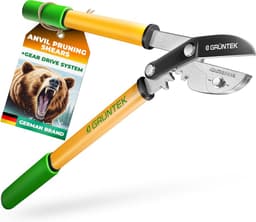
Grüntek Grüntek Grizzly 470

Best value

Grüntek Grüntek Grizzly 470
8.5/10about £24.98
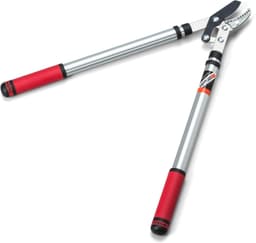
Kimura Kimura Pro 302

Alternative

Kimura Kimura Pro 302
6.6/10about £44.99
On this page

Put the stem at the back of the jaw

Basingstoke’s green-space volunteer manual tells people to place the stem deep, near the fulcrum, where the blades have the most leverage. The tips twist, slip, and ask your wrists to finish a job the pivot was meant to do. Seat the branch as far back as the jaw allows, with the anvil supporting the wood and the blade coming down square. Keep both hands on the handles. That manual uses a thumb, or two fingers, as a field habit for what volunteers should attempt. It is not the capacity printed on any listing in this comparison. The RHS tree page puts loppers under about 2.5 cm, then a saw. On a dry 20 mm bramble cane, open the tool fully, hook the cane in until it stops against the pivot, and only then close. The same cane at the tips usually folds instead of severing. On a ratchet, the jaws may spring wide open between squeezes. That reset is the mechanism. The steps live on the ratchet anvil loppers page. Keep the stem at the back of the jaw for every pump.

Stop when it creaks or the handles bow

If the tool twists or creaks, the Basingstoke guidance says to use a saw. That noise means the stem is thicker, harder or further out than the lopper can finish. Forcing it bends tubes and can throw the blade. Reviews on the AIRAJ, WOEDENU, HAUTMEC and both Spear & Jackson telescopic rows describe handles that bend when they are fully extended on a thick stem. The heavier AIRAJ’s early reviews also describe a plastic length lock that breaks or arrives unable to lock. Kimura reviews say the extra length is for reach, not for extra leverage. Shorten the handles before a hard cut. If it still creaks, stop. These tools weigh under about 2.1 kg. The Health and Safety Executive sets no manual-handling weight limit, so the risk is the reach and the twist. Do not cut on the ground. A blade driven into soil picks up grit. A 30 mm dead stub with the tubes at their longest is the usual failure. Collapse them by one or two stops, reseat the stem at the fulcrum, and try once more. If it creaks again, fetch a pruning saw and undercut, as the RHS describes once loppers are past their range. The buying guide explains why full extension is a poor place to hunt for force.

Carry it closed and wipe the sap

Carry the lopper with the blades down and closed, and latch it if it has a lock. The volunteer manual wants blades closed when the tool is idle, including when you set it down to gather cuttings. An open anvil on a path is a trip and a cut. Several listings never name the lock. Reviewers are the people who found the button. Learn it before you cross the garden. Sap on carbon steel is the other half of the afternoon. The RHS suggests a nylon scourer or wire wool on stuck sap, then a water-displacing spray, and oil on the pivot. After diseased material, disinfectant needs about 15 to 20 minutes of contact before you rinse and oil. Muddy Faces, writing about anvil blades for dead or dry wood, say the short version: wipe and oil after use. Put the tool away dry. A blade left wet will pit, and a pitted edge crushes the next stem. A sticky anvil face also stops the blade meeting the block.

Nests, a saw, and the ground

In England it is an offence to intentionally take, damage or destroy a wild bird’s nest while it is in use or being built. GOV.UK lists trimming trees, bushes and hedges among the jobs that can harm birds. That page is the England guidance. If you are cutting in nesting season, look first. An active nest means you wait. The same pause applies if you suspect bats. The RHS keeps loppers under about 2.5 cm on trees and wants a saw beyond that, with an undercut so the bark does not tear. It also keeps canopy removal to about one fifth in a year. The Arboricultural Association says not to paint pruning wounds. The RHS says the same for cuts that bleed: time the prune, and do not paint or wrap. The anvil versus bypass page is where the jaw, rather than the method, decides whether the plant should have met a flat block. Call an arborist, ideally an ARB Approved Contractor, when you cannot work from the ground, or if the limb could fall on a roof, a path, a person or a cable. In England a Tree Preservation Order needs written council consent, and a dead look does not remove it. A tool that arrives broken is a consumer question. The short-term right to reject under the Consumer Rights Act 2015 is 30 days. It does not cover a stem you forced.

Common questions

Where should the branch sit in the jaws?
Put it deep, near the fulcrum, with the anvil supporting the wood and the blade meeting it square. The tips twist and crush. Basingstoke’s volunteer manual teaches that placement and tells you to stop if the tool creaks. Their thumb-or-two-fingers habit is a field rule. It is not the millimetre figure on your listing. On a ratchet, keep the stem in that deep seat for every pump. A 20 mm dry cane cut at the tips will fold. The same cane at the back of the jaw is the cut the pivot was built to finish.
What do I do if the handles creak or the tubes flex?
Stop. Shorten telescopic handles by a stop or two, reseat the stem at the back of the jaw, and try once. If it creaks again, use a pruning saw. Reviews of the long AIRAJ, WOEDENU, HAUTMEC and Spear & Jackson tools describe bent handles when the tubes are fully out on a thick stem. Kimura reviewers use the extra length to reach, and they do not treat it as extra leverage. The mass of these tools is under about 2.1 kg. The danger is the twist at full reach, which is why the saw is the next tool.
How do I carry the tool and put it down?
Close the blades, point them at the ground, and latch the lock before you walk. Do the same when you put the lopper down to bundle cuttings. An open jaw on a path cuts people and collects grit. The Basingstoke manual wants the tool closed whenever it is idle. Learn the button or the twist lock before you cross the garden, because several product pages never name it. Lean it where it cannot fall open onto a foot. Carrying it over a shoulder with the blades unlocked is how a trip becomes a cut.
How do I get sap off carbon steel?
Wipe the blade before the sap hardens. The RHS suggests a nylon scourer or wire wool for what remains, then a water-displacing spray, then oil on the pivot. If you have cut diseased wood, leave disinfectant on the blade for about 15 to 20 minutes, then rinse and oil. Put the tool away dry. A wet anvil face rusts, and a rusty edge crushes the next stem. Muddy Faces give the short version for anvil blades used on dead or dry wood: wipe and oil after use. Do it the same afternoon. Sap left overnight is much harder to shift.
Should I paint the wound?
Leave the wound bare. The Arboricultural Association advises against wound paint, and the RHS says not to paint or wrap cuts that bleed. Time the prune instead. Paint will not close a stem an anvil has crushed, and it will not turn a dead-wood clearance cut into a healing cut on a rose. If the plant should recover, the jaw was the earlier decision. A clean cut at the fulcrum, and a stop when the tool creaks, does more than a tin of sealant.
Can I cut a hedge in nesting season?
Only if you have looked and there is no nest in use or being built. In England, intentionally damaging an active nest is an offence. GOV.UK names hedge and tree trimming as work that can harm wild birds. That page is the England guidance. If you find a nest, leave that stretch until the birds have finished. The same caution applies if bats may be present. An anvil lopper is a rough clearance tool in any season. In nesting season the legal stop comes before the cutting stop.
When is a saw the next tool, and when do I call an arborist?
Use a saw when the stem will not finish without a creak, and when the RHS has already moved you on, at about 2.5 cm for tree branches. Undercut so the bark does not tear. A lopper at full extension that bows on a 30 mm stub has reached that point even if a title says 5 cm. Call an arborist when you cannot keep both feet on the ground, when the limb could fall on a roof, a path, a person or a cable, or when the tree may be protected. In England a preservation order still needs written consent. A longer handle does not change that.

Related pages

Sources

Public UK sources used for this comparison. Listing prices, stars, and review counts are from amazon.co.uk on 20 October 2026.

  1. Burgon & Ball — anvil, bypass or scissor (retrieved 20.10.2026)
  2. RHS — pruning trees and shrubs (retrieved 20.10.2026)
  3. RHS — renovating overgrown climbers (retrieved 20.10.2026)
  4. Arboricultural Association — guide to pruning (retrieved 20.10.2026)
  5. GOV.UK — tree preservation orders (retrieved 20.10.2026)
  6. Consumer Rights Act 2015 — goods contract rights (retrieved 20.10.2026)
  7. Spear & Jackson — Razorsharp 8100RS (retrieved 20.10.2026)
  8. HSE — manual handling in agriculture (retrieved 20.10.2026)