Independent comparisons. We may earn from shop links. More info

Spade vs shovel: which blade you actually need

Updated: 21.10.2026

You searched both words because a product title on amazon.co.uk often uses them for the same tool, and you still do not know whether you are buying a cutter or a scoop. Spade vs shovel is a blade question. A spade is relatively flat and sharp so it cuts soil, turf and a neat edge. A shovel is dished so it carries loose material. The GBP table stays on the [shovel and spade comparison](/hub/garden-tools/shovel-spade). A qualifying purchase can earn us a commission at no extra cost to you.

You searched both words because a product title on amazon.co.uk often uses them for the same tool, and you still do not know whether you are buying a cutter or a scoop. Spade vs shovel is a blade question.

Our top picks

On this page

The blade, not the word in the title

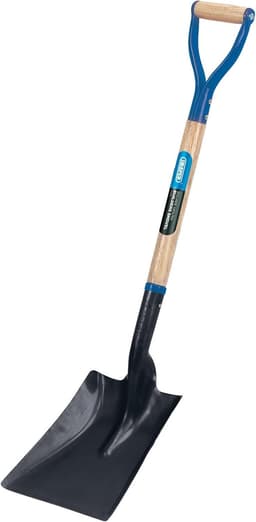
If you need to cut, buy the flat sharp blade. If you need to carry sand, gravel, compost or mulch, buy the dish. Ideal Home puts it that way: a straight blade for neat holes and edges, a curved scoop for loose soil and mulch. Length does not rename the blade. Amazon titles blur the split because shoppers type both words. Read the mouth. The Spear & Jackson 4450DS and the Roughneck ROU68224 are the cutters. The Draper 31391 is the scoop. A drain tool is a third shape. The Bulldog 5CLAM is slightly dished and round-nosed, and it is still not a builders' shovel. Treat shovel in that title as the slot. The order of length, shaft and grip is on the buying guide.

What each shape is bad at

A flat spade is a poor scoop. The 4450DS will cut a planting hole and a bed edge. It will not hold a shovelful of gravel the way a raised square mouth does. It is listed with a stainless head so soil slides off. Using the spade as a scoop bends the edge you just filed. A square shovel is a poor cutter. One Draper review describes the 31391 as a scoop with raised sides, not a tool that cuts down into soil. The blade is 240 × 310 mm on a 940 mm shaft. It fights a lawn edge, because the sides ride up instead of slicing. Other reviews report a slack handle fit, and one handle snapped while moving sand. B&Q's guide points a square shovel at loose material and a pointed shovel at gravel and rock. Buy the dish for the bag, and keep the spade for the edge.

Narrow, serrated, and micro

The Spear & Jackson 2154HK is a tubular draining shovel, forged, listed at 2.79 kg. It opens a slot. It does not turn a wide bed and it does not carry a square load of gravel. The Bulldog 5CLAM is the other narrow head, about 92 cm, and the best value pick on price against that job. One review finds the handle short past about 300 mm of trench. That limit is the shaft, not a reason to call it a border spade. Teeth are for roots. They are the wrong edge when you want a straight cut along a lawn. The Jardineer arrives in bolted sections, with review comments about play at the joints. The MICROROUND, at 700 mm, is a kneeling shovel. None of these is the one tool that both cuts a bed and shifts a bulk bag. Which listing fits a named job is on the best shovel or spade.

If you can buy only one

Most gardeners whose work is beds and planting should buy a digging spade first. It cuts the edge and turns a spit. It is only adequate as a scoop. The 4450DS is the stainless hardwood one, with a weight line of 181 g you should not believe. The ROU68224 is the fibreglass D-grip with treads. Buy the shovel first only if the job is loose material. Do not let the comparison's top pick override that. The top pick is the 2154HK. It is the right only-tool if your real job is slots, and the wrong only-tool if your real job is beds.

Common questions

What is the actual difference?
A spade cuts with a flatter, sharper blade. A shovel carries with a dished blade, square for loose material or pointed for gravel and rock. The word in an amazon.co.uk title often ignores that. Look at the mouth and whether the sides are raised before you compare prices.
Can one tool do both jobs?
A digging spade will move a little loose soil and will spill a real shovelful. A square shovel will not cut a clean edge. You can live with one tool if most days are the same job. You will fight the tool on the day the job changes. A second-hand scoop is often enough once the spade is right.
Which shape shifts a bulk bag?
A dished square shovel. The Draper 31391 is that shape, 240 × 310 mm, and reviewers treat it as a scoop. A flat spade spills. A narrow drain shovel is too slim to be worth loading. Watch the Draper's wooden handle, because reviews include a slack fit and one snap.
Is a drain shovel a spade?
It is closer to a narrow shovel or a specialist spade than to either classic. The 2154HK and the Bulldog cut a slot. They do not replace a bed spade or a builders' shovel. Use them when the hole is supposed to be slim, and keep the other blade for everything wide.
What should I buy if I can only afford one?
If the work is beds and planting, buy a digging spade and accept that gravel day will be clumsy. If the work is aggregate, buy the square shovel and accept a rough edge. Do not buy a micro or a 450 g edger as the only tool. You will stoop, or you will scrape paths and still have the bed to dig.

Related pages

Sources

Public UK sources used for this comparison. Listing prices, stars, and review counts are the amazon.co.uk figures in this set. We did not run a lab test.

  1. BSI — BS 3388:2004 Forks, shovels and spades (retrieved October 2026)
  2. HSE — Excavations and underground services (retrieved October 2026)
  3. Garden Organic — A26 Digging (retrieved October 2026)
  4. GOV.UK — Practical Guide to Street Works (retrieved October 2026)
  5. legislation.gov.uk — ESQCR 2002 regulation 14 (retrieved October 2026)
  6. East Riding of Yorkshire Council — Apparatus in the public highway (retrieved October 2026)
  7. RHS — Clay soils (retrieved October 2026)
  8. NHS — Back pain (retrieved October 2026)