Independent comparisons. We may earn from shop links. More info

Best garden spade UK: what to buy first

Updated: 21.10.2026

You are choosing one main tool for a UK garden or an allotment, and the search results treat a spade and a shovel as the same object. The best garden spade UK buyers can start with is not the highest star line. It is the blade that matches the job, then a length you can stand or kneel with, then a socket you can trust. The twelve amazon.co.uk rows, the GBP prices and the review counts sit on the [shovel and spade comparison](/hub/garden-tools/shovel-spade). A qualifying purchase can earn us a commission at no extra cost to you.

You are choosing one main tool for a UK garden or an allotment, and the search results treat a spade and a shovel as the same object. The best garden spade UK buyers can start with is not the highest star line.

Our top picks

On this page

Start with the job

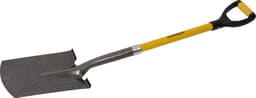
Name the work before you name a brand. A digging spade has a relatively flat, sharp blade for cutting turf, turning a bed and planting. A dished shovel carries sand, gravel and compost. A narrow head opens a slot. In this set the digging spades are the 4450DS and the ROU68224. The Draper 31391 is the scoop. The 2154HK and the Bulldog 5CLAM are the narrow tools. Flat blade against dished scoop is on spade or shovel. If most of your year is beds, start with a digging spade. The comparison's top pick is the 2154HK, with a forged head and 4.7 from 2,403 reviews, and the best value pick is the Bulldog at £11.54. Both are slot tools. They are the wrong default if your first job is a lawn edge. Which listing fits which job is on the best shovel or spade for the job.

Length and who it suits

Once the blade is right, the shaft still has to fit you. A council sheet's rule of thumb is roughly from the ground to somewhere between your elbow and your chest. That is a rule of thumb, not a British Standard. Too short and you stoop. This set runs from about 690 mm to 1,460 mm. The ROU68224 at 1,070 mm and the 102 cm 4450DS sit in a band many adults can push. The micros belong on your knees. The Bulldog is about 91.9 cm, and one review says the handle feels short once a trench is deeper than about 300 mm. That is a reach limit, not a depth you must dig to. The motion of a single spit is on how to dig with a spade.

Shaft, grip, and treads

Take the joint first. The 2154HK is a one-piece welded head. The Bulldog head is described as solid forged. The 4450DS uses a double-riveted socket on hardwood. The Jardineer arrives as bolted sections, and reviewers report play at the joints. That is a different object from a forged head, and it is the dearest row at £29.99. A hardwood shaft can sometimes be re-handled if the socket is sound. Fibreglass that snaps is rarely re-shafted at home. Foot treads do not thicken a plate that flexes. One ROU68224 review says the blade flexes when lifting a large plant. None of these listings claims BS 3388.

Read the specification, not only the title

The KKTECH title says carbon fibre. The specification lines say a carbon-steel blade and a plastic handle, and one review also says the tool is carbon steel. If you need a carbon-fibre shaft, this page does not give you one. Buy the material line you can point at. The 4450DS prints a weight of 181 g for a full hardwood digging spade. Treat that as a catalogue error. The length line of 102 cm is usable. The OEBUAFI 20-tooth saw spade has no customer-review line, and the item dimensions print 45 × 19.5 × 8 cm.

Common questions

Should I buy a digging spade or a border-sized tool first?
Buy the digging spade if you will turn beds and plant from a standing height. A border or micro shovel, about 690–700 mm in this set, is the tool you kneel with. Using that short shaft standing up loads your back. Add it when the border is the job, not as a substitute for the 1,070 mm or 102 cm spades.
Is fibreglass better than a wooden shaft?
Fibreglass stays stable in the wet and is rarely repaired if it snaps. Hardwood, as on the 4450DS, can sometimes be re-shafted and still needs weather care. Neither material fixes a thin blade or a loose socket. Read the joint, then choose the shaft you can live with if it fails.
Do I need foot treads?
Treads give your boot a place to push, which matters in firm ground. They do not make a thin blade thick. The ROU68224 has treads, and one review still says the blade flexes when lifting a plant. The 4450DS does not state treads. If your soil needs a boot shoulder, prefer a listing that prints them.
How long should the shaft be for my height?
Use the elbow-to-chest rule of thumb only as a check, not as a size you must hit. In this set, about 1,020–1,070 mm suits many standing adults, 1,460 mm is the long reach, and 690–700 mm is for kneeling. If you are short, the long Roughneck will feel high. If you are tall, the Bulldog's 92 cm shaft will feel short in a slot.
Why does one listing say carbon fibre and carbon steel?
The KKTECH title says carbon fibre and the specification says a carbon-steel blade and a plastic handle. Those cannot both be the shaft. Follow the specification, and do not pay a fibre price for a plastic handle. If the live page has changed, read it again before you order.

Related pages

Sources

Public UK sources used for this comparison. Listing prices, stars, and review counts are the amazon.co.uk figures in this set. We did not run a lab test.

  1. BSI — BS 3388:2004 Forks, shovels and spades (retrieved October 2026)
  2. HSE — Excavations and underground services (retrieved October 2026)
  3. Garden Organic — A26 Digging (retrieved October 2026)
  4. GOV.UK — Practical Guide to Street Works (retrieved October 2026)
  5. legislation.gov.uk — ESQCR 2002 regulation 14 (retrieved October 2026)
  6. East Riding of Yorkshire Council — Apparatus in the public highway (retrieved October 2026)
  7. RHS — Clay soils (retrieved October 2026)
  8. NHS — Back pain (retrieved October 2026)