Independent comparisons. We may earn from shop links. More info

How to dig with a spade without wrecking your back

Updated: 21.10.2026

You are about to turn a bed or plant a shrub with a spade you already own, and the usual mistake is to twist from the waist and then blame the tool. How to dig with a spade comes down to a near-vertical blade, a straight back, and a spit you can lift. If the shaft is the wrong length, technique will not rescue the afternoon. The lengths below are the ones in the [shovel and spade comparison](/hub/garden-tools/shovel-spade). A qualifying purchase can earn us a commission at no extra cost to you.

You are about to turn a bed or plant a shrub with a spade you already own, and the usual mistake is to twist from the waist and then blame the tool.

Our top picks

On this page

Set the blade and your feet

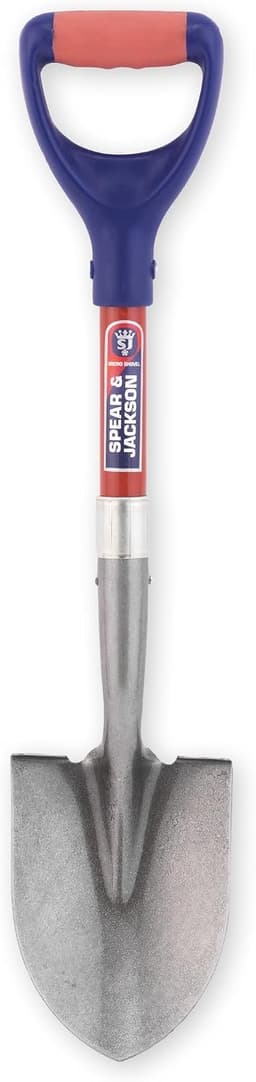
Stand close to the work with the blade nearly vertical, not laid flat like a scoop. Garden Organic's digging sheet puts one foot on the shoulder of the blade and asks you to keep your back upright. Drive the blade with your boot, then lift with your legs. Do not twist to throw the soil. Turn your feet, or place the soil beside the trench. The 4450DS listing does not state a tread. The ROU68224 does. Treads help the push. They do not make a thin blade thick, and one review says that blade flexes when you lever a large plant. The micros are about 690 mm and 700 mm. If you stand and dig with them, you are bent double. Which model to buy stays on the buying guide.

One spit, then the next

One spit is about a spade's depth. Garden Organic puts that at roughly 15–30 cm. That range is a teaching note, not a cable depth. The RHS describes single digging as a trench about 30 cm wide and a spade's depth: take out the first row, and turn each next row into the gap. Do not overload the blade. If the soil smears on the blade, stop. The RHS says not to rotavate wet soil for the same reason. Season and trenches stay on clay and narrow trenches. The Draper 31391 is a scoop, so it is the wrong motion for this trench.

Keep the edge, do not thin it

A blunt spade makes you stamp harder. The RHS sharpening note is to clamp the shaft so the head is steady, file away from you, keep the face of a spade flat, take the burr off, and not leave the edge thin. You are restoring the bevel that is already there. You are not turning the blade into a knife. A thin edge folds in stony ground. One UK tool page suggests about 45 degrees if the bevel has gone. Another suggests about 25 degrees. Do not treat either number as a rule for these spades. Follow the existing bevel with a mill file and stop while there is still metal behind the edge. Carbon steel wants a wipe and a drop of oil afterwards, or the fresh edge rusts in a damp shed. Sharpen when the blade skids on turf you know it used to cut, not on a calendar.

Stop, or change the tool

Stop when pain changes in a way the NHS back-pain page treats as urgent: numbness in the groin or legs, or a change in bladder or bowel control. That is a medical problem, not a cue to stretch and carry on. Ordinary ache after a new session is a reason to shorten the rows and finish another day. This page is not a diagnosis. About 1,020–1,070 mm, the 4450DS and the ROU68224, is the standing band in this set. The 690–700 mm micros are kneeling tools. The Bulldog at about 92 cm already feels short to one reviewer once a trench passes about 300 mm. A public highway needs street-works consent. A new fixed electrical supply is an electrician's design. If you strike a cable or smell gas, stop and keep people clear.

Common questions

How do I stand when I push the blade in?
Put the blade nearly vertical, one boot on the shoulder, and your back upright. Push with your weight, then lift with your legs. Turn your feet if the soil has to move sideways. Twisting from the waist is the habit that hurts, even when the spade is sharp.
How deep is one spit?
Garden Organic's range is about 15–30 cm, a spade's depth, and the RHS trench is about 30 cm wide and that same depth. It is a gardening measure. It is not the legal depth of a cable and not a target you must hit in wet clay. Take a smaller bite if the slab is too heavy to lift cleanly.
When is the ground too wet to dig?
When mud sticks to your boots or the blade smears the clay into a shine, leave it. Digging or rotavating wet clay damages the structure. Wait until the soil crumbles. A heavier spade does not make sticky ground workable.
How do I sharpen a blunt spade?
Clamp the shaft, file away from you along the existing bevel, keep the face flat, and take off the burr. Do not file the edge thin. Published angles differ, about 25 or 45 degrees if the bevel has vanished, so copy the bevel you still have. Oil a carbon-steel blade before you hang it up.
When should I stop because of my back?
Stop and seek urgent help if you get numbness in the groin or legs, or bladder or bowel control changes. Those are NHS red flags, not gardening advice. For ordinary ache, shorten the session and vary the task. Do not use a painkiller plan from a tool page.

Related pages

Sources

Public UK sources used for this comparison. Listing prices, stars, and review counts are the amazon.co.uk figures in this set. We did not run a lab test.

  1. BSI — BS 3388:2004 Forks, shovels and spades (retrieved October 2026)
  2. HSE — Excavations and underground services (retrieved October 2026)
  3. Garden Organic — A26 Digging (retrieved October 2026)
  4. GOV.UK — Practical Guide to Street Works (retrieved October 2026)
  5. legislation.gov.uk — ESQCR 2002 regulation 14 (retrieved October 2026)
  6. East Riding of Yorkshire Council — Apparatus in the public highway (retrieved October 2026)
  7. RHS — Clay soils (retrieved October 2026)
  8. NHS — Back pain (retrieved October 2026)