Independent comparisons. We may earn from shop links. More info

How to clear snow

Updated: 21.10.2026

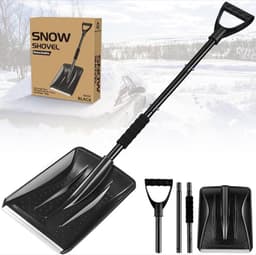
You are standing at the door with a plastic shovel, or you are about to buy one, and the path is still a thin white layer rather than a packed ridge. This is how to clear snow in the UK without leaving black ice or finishing the morning bent double. The method is the snow code: early, no water, salt or sand after you have moved the snow, and the pile kept off the walking line. The [plastic snow shovel comparison](/hub/garden-tools/plastic-snow-shovel) is where the seven listings sit.

You are standing at the door with a plastic shovel, or you are about to buy one, and the path is still a thin white layer rather than a packed ridge.

Our top picks

On this page

Clear it early

Fresh snow is the job a lightweight plastic shovel is for. Gloucestershire County Council and Essex Highways both put a plastic shovel ahead of an ordinary blade because snow tends to stick to a regular one. Do not finish with water. GOV.UK and the Met Office both say not to use water on the cleared surface. Hot water melts a film that freezes again as black ice. A 1.4 m scoop, the length listed on the longer EarlyGrow, is the example for a short drive: you can push a lane without lifting every pass.

Where the snow goes

Start with a path down the middle, wide enough for one person to walk, then widen it. The Met Office describes that middle path first so you are not clearing the whole width before anyone can get through. Put the snow to the side, on a border or a grass edge, not back onto the path and not into a drain. GOV.UK says you may clear snow and ice from a pavement, and that you are unlikely to be sued if you have cleared it carefully. That is not a promise that you cannot be sued.

Salt, sand, and what not to use

Once the snow is off, salt or sand the surface you have exposed. The Met Office snow code uses a tablespoon of table salt or dishwasher salt per square metre. Essex’s volunteer briefing talks about roughly 20 grams per square metre. Those are two published figures for a light, even scatter, not a crust of rock salt piled in the middle. Do not take salt from a roadside grit bin unless the council says you may. Those bins are for the roads. Spread salt after you have cleared, not instead of clearing. Salt on top of a deep layer does not replace the shovel.

How to shovel

Push when the snow is fresh and the blade will slide. Lift only small loads, and do not twist while you are bent. The Health and Safety Executive’s handling guidance says not to twist the back while you are stooped, and it says technique is not a substitute for a lighter task. On a 140 cm scoop you can keep your back nearer to upright. On an 80 cm car shovel you cannot, which is why reviewers of the short sectional tools describe bending, including at 171 cm and at 5 ft 5 in. If the shaft on a three-piece tool will not seat, stop. Forcing it is how sockets split.

When to stop

Stop if you get chest pain, feel faint, or are very short of breath, and call 999 for heart-attack symptoms. No UK death figure is used here. Stop if you have been told to avoid sudden hard work in the cold. A householder can choose to leave the snow. An employer cannot hand a volunteer or a member of staff a shovel and skip the law. The Manual Handling Operations Regulations 1992 require employers to avoid hazardous handling where they can, or to assess it. If that assessment has not been done, do not start. Leave the carriageway to the highway authority, and leave the ice you cannot shift rather than watering it.

Common questions

Do I have to clear the pavement outside my house?
No. GOV.UK says you may clear snow and ice. The highway authority has the duty on the public highway, so far as is reasonably practicable. You are not the council. If you do clear, do it in a way that does not leave a worse hazard than the snow you removed.
Can I be sued if someone slips afterwards?
GOV.UK says you are unlikely to be sued if you have cleared carefully. That sentence is not immunity. A path you have polished with water, or a pile you have left across the walking line, is the situation the guidance is trying to prevent.
Should I use hot water?
No. Water, hot or cold, leaves a film that freezes. The Met Office and GOV.UK both tell you not to use it. Use the shovel first and a light scatter of salt or sand afterwards. If the ice is already a solid sheet, water will not give you a safe shortcut.
How much salt do I need?
The Met Office says about a tablespoon of table salt or dishwasher salt per square metre. Essex’s volunteer note is about 20 grams per square metre. Use a light, even scatter on the cleared surface.
Should I push or lift?
Push fresh snow with the plastic blade. Lift only a small load, keep it close, and turn your feet instead of twisting your back. Wet snow on a wide blade is heavy.
When should I stop and get help?
Stop and call 999 if you have heart-attack symptoms. Stop if you were told to avoid sudden cold work. At work, stop if nobody has assessed the lifting under the 1992 regulations. Leave the public road alone. A neighbour with a longer scoop is help.

Related pages

Sources

Public UK sources used for this comparison. Listing prices, stars, and review counts are the figures printed in the amazon.co.uk saved listings.

  1. GOV.UK — Clear snow from a road, path or cycleway (retrieved October 2026)
  2. Met Office — Clearing paths and driveways (retrieved October 2026)
  3. HSE — Good handling technique (retrieved October 2026)
  4. Manual Handling Operations Regulations 1992 (retrieved October 2026)
  5. Consumer Rights Act 2015, section 22 (retrieved October 2026)
  6. Highway Code — Driving in adverse weather (rules 226 to 237) (retrieved October 2026)
  7. Gloucestershire County Council — Tools to clear snow or ice (retrieved October 2026)
  8. ManoMano — Snow removal tools buying guide (retrieved October 2026)