Bamboo root barrier UK: runners, clumps, and the fence
A new Phyllostachys in a London bed, or a runner already under the fence from next door, raises the same question. Do you need a bamboo root barrier, or are you about to fence the problem in with you? The sheet contains what is inside the line. It does not remove rhizomes already on the lawn beyond it. Depth arithmetic is the [buying guide](/hub/garden-supplies/root-barrier/sub/root-barrier-buying-guide). The ranked products are the [root barrier comparison](/hub/garden-supplies/root-barrier). RHS notes and the amazon.co.uk listings were checked on 20 October 2026. Plants were not trialled. A purchase through our links can earn a commission at no extra cost to you.
A new Phyllostachys in a London bed, or a runner already under the fence from next door, raises the same question. Do you need a bamboo root barrier, or are you about to fence the problem in with you?
A new Phyllostachys in a London bed, or a runner already under the fence from next door, raises the same question. Do you need a bamboo root barrier, or are you about to fence the problem in with you? The sheet contains what is inside the line. It does not remove rhizomes already on the lawn beyond it. Depth arithmetic is the buying guide. The ranked products are the root barrier comparison. RHS notes and the amazon.co.uk listings were checked on 20 October 2026. Plants were not trialled. A purchase through our links can earn a commission at no extra cost to you.
Our top picks
| Badge | Product | Stated height | Material named | Stated length | Note | Price | Offer |
|---|---|---|---|---|---|---|---|
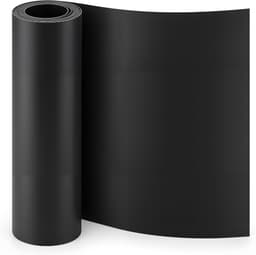
| Best overall |  West Bay West Bay roll, 20 ft × 24 in | 24 in | HDPE | 20 ft | 8.9 | about £52.92 | View offer |
 Gainspra Gainspra roll, 25 ft × 30 in | 30 in | HDPE | 25 ft | 7.7 | about £141.04 | View offer | |
| Best value |  aleawol aleawol roll, 6 m × 55 cm | 55 cm | HDPE | 6 m | 7.4 | about £34.68 | View offer |


On this page
Running and clumping
Rhizomes already on your side
What height that implies
Pot, fleece, and knotweed
Common questions
Do I need a barrier for clumping bamboo?
What about Phyllostachys?
Will runners already in my bed stop when I add a sheet?
Can I put the barrier on my side of the fence?
Is a pot enough?
Will an 18 inch roll do?
Is bamboo the same legal problem as Japanese knotweed?
How wide an area should the barrier enclose?
Related pages
Sources
Public UK sources for this comparison. Prices, stars and review counts are the amazon.co.uk listings captured on 19 October 2026. Page updated 22 October 2026.
- RHS: bamboo growing guide (retrieved 22 October 2026)
- RHS: bamboo control (retrieved 22 October 2026)
- RHS: trees near buildings (retrieved 22 October 2026)
- Environment Agency: RPS 178 (retrieved 22 October 2026)
- PCA: Japanese knotweed code of practice, November 2023 (retrieved 22 October 2026)
- Natural Resources Wales: Japanese knotweed (retrieved 22 October 2026)
- DeepRoot: root barrier installation manual, 2025 (retrieved 22 October 2026)
- HSE: excavations and underground services (retrieved 22 October 2026)
- Palm Centre: how to install bamboo root barrier (retrieved 22 October 2026)
- Consumer Rights Act 2015, section 11 (retrieved 22 October 2026)