How to grow Amazon frogbit
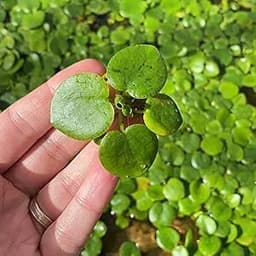
The parcel is on the side and the contents do not match the photograph. A Tropica cup is a pot of small plantlets in gel, not a mature mat, and a loose bunch can arrive yellow. How to grow Amazon frogbit from here is a surface job: rinse, float, and keep the leaf tops dry. The [frogbit comparison](/hub/garden-ponds/frogbit) is where the twelve amazon.co.uk listings and prices sit. This page starts after you have bought one. It does not rank the packs. We did not grow a trial tank. A qualifying purchase can earn a commission at no extra cost to you.
The parcel is on the side and the contents do not match the photograph. A Tropica cup is a pot of small plantlets in gel, not a mature mat, and a loose bunch can arrive yellow.
The parcel is on the side and the contents do not match the photograph. A Tropica cup is a pot of small plantlets in gel, not a mature mat, and a loose bunch can arrive yellow. How to grow Amazon frogbit from here is a surface job: rinse, float, and keep the leaf tops dry. The frogbit comparison is where the twelve amazon.co.uk listings and prices sit. This page starts after you have bought one. It does not rank the packs. We did not grow a trial tank. A qualifying purchase can earn a commission at no extra cost to you.
Our top picks
| Badge | Product | Format | Light | Listed use | Note | Price | Offer |
|---|---|---|---|---|---|---|---|
| Best overall |  Aquarium Fan Aquarium Fan 3 large Amazon frogbit | Loose plants | Partial sun | Indoor | 6.0 | about £12.99 | View offer |
 Tropica Tropica Limnobium laevigatum 1-2-GROW | Tissue-culture cup | Partial shade | Indoor | 7.4 | about £10.00 | View offer | |
| Best value |  AquaPlants AquaPlants American frogbit, 3 plants | Loose plants | Partial shade | Indoor, wide leaves | 4.3 | about £7.09 | View offer |


On this page
Put it on the surface
Keep the tops dry
Light, carbon dioxide and heat as printed
When it yellows or the mat closes
Common questions
Do you bury Amazon frogbit?
What do you do with the gel in a 1-2-Grow cup?
Why did it melt when ammonia was zero?
What temperature is actually printed?
Does Amazon frogbit need carbon dioxide or a strong light?
When is a dead cup a goods problem rather than a care problem?
Related pages
Sources
Public UK and maker sources from the research digest, used for this page in October 2026. Prices, stars and review counts are from the twelve amazon.co.uk listings captured on 19 October 2026. A snail-free line, a pond word and a rapid-growth bullet are listing claims. This is not a laboratory test, and these listings are not scored as winter-hardy pond plants.
- Tropica, Limnobium laevigatum (retrieved 19 October 2026)
- RHS, Hydrocharis morsus-ranae (retrieved 19 October 2026)
- RHS, Limnobium laevigatum (retrieved 19 October 2026)
- BSBI, Hydrocharis morsus-ranae (retrieved 19 October 2026)
- legislation.gov.uk, SI 2014/538 (retrieved 19 October 2026)
- NNSS, Be Plant Wise (retrieved 19 October 2026)
- Bennetts, Amazon frogbit (retrieved 19 October 2026)
- Natural History Museum, garden pond FAQs (retrieved 19 October 2026)
- Plants for Ponds, smooth frogbit (retrieved 19 October 2026)
- OATA, aquatic plants, July 2024 (retrieved 19 October 2026)