Independent comparisons. We may earn from shop links. More info

Amazon frogbit vs European frogbit

Updated: 22 October 2026

You keep a pond out through a British winter, or you run a warm tank, and amazon.co.uk has used one English name for both. Amazon frogbit vs European frogbit is a species split, not a size choice. Amazon frogbit is Limnobium laevigatum, a South American floater. European frogbit is Hydrocharis morsus-ranae, the native plant that drops a winter bud into the mud. Our [frogbit comparison](/hub/garden-ponds/frogbit) holds twelve rows, and the native species is not among them. This page sorts the leaf, the flower and the bud. There was no winter grow-out. A qualifying purchase can earn a commission at no extra cost to you.

You keep a pond out through a British winter, or you run a warm tank, and amazon.co.uk has used one English name for both. Amazon frogbit vs European frogbit is a species split, not a size choice.

Our top picks

On this page

Two plants, one shop name

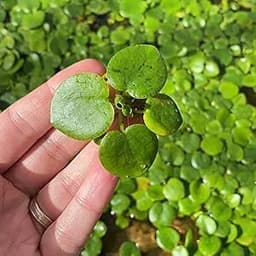
The shared shop name is why the wrong plant arrives. Limnobium laevigatum is Amazon frogbit, and the Royal Horticultural Society lists it as not native to Great Britain or Ireland. Hydrocharis morsus-ranae is European frogbit. A title that stops at the English word has not chosen between them. The RHS puts European leaves at about 3 cm across. Tropica puts Amazon frogbit at 1–5 cm tall, with leaves 5–15 cm wide. A rosette that covers your palm is not a large native plant. In summer the native plant carries white, three-petalled flowers about 2–3 cm across. No such flower, and a leaf past 3 cm, means you are not holding Hydrocharis. The RHS prefers full sun in still, alkaline water. The Canal & River Trust allows shade and says the plant can dominate a still patch, so treat full sun as the RHS preference.

Winter and native status

European frogbit spends winter as a turion, a bud that drops into the mud and rises in spring. The Freshwater Habitats Trust describes that bud, and the RHS rates the plant H5 and native. Amazon frogbit has no such bud in these sources, and UK nurseries call it not frost hardy. The Botanical Society of Britain and Ireland records European frogbit as Vulnerable in Great Britain. That is not a licence to thin a wild colony. The Trust gives about pH 6.5–7.8. Buy nursery stock. Overflow and waste water sit on the pond or aquarium page.

What you can actually order in this comparison

The twelve rows are Amazon frogbit, plus one American frogbit. None is European frogbit. Two titles print Limnobium laevigatum. Cup complaints cover melt, snails despite a snail-free line, and death in a pond or moving water. The other ten rows have no review line. Those notes describe parcels and tanks, not a pond left out in January. Neighbouring listing B01GI9759U was £13.99, with 3.2 from 420 ratings, and the description said four outdoor plants. Very small leaves can be the native size or a stressed parcel. The stars do not name the species, and that ASIN is not in this table. A missing Latin name is a job for the frogbit buying guide.

If the parcel looks like the other plant

A June 2025 Wildlife Ponds forum thread records buyers who asked for native frogbit and received Amazon frogbit. Treat that as a customer-service account, not as a leaf key and not as a legal opinion. A reply that the plant was not listed as prohibited still does not make it a wildlife-pond plant. A leaf of 10 cm, sold as the native plant, is the mismatch to photograph on a ruler. American frogbit is a third species. One row prints Limnobium spongia and claims leaves up to 20 cm wide, with no review line. Do not file that bullet under European frogbit. Choose European frogbit for a still pond left out all winter, from a nursery rather than a ditch. Choose Amazon frogbit for a warm tank with a dry leaf surface, and only when the title says Limnobium laevigatum.

Common questions

Are Amazon frogbit and European frogbit the same species?
They are not. Amazon frogbit is Limnobium laevigatum and European frogbit is Hydrocharis morsus-ranae. They share a shop name and a floating habit. Leaf width, the white three-petalled flower, the winter bud and native status all separate them. A listing that prints only frogbit has not named the plant in the bag.
Which frogbit overwinters as a bud in the mud?
European frogbit does. It forms a turion that sinks into the mud and rises in spring, which suits an outdoor pond and the RHS rating H5. Amazon frogbit is not frost hardy in the nursery accounts, and these sources give it no mud bud. A warm tank is the winter plan for the Amazon plant, and only if the leaf tops stay dry.
How big are the leaves on each frogbit?
European frogbit leaves are about 3 cm across, with white flowers about 2–3 cm, on the RHS account. Amazon frogbit on the Tropica line is 1–5 cm tall, with leaves 5–15 cm wide. American frogbit, on one row in this set, is listed at up to 20 cm wide. A leaf the width of your palm is already outside the native size, so question the name before July.
Can you collect European frogbit from a ditch?
You should buy nursery plants and leave wild colonies alone. The species is Vulnerable in Great Britain, so a ditch is not a free replacement for a wrong parcel. The Freshwater Habitats Trust gives about pH 6.5–7.8, and the RHS describes still, alkaline water. A random ditch may fail that test as well as the conservation warning.
Why might a native order arrive as the larger plant?
A Wildlife Ponds forum thread in June 2025 recorded Amazon frogbit sent against a native order. That is a customer-service account, not a leaf key and not a legal opinion. Measure against about 3 cm for European frogbit and 5–15 cm for Amazon frogbit. Less hardy, in a seller’s note, still does not make the larger leaf a winter pond plant.

Related pages

Sources

Public UK and maker sources from the research digest, used for this page in October 2026. Prices, stars and review counts are from the twelve amazon.co.uk listings captured on 19 October 2026. A snail-free line, a pond word and a rapid-growth bullet are listing claims. This is not a laboratory test, and these listings are not scored as winter-hardy pond plants.

  1. Tropica, Limnobium laevigatum (retrieved 19 October 2026)
  2. RHS, Hydrocharis morsus-ranae (retrieved 19 October 2026)
  3. RHS, Limnobium laevigatum (retrieved 19 October 2026)
  4. BSBI, Hydrocharis morsus-ranae (retrieved 19 October 2026)
  5. legislation.gov.uk, SI 2014/538 (retrieved 19 October 2026)
  6. NNSS, Be Plant Wise (retrieved 19 October 2026)
  7. Bennetts, Amazon frogbit (retrieved 19 October 2026)
  8. Natural History Museum, garden pond FAQs (retrieved 19 October 2026)
  9. Plants for Ponds, smooth frogbit (retrieved 19 October 2026)
  10. OATA, aquatic plants, July 2024 (retrieved 19 October 2026)