How often to feed pond fish: read your thermometer

How often to feed pond fish follows the water, not a date. Wheatgerm near 10°C, then two UK stops: below 4°C, or when the fish themselves stop.
On this page

You are at the pond in a coat. The summer pellets are still in the tub, the fish are slower than in July, and someone has told you to stop on a date. How often to feed pond fish starts with a thermometer in the water. Goldfish and koi keep taking food while they can use it. As the water cools, the metabolic rate falls, and the summer pellet becomes the wrong tool. Two UK sources do not draw the winter stop on the same line. This page leaves those lines separate.
Pond Planet moves you to wheatgerm as the water falls towards 10°C, stops feeding below 4°C, and offers late October to late March as a typical window. Practical Fishkeeping names wheatgerm below 10°C, asks you to lift uneaten food after about 20 minutes, and argues against starving fish all winter until the fish themselves stop. All Pond Solutions notes that leftover food raises waste and clogs filter foams. Peter F. has not weighed a ration, logged your pond, or tested a feeder. Tubs and prices sit on the pond food comparison. A qualifying purchase can earn a commission at no extra cost to you.
In short
How often to feed pond fish follows the water, then the fish. Pond Planet and Practical Fishkeeping both point you to wheatgerm around 10°C, and they do not share one stop: one stops below 4°C, the other keeps offering food until the fish refuse it. Uneaten pellets load the filter. A feeder's timer does not know either temperature. A wildlife pond with no fish has nothing to feed.
Temperature changes the diet
The diet changes because the water does. Practical Fishkeeping ties that to metabolic rate: it falls as the water cools, so the same pellet is a different meal in August and in November. Pond Planet puts the switch on the way down, as the water falls towards 10°C, and names wheatgerm for that stretch. Practical Fishkeeping puts wheatgerm below 10°C. One line starts the change as you approach the figure. The other uses the figure as the point you are already under. A single switch at exactly 10°C flattens a difference the two articles wrote.
Wheatgerm pond food is the named alternative to the summer pellet. Neither source prints a ration you can weigh per goldfish or per koi. Summer food left in the hopper is how cold fish meet a warm-weather pellet. When the reading is in that wheatgerm band, the food in your hand should be wheatgerm, one food at a time. It is not a tonic you add on top of the summer pellet. Take the temperature in the pond, not the air temperature on a phone. These sources do not give goldfish and koi separate degree lines. Without a thermometer in the water, you do not yet have the fact the rules are built on.
Two sources, two stop rules
Pond Planet stops feeding below 4°C. The late October to late March span is the note attached to that cold period, not a second law that overrides the thermometer. Practical Fishkeeping does not use 4°C as the stop. It argues against starving fish for the whole winter, and it continues on the cooler food until the fish themselves stop taking it.
Those rules can disagree on the same morning. A koi that still rises at 3°C fits Practical Fishkeeping and sits outside Pond Planet. A goldfish that loses interest at 8°C is a Practical Fishkeeping stop while Pond Planet would still be on wheatgerm. We will not average that into a private 6°C or 7°C. Do not break ice to make a feeding hole. If you can read the thermometer without smashing the ice, the reading still beats the date. These sources do not split goldfish from koi.
How often while they are still eating
Neither source sets two feeds a day, three feeds a day, or a weight of pellet per fish. The interval written down is Practical Fishkeeping's about 20 minutes. All Pond Solutions supplies the reason: food that stays in the pond becomes waste. A sitting should be small enough that the fish clear it inside the check you respect. If the surface is empty early, the next sitting can be a little larger or sooner. If pellets remain, the next one should be smaller or later, not a second handful on the first. Cleared sittings fall as the water cools, often before either stop rule.
A July pattern of several quick feeds feels like care. Left unchanged into a cold week, it is how uneaten food piles up. You do not need a formula that halves the feeds at 12°C. Fewer sittings, wheatgerm in the band both sources describe, and a stop when your chosen rule says stop. Fish that drift off or spit pellets are finished even if the 20 minutes have not. Frenzy at the surface in cold water is not a reason to open the summer bag.
Uneaten food is filter load
A pellet the fish do not eat does not vanish. Leftover food raises waste and clogs the foams in a pond filter. Rinsing those foams is a separate job. About 20 minutes is Practical Fishkeeping's removal line. In cold water a slow goldfish may still be working towards a pellet, so a rigid 20 minutes can be early. In warm water the fish can finish in five minutes, and the surplus softens if you leave it. The failure is walking away while the surface is still speckled. Food that has already sunk is already becoming waste.
Wheatgerm left overnight is still leftover food. If you follow Pond Planet, pond food below 4°C should not be in the water at all. If you follow Practical Fishkeeping, a small wheatgerm sitting can continue while the fish take it, and anything they leave still comes out. A pond whose filter is off for winter has nowhere for that waste to go except the water. Pause the food when the filter is paused, unless you are removing every pellet they leave.
A feeder does not read the thermometer
An automatic feeder is a clock and a hopper. It does not know that the water has fallen towards 10°C or below 4°C. A timer set in July keeps a promise you have stopped meaning. Assume the unit is blind unless that model's listing says it has a probe. This article has not scored feeders. Change the food when you change the diet, reduce the portion when sittings survive the 20-minute check, and switch it off when your stop rule is met.
A long weekend in warm weather, with the pellet the fish are already clearing, is what a timer is good at. A fortnight in November on summer pellets is the job it does badly. If nobody can look, set the stricter of the two stop rules before you leave, on wheatgerm, in a portion the fish were clearing last week. The fish feeder comparison is where battery, mains and hopper size belong. A feeder replaces your presence at feeding time. It does not replace the thermometer or the decision to stop. Empty the hopper when you stop for the cold.
A wildlife pond has nothing to feed
A pond with no fish is outside every interval here. Adding wheatgerm for the frogs pours in food that nobody is waiting to eat. The waste All Pond Solutions describes does not require a koi. If goldfish or koi live in the water, even with newts, the temperature rules apply. If you are sure there are no fish, leave the tub in the house. A barrel you almost stocked is still no fish. When to stop feeding goldfish begins on the day the goldfish arrive.
A glimpse of orange is a fish. Watch once, in water warm enough that a fish would come up, before you decide an inherited pond is wildlife-only. One warm afternoon with no rise is a reasonable basis for putting the tub away. It is not a survey. If you later find a fish, start the thermometer habit that day. Do not back-fill a month of missed pellets in one afternoon. Small cleared sittings, on the food the temperature allows, are the return.
Common questions
When do I switch pond fish onto wheatgerm?
Do I stop feeding at 4°C or when the fish stop?
How long do I leave pellets on the water?
How often should I feed pond fish in summer?
Does a pond fish feeder know the water temperature?
Should I feed a wildlife pond with no fish?
Can I use late October to late March as my feeding calendar?
Is pond food below 4°C always wrong?

Peter F. is the editor for DIY & tools at productscompared.co.uk. Comparisons in this category are checked against amazon.co.uk listings, review evidence and public UK sources.
Related articles

How often to clean a pond filter
Leftover pellets raise waste and clog foams. Rinsing the filter is a separate job from the feeding interval.

What to do when the pond freezes
A sheet of ice is a different job from a cold week when goldfish or koi still rise for wheatgerm.
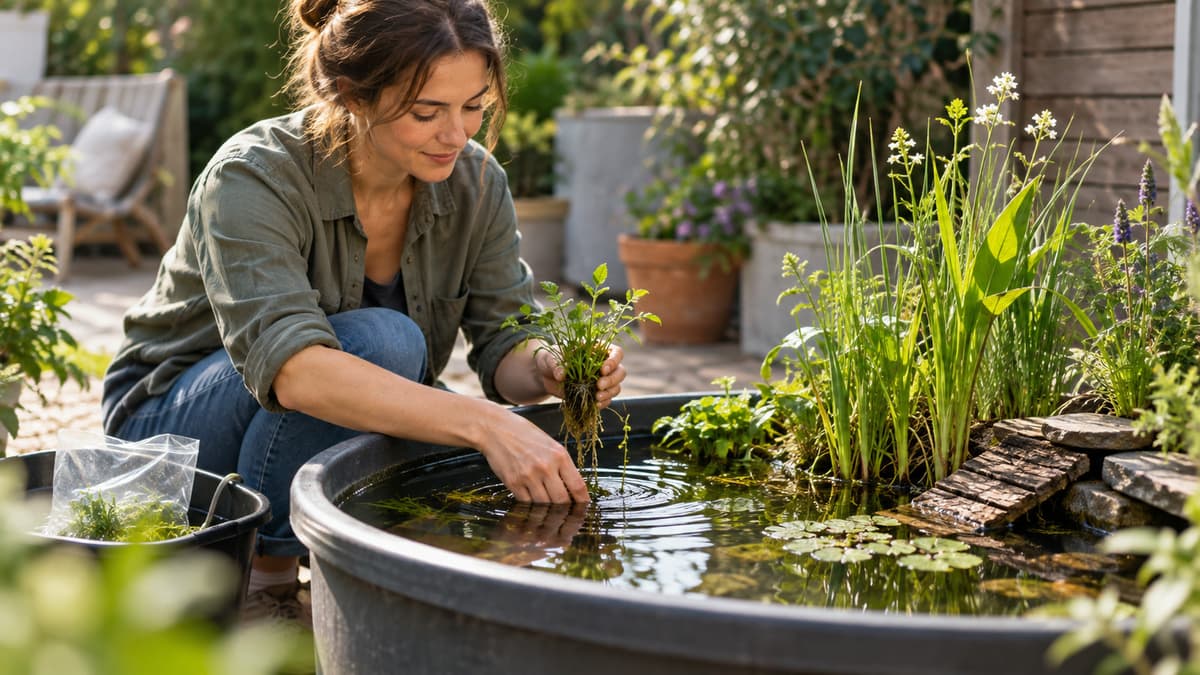
How to plant a small wildlife pond
A small pond with no fish has no feeding schedule. Plants and wildlife are the work on that water.