Independent comparisons. We may earn from shop links. More info

Aquarium plants in a pond

Updated: 22 October 2026

You have a leftover bunch from the fish tank, or a parcel labelled aquatic, and the garden pond looks like the spare tank. That shortcut is the one this page is here to stop. Aquarium plants in a pond can leave as a fragment in overflow. The [aquatic plant comparison](/hub/garden-ponds/aquatic-plant) keeps listings that mix those two jobs. Here you get one split: which of them can sit in a lined pond you control, and which stay in the aquarium even when the seller wrote coldwater on the title. Prices and star ratings below are the amazon.co.uk figures recorded on 19 October 2026.

You have a leftover bunch from the fish tank, or a parcel labelled aquatic, and the garden pond looks like the spare tank. That shortcut is the one this page is here to stop.

Our top picks

On this page

Why the pond is the wrong home for a tank plant

Be Plant Wise, from the GB Non-native Species Secretariat, says to keep aquarium plants out of your pond. OATA gives the trade the same instruction, including for Egeria densa, often sold as Elodea densa. A tank is a closed box. A garden pond is not, once rain lifts the water over the edge or you empty a bucket near a drain. The three live packs here are USDA zone 10, about £14 to £17. A coldwater word in the title is not outdoor hardiness. Whether those bunches belong in the tank is on live or artificial aquarium plants.

Which listings in this set belong where

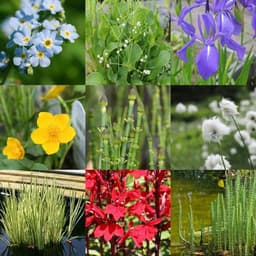
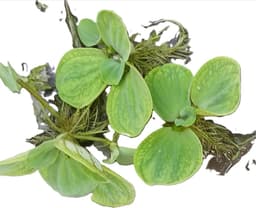
Only two live listings here are sold as pond plants. Carbeth Plants is four marginals in 9 cm pots at about £26.99, with 4.1 from 374 reviews. The mix may include Acorus, Juncus, Iris, Eriophorum and Caltha, chosen on the day, and 9 cm is the pot, not the grown height. It suits a shelf if you will move the plants into aquatic baskets. Water lettuce, Pistia stratiotes, is about £6.99 with 3.0 from two reviews: one sound arrival, one death within a week. Schedule 9 means you must not cause it to grow in the wild. It is not named in England sale order SI 2014/538, so this page does not call the sale banned in England. The RHS notes a Northern Ireland sale ban from August 2024. Float it only on a pond you can empty. Plastic in this set does not oxygenate. The Natural History Museum asks for at least one submerged native, such as hornwort or starwort, which these listings do not include.

Elodea, Egeria, and the names that are actually restricted

Shop labels collapse three plants into one word. Elodea nuttallii and Lagarosiphon major are species of special concern. Refuse a bunch named as either. Egeria densa, often sold as Elodea densa, is not on the OATA July 2024 sale-ban table, so this page does not say it is illegal to sell. OATA still says sell it for aquariums, not ponds. None of the three live packs names a species. Zone 10, and Singapore as the origin on one pack, are indoor signals, not a species check. If the label is blank, the plant stays in the tank or goes in the bin. Iris on the Carbeth may-include list is not a tropical aquarium plant, and the box is not guaranteed to contain iris.

If you already mixed them

If a tank bunch is already in the pond, do not tip the water toward a ditch, a stream or the road drain. Rinse compost into a bucket and use that water on garden soil away from drains. Leave trimmings on the edge so newts and snails can crawl off, then bin them away from wild water. Planting steps for a marginal that does belong outdoors are on how to plant pond plants. Those steps do not turn a zone 10 bunch into a pond oxygenator. Do not pass unnamed bunches or water lettuce on to a neighbour. Section 11 of the Consumer Rights Act 2015 says goods must match their description, so photograph a dead delivery before you destroy it.

Common questions

Is Elodea densa the same as a banned oxygenator?
Elodea densa is a trade name for Egeria densa. It is not the same plant as Elodea nuttallii or Lagarosiphon major, which are species of special concern. Egeria densa was not on the OATA July 2024 sale-ban table, so it is not described here as illegal to sell. OATA still says sell it for aquariums, not ponds. A blank bunch is not a safe stand-in for either name.
Will zone 10 bunches survive a British winter?
The three unnamed live packs are listed at USDA zone 10. That field is a warm-winter label, not a British outdoor rating, and this page has no winter trial of those listings in a UK pond. A plant that lingered through a mild autumn would still break the Be Plant Wise rule if it came from an aquarium listing.
Can a marginal iris go in a tropical tank?
The Carbeth mix may include iris, among other marginals, for a small outdoor pond or bog. That is not a tropical aquarium plant, and the box is not guaranteed to contain iris on the day it arrives. A heated tank is the wrong temperature and the wrong setting for a pond-edge crown. Use the mix on a measured shelf, in a larger aquatic basket, or leave it out.
What if the pond is next to a ditch?
Treat overflow as a route out. Do not site aquarium plants, water lettuce or unnamed bunches where floodwater or a spilled bucket can reach the ditch. Rinse water goes on soil away from that channel, not down a drain. If a listed invasive is already in the ditch, or you have to move it off the site, ask someone qualified instead of pulling it onto the bank and leaving it there.
Where does the delivery water go?
Pour it on garden soil that does not run toward a drain, a ditch or another pond, or bag the settled solids and bin them. Do not tip it back into the pond, and do not share unnamed cuttings with a neighbour. If you are unsure of the name, the plant goes in the bin, away from wild water.

Related pages

Sources

Public UK sources from the research digest, used for this page in October 2026. Prices, stars and review counts are from the eleven amazon.co.uk listings. A nitrate, oxygen or algae line on a listing is the seller's claim, not a laboratory result.

  1. RHS, choosing pond plants (retrieved 19 October 2026)
  2. RHS, planting aquatic and bog plants (retrieved 19 October 2026)
  3. GOV.UK, invasive non-native plant rules in England and Wales (retrieved 19 October 2026)
  4. The Wildlife and Countryside Act 1981 (Prohibition on Sale etc.) (England) Order 2014 (retrieved 19 October 2026)
  5. GB Non-native Species Secretariat, Be Plant Wise (retrieved 19 October 2026)
  6. Natural History Museum, garden pond FAQ (retrieved 19 October 2026)
  7. Consumer Rights Act 2015, section 11 (retrieved 19 October 2026)
  8. OATA, do not sell aquarium plants for ponds (retrieved 19 October 2026)