Independent comparisons. We may earn from shop links. More info

Best pond plants UK: pick the job before the price

Updated: 22 October 2026

You have a new liner in the garden, or a tank that still looks empty, and a search for an aquatic plant on amazon.co.uk has mixed a marginal, a floater, unnamed live bunches and plastic stems in one grid. The best pond plants UK for a small wildlife pond are a different purchase from a tank decoration. This page sorts those jobs and the names to refuse before you compare stars. Listings sit on the [aquatic plant comparison](/hub/garden-ponds/aquatic-plant), captured on 19 October 2026, with RHS and GOV.UK guidance. There was no lab test. A qualifying purchase through an amazon.co.uk link can earn a commission at no extra cost to you.

You have a new liner in the garden, or a tank that still looks empty, and a search for an aquatic plant on amazon.co.uk has mixed a marginal, a floater, unnamed live bunches and plastic stems in one grid.

Our top picks

On this page

Four pond jobs, and the tank job that is not one of them

The Royal Horticultural Society groups outdoor plants by where they sit: marginals on a shallow shelf, bog plants in wet soil at the edge, deep-water plants such as waterlilies, unrooted floaters, and submerged oxygenators. An aquarium bunch is a separate job, even when the title says coldwater. A USDA zone 10 bunch is sold for a warm indoor tank, not as a named hardy marginal. RHS container-pond notes suggest spring planting and up to five small plants. The Natural History Museum wants at least one submerged native, such as hornwort or starwort. Baskets and the first week are on how to plant pond plants.

Names you do not buy or share

Check the Latin name before the price. In England and Wales, GOV.UK lists invasive non-native plants of special concern, and Schedule 9 of the Wildlife and Countryside Act 1981 covers plants you must not plant or cause to grow in the wild. Refuse curly waterweed (Lagarosiphon major), floating pennywort, parrot's feather, Nuttall's waterweed (Elodea nuttallii), water fern (Azolla) and Australian swamp stonecrop (Crassula helmsii). Quarantine new pots, because the RHS warns that New Zealand pygmyweed hitchhikes in the compost. Water lettuce (Pistia stratiotes) is the awkward listing in this set. Schedule 9 means you must not cause it to grow in the wild. It is not named in England sale order SI 2014/538, so this page does not treat it as banned from sale in England. The RHS notes a Northern Ireland sale ban from August 2024. Be Plant Wise says aquarium plants stay out of ponds. Whether a tank species belongs in the liner is on pond plants or aquarium plants.

What this set can and cannot decide

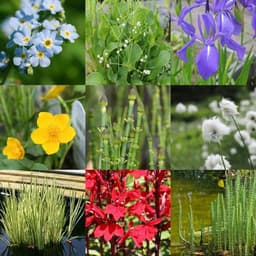
Only two live listings in this set of eleven are sold as outdoor plants. Carbeth is four 9 cm pots at about £26.99, with 4.1 from 374 reviews on 19 October 2026. The mix may include Acorus, Juncus, Iris, Eriophorum and Caltha. May include means the box can vary, and 9 cm is the pot, not the grown height. A named hardy oxygenator is a separate purchase. The water lettuce listing is about £6.99, with 3.0 from two reviews. Three unnamed live packs are indoor, USDA zone 10 and pre-weighted, about £14.00 to £17.00. Plastic does not oxygenate. The small plastic sets in that same £6.99 to £9.99 band are tank decorations, not a substitute for a submerged native.

A short checklist before you order

Measure the shelf before you order. A marginal often wants only a few centimetres of water over the crown. RHS notes put miniature waterlilies from about 10 cm. Check the Latin name against the special-concern list and Schedule 9, then compare prices. Add an aquatic basket for a 9 cm pot. Photograph the delivery against the description on the day it arrives. The Consumer Rights Act 2015 requires the goods to match that description, and live plants in this set often arrive stressed or short of roots.

Common questions

What are the best pond plants for a small pond?
For a small wildlife pond, choose a few named hardy marginals and at least one submerged native such as hornwort or starwort. RHS notes suggest spring planting and up to five small plants. In this set the marginal mix is Carbeth at about £26.99, and the species may differ. Named oxygenator bunches are absent.
How many oxygenating plants do I need?
The RHS suggests about four to five bunches, of three to four stems, per square metre. That is gardening guidance, and too many bunches can leave fish short of oxygen at night. A pack marked 25 plants here counts unnamed indoor stems, which is a different job from a liner. This set has no named hardy oxygenator for that rate.
Should the pond surface be fully covered?
Keep about half the surface clear so light reaches submerged plants. The RHS starting point is one floating plant per square metre, so a pond of about two square metres starts with two floaters. A solid mat shades the oxygenators underneath. Surplus plants stay out of ditches.
Is a 9 cm marginal a finished plant?
The 9 cm on Carbeth is the pot size of four young plants at about £26.99, not next summer's height. The mix may include Acorus, Juncus, Iris, Eriophorum and Caltha. You still need a shelf, an aquatic basket and a quarantine before the pots share an established pond. Compared with a mature nursery clump, this is a starter set.
Are the live coldwater bunches pond plants?
No. The three live packs are indoor plants: USDA zone 10, pre-weighted and unnamed, at about £14.00, £15.50 and £17.00. Be Plant Wise says aquarium plants stay out of the pond. Egeria is often sold as Elodea, and OATA says sell Egeria densa for aquariums. It is absent from their July 2024 sale-ban table.
Is water lettuce a hardy British floater?
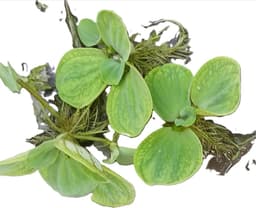
Five water lettuce plants, Pistia stratiotes, are about £6.99 here, with 3.0 from two reviews. A 2017 GB assessment says the plant is unlikely to overwinter in Britain. Schedule 9 means you must not cause it to grow in the wild. It is not named in England sale order SI 2014/538. The RHS notes a Northern Ireland sale ban from August 2024.

Related pages

Sources

Public UK sources from the research digest, used for this page in October 2026. Prices, stars and review counts are from the eleven amazon.co.uk listings. A nitrate, oxygen or algae line on a listing is the seller's claim, not a laboratory result.

  1. RHS, choosing pond plants (retrieved 19 October 2026)
  2. RHS, planting aquatic and bog plants (retrieved 19 October 2026)
  3. GOV.UK, invasive non-native plant rules in England and Wales (retrieved 19 October 2026)
  4. The Wildlife and Countryside Act 1981 (Prohibition on Sale etc.) (England) Order 2014 (retrieved 19 October 2026)
  5. GB Non-native Species Secretariat, Be Plant Wise (retrieved 19 October 2026)
  6. Natural History Museum, garden pond FAQ (retrieved 19 October 2026)
  7. Consumer Rights Act 2015, section 11 (retrieved 19 October 2026)
  8. OATA, do not sell aquarium plants for ponds (retrieved 19 October 2026)